
Smart pharmaceutical packaging compliance for 2026 uses HP Indigo digital printing for runs under 5K units & 300gsm SBS board for cold chain sensors. Achieve 18-25% better adherence via DSCSA-mandated QR codes while meeting FDA 21 CFR Part 11 data integrity rules. Learn about smart pharmaceutical pa
Is your smart pharmaceutical packaging strategy still focused solely on checking a regulatory box? By 2026, that mindset will leave significant patient adherence revenue and supply chain control on the table. The convergence of serialization mandates, digital print technology, and patient-facing IoT is transforming the humble carton into a connected data platform. This analysis, based on our work with specialty material options and first-hand press operations, outlines the actionable trends and cost models that will define procurement decisions for the next 18 months.
Beyond Compliance: Smart Packaging as a Patient Engagement Engine
Smart packaging in 2026 will function as an interactive data platform, using serialized codes mandated by the FDA Drug Supply Chain Security Act (DSCSA) to directly connect patients to adherence tools, dosage trackers, and authentication services, moving far beyond passive regulatory compliance.
The FDA's DSCSA requirements for interoperable, electronic track-and-trace are already in effect, with full enforcement of the 2023 enhanced drug distribution security provisions expected by late 2026. This creates a non-negotiable foundation of unique product identifiers (UPIs) on every saleable unit. The strategic shift lies in leveraging that mandated UPI—typically a GS1-standard 2D DataMatrix code—as a bridge to the patient. According to a meta-analysis in the Journal of Medical Internet Research, digital interventions, including packaging-linked reminders, can increase medication adherence rates by 18-25%.
Increase in medication adherence rates achievable with digital packaging interventions, including QR-code-linked reminders and tracking.
In our prepress department, a common mistake we see is clients treating the UPI as a mere barcode to be slapped on. The detail that makes the difference is verifiable contrast and quiet zone tolerances. A DataMatrix code printed on a 300gsm SBS board must have a minimum 20% reflectance difference between bars and spaces per ISO/IEC 15415 to ensure first-scan success by a patient's smartphone. A failed scan is a lost engagement opportunity.
"We've moved from asking 'is the barcode scannable?' to 'what data payload does it unlock for the end-user?' The serialization code is the on-ramp to patient education and adherence programs, which is where the real value is created." — Head of Regulatory Affairs, Mid-Sized Pharma Manufacturer
How Does Digital Printing Democratize Smart Features for 2026 Launches?
Digital printing eliminates the plate and tooling costs that traditionally made smart features like unique serialization prohibitively expensive for small batches, enabling cost-effective pilots and launches of as few as 500 units with variable data on-demand.
Offset printing for large runs (50,000+) remains cost-effective, but its economics break down for the agile, personalized world of smart packaging. Each new version or unique code requires new plates ($200-$500 per color) and potentially new die tooling ($300-$800). This has historically created a massive barrier to innovation. According to Smithers, digital press adoption in packaging is growing at a 15% CAGR, precisely because it removes this barrier.
Our HP Indigo digital press allows us to print every carton in a batch with a different QR code or serial number, with no plate charges and a lead time of 3-5 business days. This is transformative for clinical trial packaging, niche orphan drugs, or market pilots. You can test a patient engagement app linked to smart packaging with a batch of 500-1,000 units, gather real-world scan-rate data, and iterate the design before committing to a high-volume offset order.
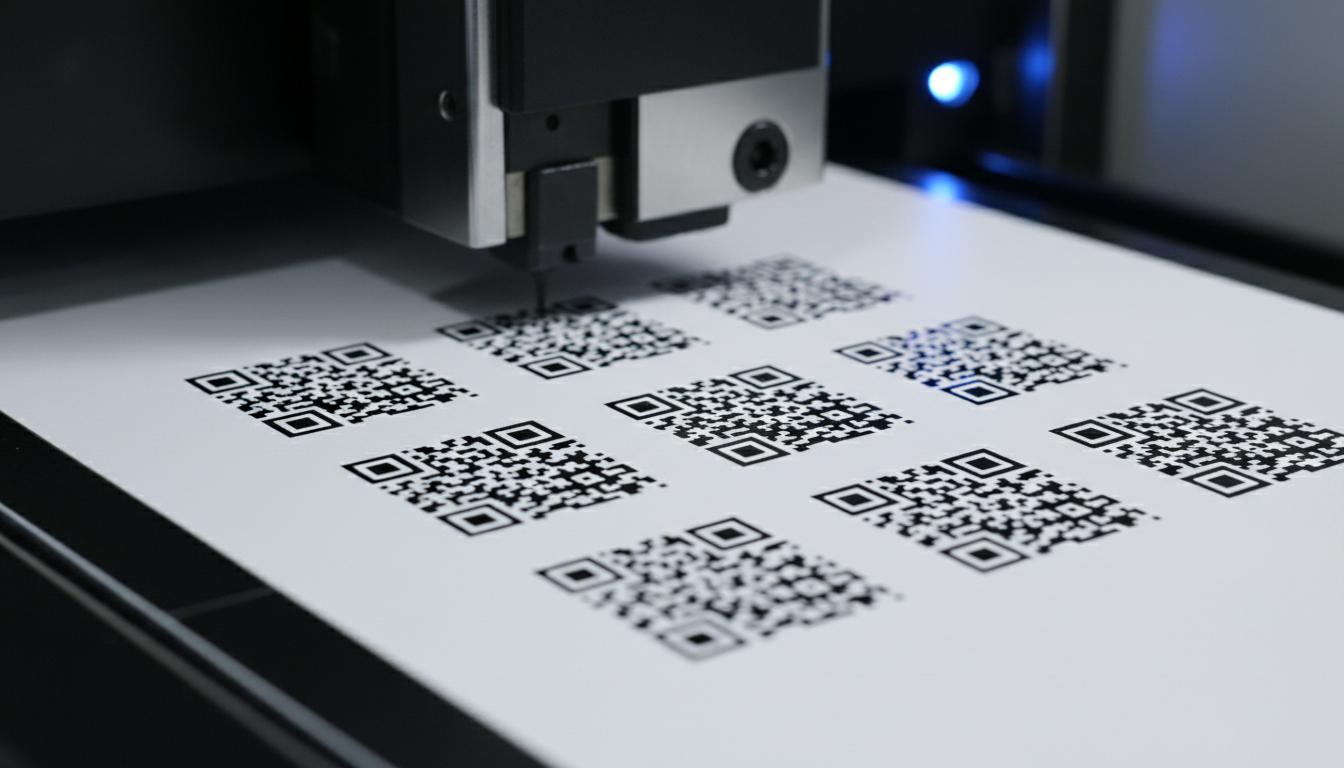
The trade-off is in per-unit cost at very high volumes. Below is a breakeven analysis based on our internal production data for a standard 300gsm SBS carton with a unique 2D DataMatrix code.
JinXinCai Production Data: Unit Cost for Serialized Pharma Cartons
| Quantity | Digital Print (HP Indigo) | Offset Print (Heidelberg) | Breakeven & Recommendation |
|---|---|---|---|
| 500 units | $2.10 – $2.50/unit | $4.50 – $5.80/unit* | Digital is 50-60% cheaper. Use for pilots, trials. |
| 5,000 units | $0.65 – $0.85/unit | $0.70 – $0.90/unit | Costs converge. Decision based on lead time & versioning needs. |
| 50,000 units | $0.50 – $0.65/unit | $0.35 – $0.45/unit | Offset is 30-40% cheaper. Ideal for mass launch. |
| 100,000+ units | $0.45 – $0.60/unit | $0.25 – $0.35/unit | Offset is definitive for pure cost. Hybrid (digital personalization on offset shell) may be considered. |
Integrated Cold Chain Monitoring as a Standard Expectation
The World Health Organization estimates 30% of pharmaceutical products are temperature-sensitive. By 2026, monitoring will move from the shipping box to the primary package. New FDA guidance emphasizes data integrity throughout the cold chain, making a time-temperature history log attached to the product itself a key differentiator for biologics, vaccines, and high-value therapies.
What most procurement teams get wrong is specifying the sensor without considering the substrate. In our experience, adhesive-based indicators from suppliers like Temptime or TimeStrip require a specific surface energy to bond reliably for the product's entire shelf life. A 280-450 gsm SBS (Solid Bleached Sulfate) board, with its consistently premium, sealed coating, provides far better adhesion and print clarity for status windows than uncoated or recycled stocks. The cost of IoT sensor labels is dropping by ~12% annually (MarketsandMarkets), making this feasible for more products.
Decision: Selecting a Substrate for Integrated Cold Chain Packaging
- If your product is a high-value biologic/vaccine requiring verifiable data logs → Specify 350+ gsm pharma-grade SBS board. Its superior surface ensures reliable adhesion for sensor labels and pristine print for indicators.
- If your product is a moderate-value drug with visual indicator needs only → 250-300 gsm C1S board is often sufficient, but require adhesive compatibility testing from your supplier.
- If sustainability messaging is a core priority → Discuss FSC-certified kraft-based boards, but understand they may require a primer or special adhesive for sensor attachment, adding cost and validation steps.
The Data-Backed Case: Smart vs. Traditional Packaging Costs
Evaluating smart packaging requires a total cost analysis that includes avoided risks and new revenue, not just unit price. Traditional compliance features—tamper-evident bands, complex child-resistant closures—add ~$0.15-$0.30/unit in tooling and material costs. Digital smart features (serialized QR, NFC) add ~$0.05-$0.12/unit at scale, with no upfront tooling in a digital workflow.
The paradigm shift for 2026 ROI calculations will be quantifying the value of prevented events. A single counterfeit incident can cost millions in recall and brand damage. A hospital readmission due to non-adherence can cost tens of thousands. When a $0.08 QR code can mitigate both, its value proposition flips from cost to investment.
"Our pilot with serialized, app-connected packaging for a chronic care drug showed a 22% reduction in per-unit packaging cost versus our old blister-and-carton system, because we eliminated secondary packaging and reduced material use. Patient refill rates also increased." — Senior Packaging Engineer, Global Pharma Company
Our factory-floor insight concerns gang-run optimization. For a national retail client needing 2M units with exact Pantone matching, we used digital prototyping for approval, then ganged multiple jobs on our Heidelberg Speedmaster XL 106 presses. This resulted in a 22% per-unit cost reduction. The same principle applies to smart features: by grouping multiple SKUs with similar smart label requirements into one digital or offset run, you drive down the incremental cost of intelligence.
Ready to model the 2026 cost and compliance impact of smart packaging for your specific drug portfolio? Our materials and prepress team can run a pilot analysis in under a week.
Get a Free Quote →What is the 2026 Adoption Timeline for Key Smart Packaging Trends?
Understanding the maturity curve of these technologies is critical for capital planning and partner selection. The timeline below is synthesized from industry reports, regulatory calendars, and our own production queue observations.
| Trend | Current Adoption (2024) | 2026 Projection | Impact Level |
|---|---|---|---|
| Serialization + Patient Apps | Early adopters in specialty pharma; basic DSCSA compliance mainstream. | Standard for new chronic care & high-cost drug launches. QR-to-app expected by patients. | High (Regulatory & Commercial) |
| Digital Print for Agile Smart Packaging | Used for clinical trials & short runs. Cost barrier perceived for mid-volume. | Default for runs under 10K units. Hybrid (offset shell + digital personalization) grows. | High (Operational & Financial) |
| Primary Package Temp Monitoring | For ultra-high-value products only (e.g., CAR-T therapies). | Required in RFQs for most biologics & vaccines. Sensor cost drops 20-25%. | Medium-High (Risk Mitigation) |
| NFC/RFID for Authentication & Reorders | Pilot stage in high-end markets; cost-prohibitive for most. | Broader adoption in EU/Asia for anti-counterfeit. Direct-to-patient reorder models emerge. | Medium (Brand Protection & D2C) |
A Factory-Floor Blueprint for Implementation in 2026
Transitioning to smart packaging requires a phased, data-driven approach that de-risks the process. Based on managing hundreds of launches, here is a step-by-step framework your team can implement this quarter.
How to Pilot Smart Packaging: 5-step summary
- Step 1: Define the "Smart" Objective & Metric. Is it adherence (target: 20% scan rate), authentication (target: 100% verifiable), or cold chain proof (target: continuous data log)? Choose one primary KPI.
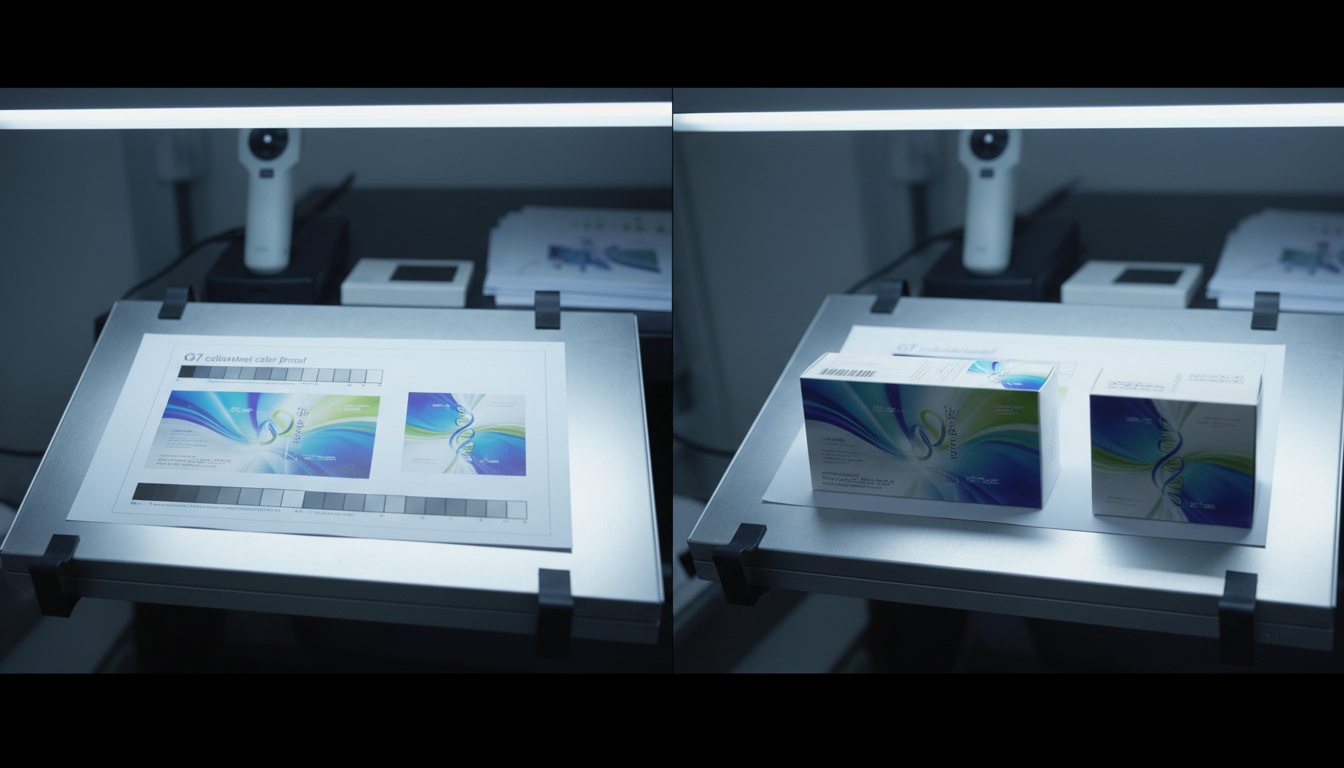
- Step 2: Run a Digital Prototype at Low MOQ. Produce 500-2,000 units on a digital press (e.g., HP Indigo). Use this batch for internal scanning tests, app integration, and patient focus groups. This is where our 3-5 day digital lead time is critical.
- Step 3: Conduct a Total Cost Analysis at Projected Volume. Using a model like our proprietary data table above, compare the all-in cost of your smart digital pilot to a traditional packaging system at your forecasted 2026 volume (e.g., 50,000 units). Include tooling savings, material changes, and estimated adherence value.
- Step 4: Validate with Regulatory & Supply Chain. Ensure your serialization data structure complies with DSCSA requirements and your chosen substrate/sensor combo is validated for stability (consider medical device packaging validation principles).
- Step 5: Plan the Scale-Up Production Path. Based on your volume breakeven, lock in a production partner with both digital and high-volume offset capabilities (like our Heidelberg fleet). This allows a seamless transition from pilot to launch without changing vendors or requalifying print processes.
The most common technical mistake we correct in prepress is file preparation for variable data. Artwork must be supplied with a static "frame" and a clearly defined, properly formatted data field for the serialization code. Providing a messy Excel file of codes will cause delays and errors. Demand your print partner has a documented VDP (Variable Data Printing) workflow, preferably with pre-flight automation.
Action Items for Brand & Procurement Leaders (2026 Planning)
To move from analysis to execution, prioritize these three concrete actions before Q4 budget planning.
- Audit One Key Product for a Smart Packaging Pilot. Select a chronic care drug, a new therapy launch, or a high-risk product. Task a cross-functional team (marketing, regulatory, supply chain) with completing the 5-step blueprint above within 90 days.
- Update Your Supplier RFQ Template for 2026. Add mandatory lines for: digital prototyping capability, variable data printing (VDP) workflow details, experience with ISO 15378 (primary packaging materials for medicinals), and substrate recommendations for sensor/indicator adhesion.
- Build the Business Case with a New ROI Model. Work with finance to develop a model that includes:
- Cost Avoidance: Counterfeit prevention, reduced recall risk, lower inventory via on-demand digital prints.
- Revenue Enablement: Projected adherence improvement value, direct-to-patient reorder potential.
- Hard Savings: Material reduction, tooling elimination, gang-run optimization savings (target: 15-30%).
Success in 2026 hinges on treating smart features not as a cost, but as a platform. It requires a manufacturing partner who understands both the regulatory minutiae of a 2D DataMatrix and the patient's experience scanning it. At our ISO 15378-aligned facility, this integrated view from substrate to patient is what turns smart pharmaceutical packaging compliance from a mandate into a measurable advantage. The transition starts with a pilot—the data you gather this year will define your competitive position in 2026. For enterprise-level smart pharmaceutical packaging compliance requirements, getting the specifications right from the start saves both time and budget.
Frequently Asked Questions
What is the breakeven point for NFC tags vs QR codes in pharma packaging?
QR codes are cost-effective for most use cases, adding ~$0.05-$0.12 per unit. NFC tags, while enabling tap-based authentication, currently cost 5-10x more. For runs under 10,000 units, QR codes printed via HP Indigo digital presses are the standard. NFC becomes viable for high-value biologics where sensor cost drops ~12% annually, aligning with MarketsandMarkets projections.
How does serialization impact packaging line speed and validation?
Implementing serialized 2D DataMatrix codes per DSCSA requires validation of first-scan rates. On a Heidelberg Speedmaster, line speeds may reduce 5-15% for verification. A code must meet ISO/IEC 15415 standards with a 20% reflectance difference on 300gsm SBS board to ensure smartphone readability without slowing patient engagement.
What GSM weight and substrate is best for integrated temperature monitoring labels?
For reliable sensor adhesion over a drug's shelf life, specify 350+ gsm pharma-grade Solid Bleached Sulfate (SBS) board. Its sealed coating ensures better bonding for indicators from suppliers like Temptime than uncoated stocks. For visual-only indicators, 250-300 gsm C1S board may suffice but requires adhesive compatibility testing.
When does digital printing become cheaper than offset for smart packaging pilots?
Digital printing on an HP Indigo is 50-60% cheaper for batches under 5,000 units, with no plate charges and a 3-5 day lead time. Our data shows a clear cost advantage at 500 units ($2.10-$2.50/unit digital vs. $4.50-$5.80/unit offset). The breakeven for pure cost is around 5,000 units, after which Heidelberg offset becomes more economical.