
A complete, actionable checklist for validating sterile barrier systems and preparing IVDD Annex III technical documentation to avoid costly regulatory delays in 2026.
Submitting incomplete technical documentation for your medical device packaging is a direct path to regulatory rejection and a 6-12 month delay in market entry. The most common mistake we see is treating packaging validation as a final box-ticking exercise, rather than a core design input from day one. At JinXinCai Printing, where we've run over 500 packaging programs for regulated industries, we've learned that a failed seal strength or accelerated aging test often stems from a material specification error made months earlier. This guide provides a forward-looking, actionable medical device packaging validation requirements checklist to navigate the evolving EU IVDR and FDA landscape through 2026 and beyond.
- Budget $15,000-$45,000 and 4-6 months for a full sterile barrier system validation suite for a Class II device.
- Accelerated aging (ASTM F1980) at 55°C can predict 2.5 years of real-time aging in just 3 months, but real-time data is still required for final shelf-life claims.
- Your packaging supplier must provide a Declaration of Conformity to EN 868 for each material lot, not just a generic certificate.
- FDA 21 CFR Part 820 and EU MDR Annex I require a formal, documented risk management file for your packaging system, not just test reports.
- Choosing a supplier with in-house ISO 11607 expertise can reduce validation timeline by 30% by preventing specification errors.
What is IVDD Annex III and Why Does Packaging Validation Matter?
IVDD Annex III outlines the essential requirements for technical documentation under the In Vitro Diagnostic Device Directive, a framework being replaced by the stricter IVDR. For packaging, this means your IVDD Annex III declaration of conformity template must prove your sterile barrier system maintains device safety and performance throughout its declared shelf life. Packaging is not just a container; it's a critical component of the device itself. A validation failure here invalidates your entire conformity assessment.
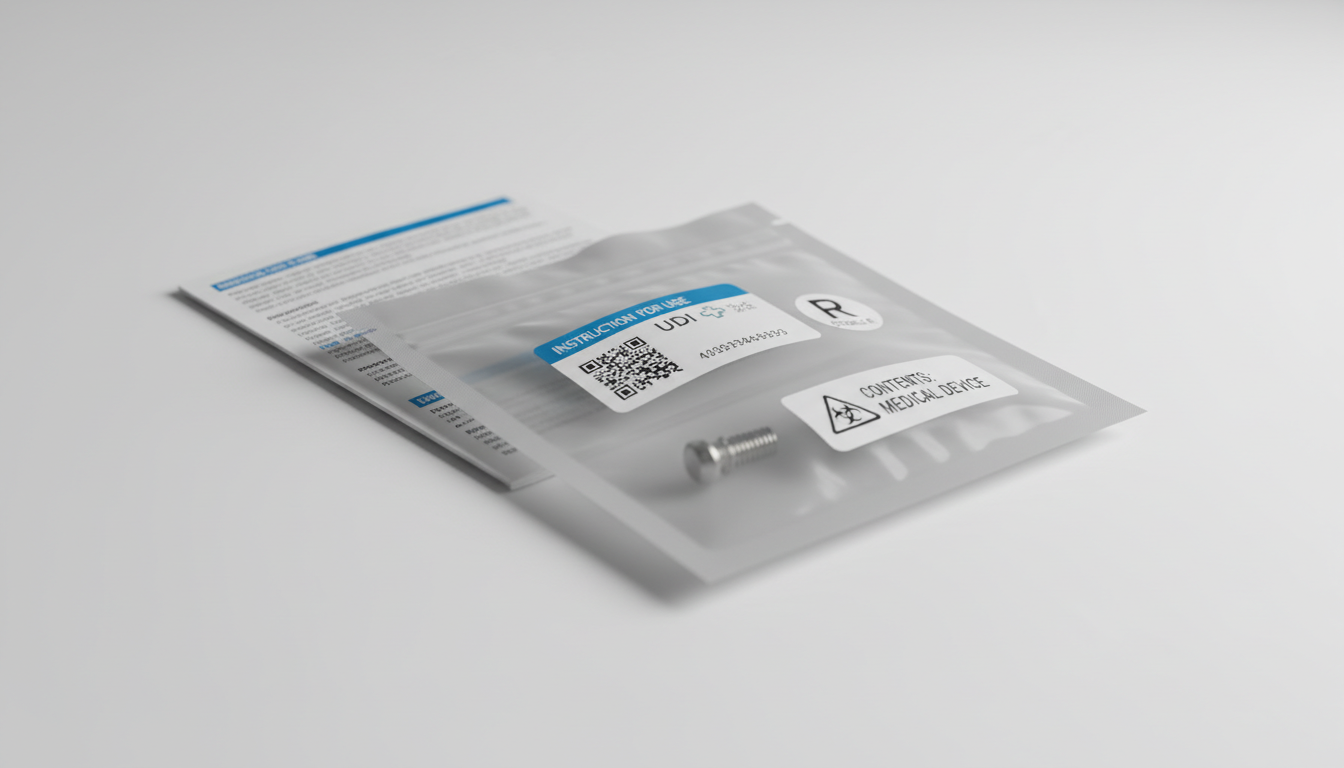
"We reject about 20% of initial packaging specifications from new clients because they specify a film that cannot achieve the required seal strength after accelerated aging," says Li Wei, our Head of Regulated Materials with 12 years of experience. "The mistake is choosing for cost or aesthetics first, rather than starting with the validation protocol's pass/fail criteria."
In our ISO 9001:2015 certified facility, we run pre-validation trials on our Bobst die-cutting lines to simulate distribution stresses before formal testing even begins. This hands-on approach identifies failure modes—like weak seals at die-cut corners—that a theoretical risk analysis often misses.
FDA vs. EU MDR/IVDR: Key Packaging Requirement Differences
While both aim for patient safety, their pathways diverge. Understanding these differences is critical for a global medical device label compliance FDA vs EU strategy. FDA requirements under 21 CFR Part 820 (Quality System Regulation) are process-oriented, focusing on your design controls and production process validation. The EU MDR and IVDR, under Annex I, are more explicitly tied to harmonized standards like ISO 11607.
| Factor | U.S. FDA Approach | EU MDR/IVDR Approach |
|---|---|---|
| Primary Standard | ISO 11607 is recognized but not mandated; focus is on 21 CFR Part 820 design controls. | ISO 11607 parts 1 & 2 are harmonized standards, providing presumption of conformity. |
| Technical Documentation | Detailed in Design History File (DHF); reviewed during inspection. | Formal Technical Documentation per Annex II & III; scrutinized by Notified Body. |
| Material Evidence | Supplier certification may suffice; FDA may audit your supplier. | Requires specific Declaration of Conformity to EN 868 series for each material. |
| Shelf-Life Validation | Accepts accelerated aging (ASTM F1980) with real-time ongoing. | Requires a justification for the acceleration factor; real-time data must eventually align. |
| Labeling & UDI | FDA GUDID submission with specific formatting rules. | EUDAMED registration with EUDAMED DI; different carrier symbology requirements. |
The practical implication? You likely need two parallel validation master plans. For a client launching in both markets, we developed a unified protocol where the more stringent EU requirement (e.g., EN 868 material certification) became the baseline, avoiding duplicate testing.
The 5-Step Medical Device Packaging Validation Framework
This framework is your core medical device packaging validation requirements checklist. Treat each step as a gate; do not proceed until documentation is signed off.

Step 1: Define User Needs & Design Inputs (Priority: MUST-HAVE)
1. Document intended transport cycles: Specify exact number of drops, vibration profiles (ASTM D4169), and temperature/humidity ranges. Guesswork here invalidates later testing.
2. Define sterile shelf life: Target 2, 3, or 5 years? This dictates your accelerated aging plan.
3. Select primary materials with certified compliance: Specify not just "Tyvek" but "DuPont Tyvek 1073B, with EN 868-5 certification and lot-specific DoC."
4. Establish pass/fail criteria for all tests (e.g., seal strength > 1.5 N/15mm, zero failures in dye penetration).
Step 2: Package Design & Risk Analysis (Priority: MUST-HAVE)
5. Conduct a formal FMEA for the packaging system: Include failure modes for sealing, porosity, and label adhesion.
6. Create detailed engineering drawings: With critical-to-quality dimensions for seal widths (±0.5mm tolerance) and die-cut features.
7. Verify material compatibility: Ensure adhesives, inks, and substrates don't interact to create leachables. We once saw a UV-cured ink inhibit seal formation on a PET film.
8. Generate prototype samples using production-equivalent processes: Don't validate with hand-sealed samples.
Step 3: Installation & Operational Qualification (IQ/OQ) (Priority: MUST-HAVE)
9. IQ: Document that production equipment is installed correctly: This includes your manufacturer's sealing and die-cutting equipment. Request their IQ protocols.
10. OQ: Prove equipment operates within specified parameters across its operating range (e.g., sealer temperature 150°C-170°C, dwell time 1.0-1.5 seconds).
11. Establish machine settings for your specific package: This becomes your Master Batch Record.
12. Train operators on the critical process and document training.
Step 4: Performance Qualification (PQ) & Testing (Priority: MUST-HAVE)
13. Execute a sterile barrier system validation protocol per ISO 11607-1: This is your core test suite.
14. Seal Strength Testing (ASTM F88): Test samples pre- and post-aging. Minimum strength should be defined in your risk analysis.
15. Package Integrity Testing: Perform dye penetration (ASTM F1929) or bubble emission (ASTM F2096) on a statistically significant sample size from three separate production lots.
16. Accelerated Aging (ASTM F1980): Use a qualified aging chamber. Standard condition is 55°C, but the factor (Q10=2.0 is common) must be justified.
17. Real-Time Aging Study: Start immediately! Place samples in controlled ambient storage. This data ultimately supports your shelf life.
18. Distribution Testing (ASTM D4169): Simulate the worst-case shipping scenario you defined in Step 1, then repeat integrity tests.
Decision: When to Use Accelerated Aging vs. Real-Time Data for Shelf-Life Claims
- If your device has a shelf-life claim ≤ 2 years and you need to launch → Use accelerated aging (55°C, Q10=2.0) for initial submission, with a commitment to ongoing real-time monitoring. Most Notified Bodies accept this with justification.
- If your device has complex materials (e.g., biologics, drug-device combos) or a claim > 5 years → Start real-time aging 24 months before submission. Use accelerated data for supporting evidence only. Correlation can be less predictable.
- If you are changing an existing, validated material supplier → Accelerated aging comparing old vs. new material is often sufficient to justify equivalence, provided chemical composition is identical.
Step 5: Documentation & Technical File Compilation (Priority: MUST-HAVE)
19. Compile the Validation Master Plan (VMP) and Report (VMR): These are living documents.
20. Include all raw data, calibration certificates for test equipment, and material Certificates of Analysis.
21. Prepare a clear IVDD Annex III declaration of conformity template section for packaging: Summarize standards met, test results, and conclusion of safety.
22. Establish procedures for ongoing process control and change management: Any change to material, equipment, or process triggers re-validation.
Struggling to map test protocols to regulatory submissions? Our team, with direct experience preparing documentation for EU Notified Bodies, can review your validation plan.
Get a Free Technical File Gap Analysis →Case Study: Validating a Sterile Barrier System for a Class IIb Device
Consider a real-world scenario: A European client needed a sterile barrier for a Class IIb surgical instrument with a 3-year shelf life, using a formed tray and lid. How to prepare technical documentation for medical packaging was their primary hurdle.
- Challenge: Initial dye penetration tests showed a 5% failure rate at tray corners post-distribution.
- Root Cause: Our analysis found the die-cutting angle on the lid stock was too sharp, creating a stress concentration point during vibration testing.
- Solution: We modified the die on our Bobst machine to a rounded corner (radius increased from 0.5mm to 2.0mm) and adjusted the sealing pressure profile.
- Validation Outcome: After re-running OQ and PQ, failure rate dropped to 0%. The total project timeline was 5 months, with a validation cost of €32,000. The key was having in-house tooling adjustment capability, which saved an estimated 8-week delay from an external toolmaker.
Common Pitfalls in Technical Documentation for Packaging
Based on reviewing dozens of client-submitted files, these errors are pervasive and costly.
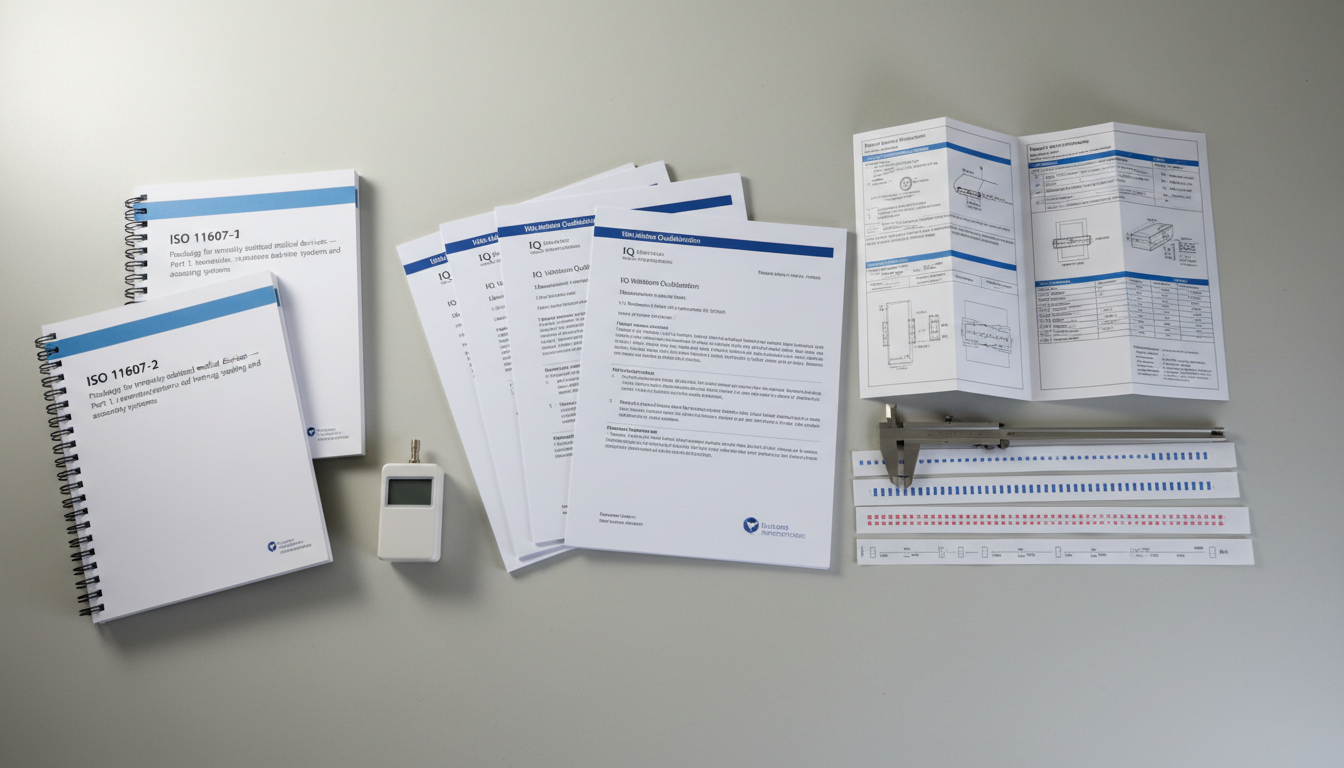
- Pitfall 1: Missing Material Traceability: Submitting a generic "ISO 11607 compliant" certificate instead of a lot-specific Declaration of Conformity to the relevant EN 868 part (e.g., EN 868-5 for non-wovens). Notified Bodies increasingly reject this.
- Pitfall 2: Inadequate Sample Sizing: Using too few samples for statistical power. For a dye penetration test, a sample size of 60 units (20 pre-aging, 20 post-accelerated aging, 20 post-distribution) from three independent production runs is a robust minimum.
- Pitfall 3: Ignoring the "Worst-Case" Concept: Validating only the smallest device in a family. You must validate the largest device and the smallest pouch—the extremes of material stress.
- Pitfall 4: Poor Change Control: Switching an ink supplier or adhesive without assessing impact on sealability or biocompatibility. Any change requires a documented impact assessment and potentially re-validation.
How to Select a Packaging Manufacturer with Regulatory Expertise
Your manufacturer is a critical partner, not just a vendor. Use this vetting checklist.
- Request their Quality Management System certificate: It must be ISO 13485 or have a robust ISO 9001:2015 system with a documented annex for medical devices. JinXinCai's ISO 9001:2015 certification, renewed in 2021, includes specific procedures for controlled documentation and traceability required for medical files.
- Audit their change control process: Ask for a recent example of a material change and how they managed the re-validation documentation.
- Verify in-house testing capability: Can they perform seal strength or burst testing on-site for rapid iteration? Our facility includes a controlled environment lab for pre-validation checks.
- Ask for a sample Technical Documentation package (redacted): A competent supplier will have a template showing how they structure data for client submissions.
- Check their material partnerships: Do they have direct agreements with medical-grade material suppliers (e.g., DuPont, Amcor, Oliver) to ensure lot-to-lot consistency and access to full compliance dossiers?
of medical device launch delays are linked to packaging and labeling issues, according to a 2025 survey of 200 quality managers.
Implementing this comprehensive medical device packaging validation requirements checklist transforms packaging from a regulatory hurdle into a competitive advantage. The goal for 2026 is not just compliance, but building a robust, data-driven packaging system that accelerates approvals and protects patients. Begin by reverse-engineering your validation plan from your target shelf-life and distribution claims, and select partners who provide data, not just products.
Your Next Step: Download our expanded validation protocol template and checklist, which includes sample sizes, acceptance criteria, and a cross-reference matrix to ISO 11607 and FDA requirements. Contact our regulatory support team to request your copy and schedule a 30-minute gap analysis of your current technical documentation.
Frequently Asked Questions
How does packaging validation affect time-to-market for a new medical device?
Poorly planned validation is the single biggest delay. A full sterile barrier system validation suite typically takes 4-6 months from protocol writing to final report. Starting material compatibility testing during device design (not after) can save 2-3 months. Choosing a manufacturer with in-house tooling and pre-validation testing can compress the timeline by 30%.
What is the typical cost range for a full packaging validation suite?
Costs vary by device class and complexity. For a Class II device with a tray and lid system, budget $15,000 to $45,000. This includes physical testing (seal strength, integrity, aging, distribution), laboratory fees, and the labor for protocol/report writing. A simple pouch for a Class I device may cost $8,000-$20,000. The largest cost drivers are accelerated aging chamber rental and the sample size required for statistical significance.
What specific material certifications should I request from my packaging supplier for an IVDD product?
You must request a lot-specific Declaration of Conformity to the relevant EN 868 standard. For example: Tyvek lid stock requires a DoC to EN 868-5; medical-grade films need EN 868-1. Do not accept generic "ISO 11607 compliant" statements. Also request the material's Certificate of Analysis with data on basis weight, porosity, and tensile strength, and evidence of biocompatibility (ISO 10993-5 cytotoxicity) if the package contacts the device.
How do accelerated aging results correlate with real-time shelf life claims?
Accelerated aging uses elevated temperature (e.g., 55°C) to simulate time. Using a standard acceleration factor (Q10) of 2.0, 90 days at 55°C correlates to approximately 2.5 years of real-time aging at 23°C. However, correlation is not guaranteed for all materials. Regulatory bodies require you to justify your chosen Q10 factor and, crucially, to have ongoing real-time aging studies to confirm the accelerated data. The real-time data ultimately supports your final shelf-life claim.