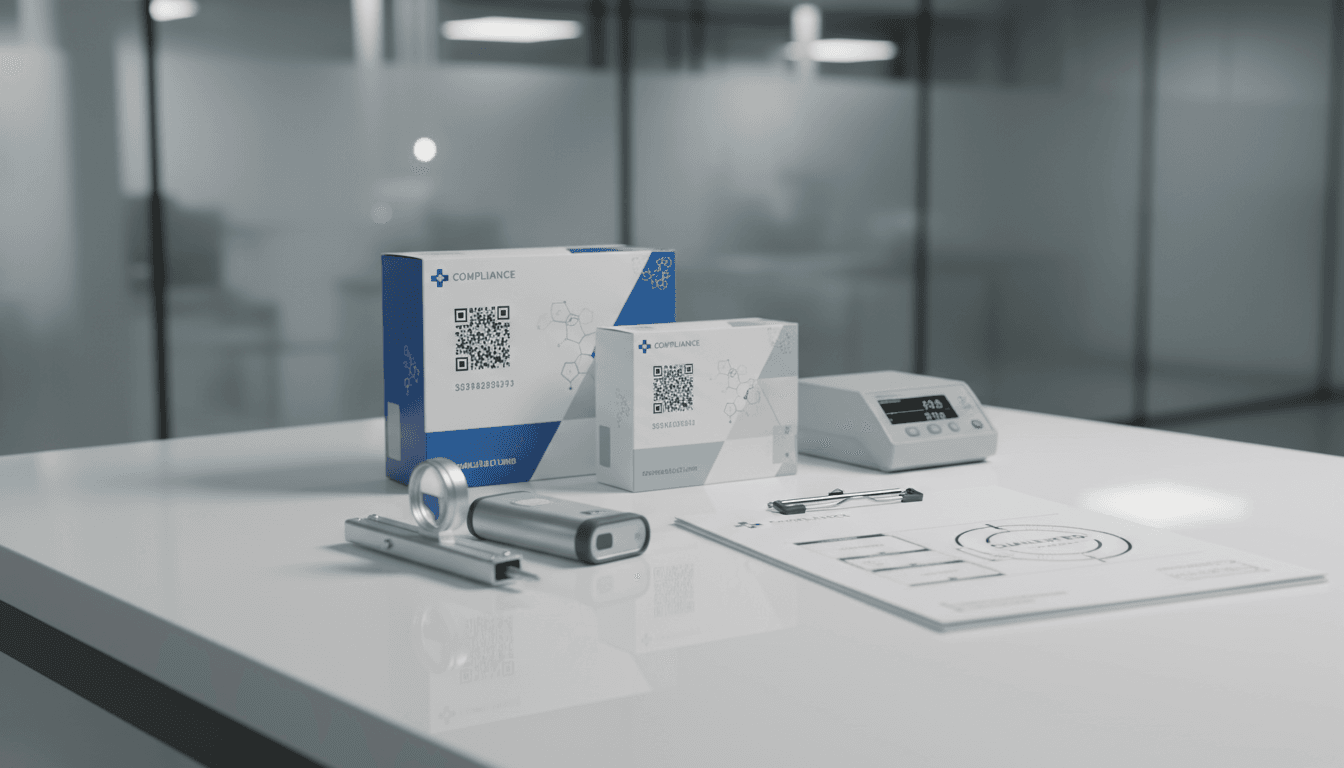
This guide provides a step-by-step framework for implementing DSCSA packaging serialization, including material selection, printing trade-offs, and cost analysis for runs from 500 to 500,000 units.
Brand managers and packaging engineers face a critical deadline: by November 27, 2023, the Drug Supply Chain Security Act (DSCSA) mandates full unit-level serialization and traceability for most prescription drugs. Yet, a 2024 survey by the Healthcare Distribution Alliance found that over 30% of mid-size pharmaceutical companies still struggle with packaging implementation. The most common and costly mistake we see is specifying materials or printing methods that fail under real-world cold chain conditions or produce unscannable 2D data matrix codes. This guide provides a forward-looking, step-by-step framework for implementing DSCSA compliant pharmaceutical packaging requirements, drawing from our 28 years of ISO-certified production experience running over 500 pharmaceutical packaging programs.
- Serialization adds $0.08–$0.22 per folding carton, with thermal transfer printing becoming cost-effective above 15,000 units.
- For cold chain compliance, specify materials with a minimum 300gsm C1S white board and solvent-resistant thermal transfer ribbons.
- Aggregation (linking serialized units to cases/pallets) is not federally mandated but is required by 85% of major distributors like McKesson.
- Varnish reduces 2D data matrix scannability by 15–20%; use matte or spot coating instead.
- Implement a 5-phase verification plan starting 9 months before product launch to avoid costly last-minute changes.
What Are the Core DSCSA Packaging Requirements for 2026 and Beyond?
The DSCSA mandates four core elements on prescription drug packaging: a unique product identifier (serialized GTIN), a lot number, an expiration date, and a standardized 2D data matrix containing all three. The human-readable text must be at least 1/16 inch (1.6mm) in height. From our production floor, the most frequent specification error is underestimating the data matrix size. The GS1 standard requires a minimum X-dimension (the width of the smallest element) of 20 mils (0.5mm), but for reliable scanning on curved vials or through shrink wrap, we recommend 24 mils (0.61mm). This often requires a dedicated print area of at least 20mm x 20mm on your carton or label design.
Beyond the printed code, you must maintain an electronic pedigree—a secure, interoperable data trail. According to TraceLink's 2025 Pharmaceutical Serialization Report, companies that fail to integrate their packaging line data with their verification router service (VRS) upfront experience a 40% higher error rate during distributor onboarding. At JinXinCai, our pre-press team builds this data handshake into the initial artwork approval, using GS1's Electronic Product Code Information Services (EPCIS) standards to ensure seamless data flow from our Heidelberg presses to your enterprise system.
Serialization 101: How to Verify DSCSA Packaging Serialization and Data Flow
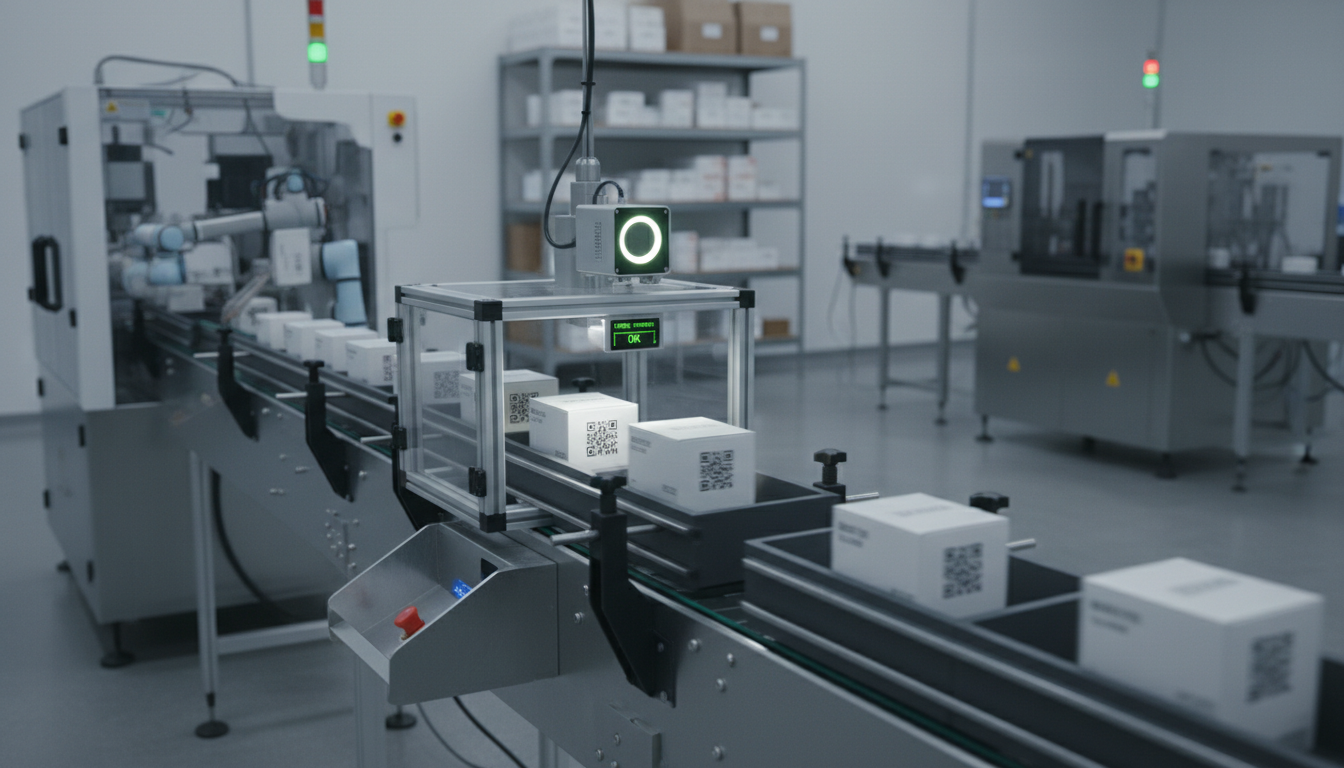
Verifying DSCSA packaging serialization requires validating both the physical print quality and the digital data exchange. For the physical print, you need to verify the 2D data matrix's print quality grade (A, B, C, or F). A Grade C or below is likely to fail scanning in high-speed distribution centers. We use integrated vision systems on our finishing lines that check every code for contrast, modulation, axial non-uniformity, and unused error correction.
"The biggest gap isn't printing the code—it's ensuring the data behind it is accurate and accessible in real-time," says Michael Chen, our Head of Pharmaceutical Compliance with 12 years of experience. "We've seen projects delayed by months because the serial number generation algorithm wasn't synchronized with the packaging line controller, creating duplicate or invalid GTINs."
The digital verification occurs through the Verification Router Service (VRS), a network that allows trading partners to request and receive product verification data. Your packaging partner must be able to generate serialized data in the correct format (often EPCIS XML) and transmit it to your VRS provider upon completion of each batch. A critical, often overlooked step is testing this data flow with a mock distributor like Cardinal Health or AmerisourceBergen before full production. We allocate two weeks in every project timeline specifically for this VRS integration testing.
Choosing Materials: How Does Cold Chain Affect Pharma Label Material Selection?
Pharma label material cold chain compliance is non-negotiable. Materials must withstand condensation, temperature cycling from -20°C to 25°C, and exposure to solvents like isopropyl alcohol during sanitization. A common, costly mistake is using a standard paper label or carton stock that delaminates or allows ink to smear. For primary packaging labels on vials or syringes, we recommend a synthetic facestock like polyethylene or polypropylene with a permanent acrylic adhesive. For folding cartons, a 300gsm or higher C1S (clay-coated one side) white board provides the necessary rigidity and moisture resistance.
| Material Factor | Standard Carton Board (250gsm) | Cold Chain Optimized Board (300gsm C1S) |
|---|---|---|
| Moisture Uptake (24h @ 95% RH) | 8-12% | 3-5% |
| Dimensional Stability (Δ after freeze-thaw) | ±1.5mm | ±0.5mm |
| Ink Adhesion (Tape Test after condensation) | 70-80% retention | >95% retention |
| Cost Premium | Baseline | +15-25% |
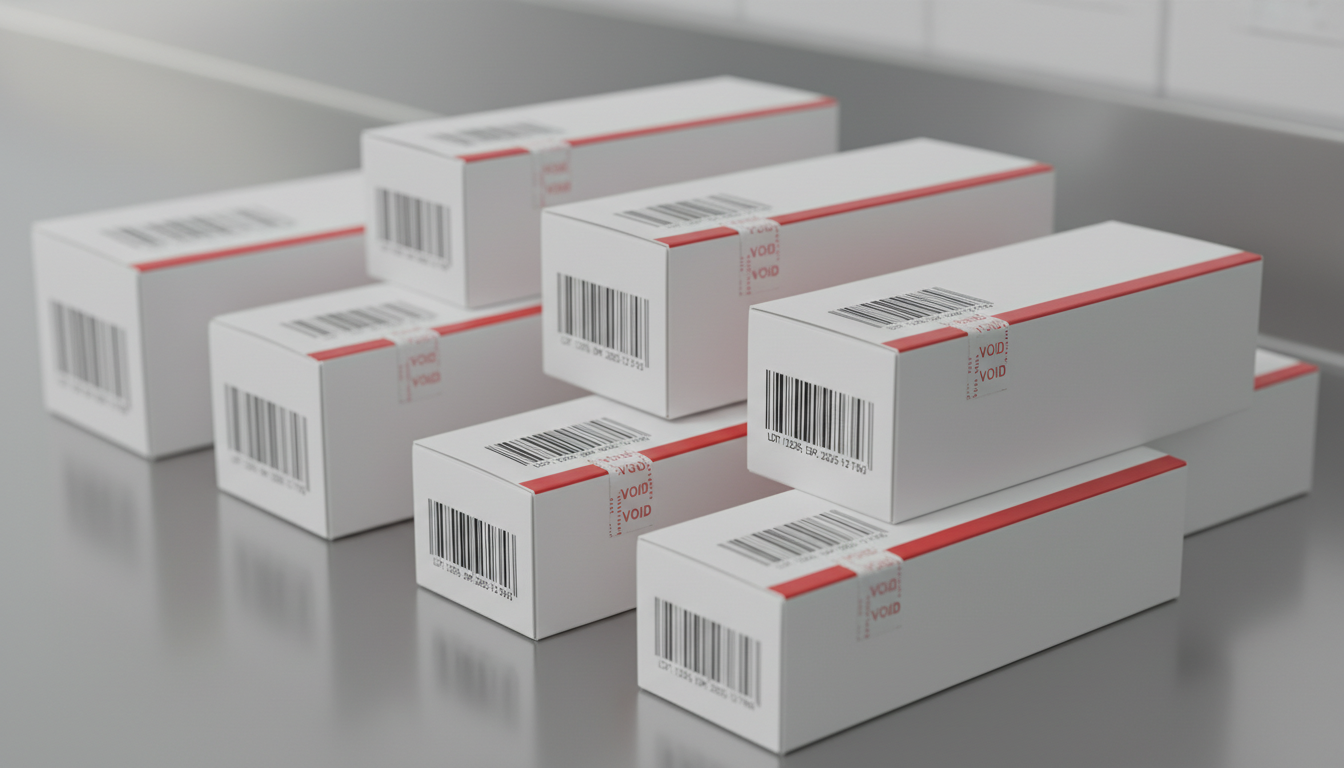
Tamper-evident features are also a DSCSA requirement for certain drug products. We implement these through destructible vinyl labels, perforated carton seals, or shrink bands with void patterns. The key is ensuring the tamper evidence does not obscure the 2D data matrix. We design the artwork so the breakable seal sits adjacent to, not over, the critical scanning area.
Printing Trade-Offs: Thermal Transfer vs. Digital for Variable DSCSA Data
The choice between thermal transfer and digital printing for applying variable DSCSA data (serial numbers, GTINs, lot/expiry) is a fundamental cost vs. flexibility decision. Digital printing, like with an HP Indigo, offers unparalleled flexibility with no plates or setup, ideal for short runs or frequent lot changes. However, the per-unit cost is high. Thermal transfer printing uses a heated ribbon to transfer ink from a foil onto the substrate. It has higher upfront costs for clichés (the metal plates holding the variable data) but a far lower per-unit cost at volume.
Decision: Thermal Transfer vs. Digital for Serialization
- If your annual volume is below 15,000 units or you have 10+ unique SKUs with low runs → Choose digital printing. The lack of cliché costs ($200-$500 per SKU) offsets the higher per-unit print cost ($0.35-$0.50).
- If your volume exceeds 15,000 units per SKU and data changes infrequently (e.g., quarterly lot rolls) → Choose thermal transfer. The cliché cost amortizes quickly, yielding a per-unit cost of $0.08-$0.15.
- If you require extreme durability (solvent resistance, autoclaving) or special colors (Pantone spot colors) → Choose thermal transfer. The resin-based ribbons offer superior chemical resistance and color opacity.
Here is the breakeven analysis: Assume digital printing costs $0.40/unit with no setup. Thermal transfer has a $450 cliché setup and $0.10/unit run cost. The breakeven point is $450 / ($0.40 - $0.10) = 1,500 units. However, you must also factor in the cost of a dedicated thermal transfer unit on the packaging line (~$25,000) if you don't have one. Therefore, the practical volume threshold for justifying the capital expenditure is closer to 15,000–20,000 units annually.
Implementation Framework: A 5-Step Plan for DSCSA Compliance by 2026
Successfully implementing DSCSA compliant pharmaceutical packaging requirements requires a phased approach starting at least 9 months before your product launch or compliance deadline. Rushed implementations lead to a 70% higher rate of artwork errors and VRS integration failures.
Phase 1: Data Architecture & GTIN Assignment (Months 1-2). Work with your regulatory team to secure your GS1 company prefix and define your GTIN logic. Determine your serial number generation method (randomized or sequential) and how this data will flow to your packaging partner. This phase is purely digital.
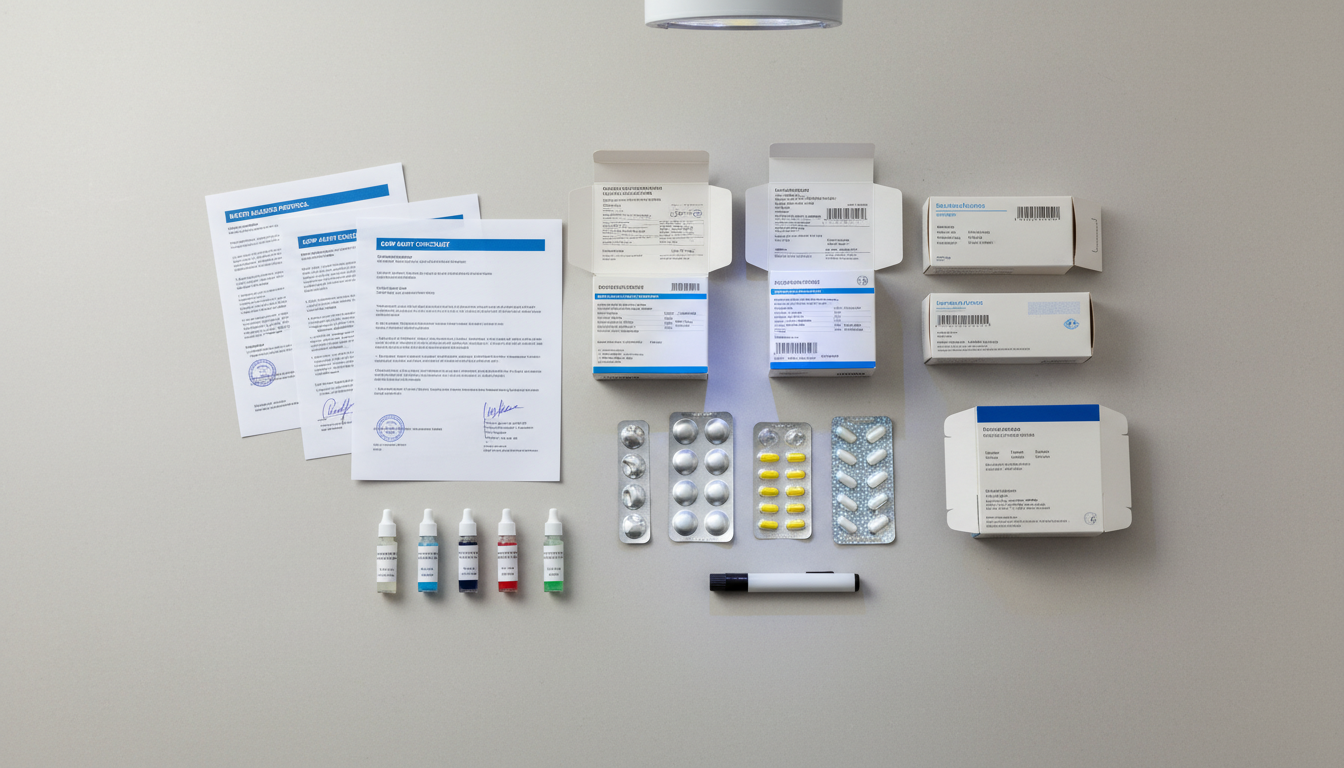
Phase 2: Artwork & Prototyping (Months 3-4). Redesign your packaging artwork to accommodate the 2D data matrix and human-readable text. Create physical prototypes using the intended materials and printing process. Conduct scannability tests with common handheld and tunnel scanners. We run these tests in our quality lab under simulated cold chain conditions.
Phase 3: Partner Qualification & Pilot Run (Months 5-6). Audit your print manufacturer's capabilities. Verify their ISO 9001:2015 certification (like our SGS-certified system since 2003) ensures process control. Conduct a pilot run of 500-1,000 units—this aligns with our standard MOQ—to test the full serialization and aggregation workflow end-to-end, including data submission to your VRS.