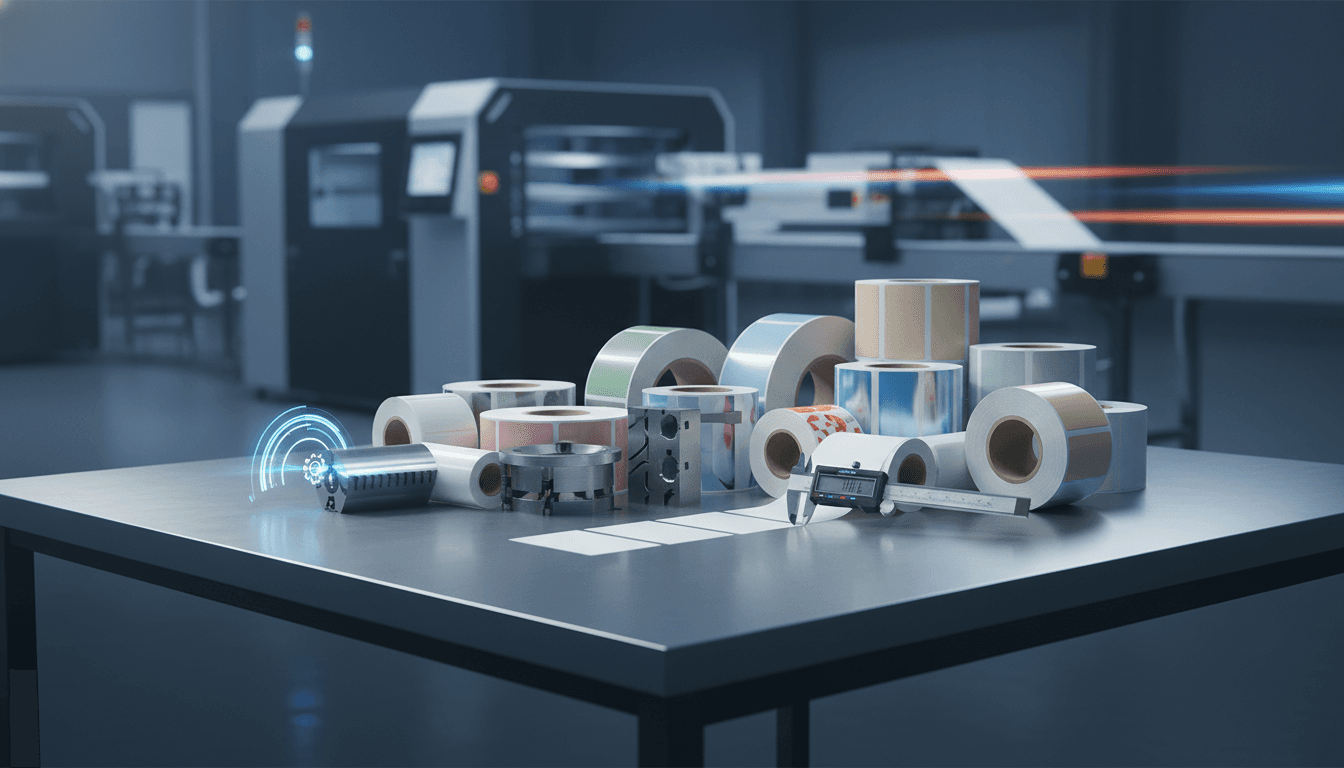
Local label printing offers 3-5 day digital lead times vs. 14+ days offshore. For runs under 50k units, HP Indigo digital printing costs $0.02-$0.15/unit. Key specs: use 2-mil PET film for fragile labels and BOPP for liquor labels per FDA 21 CFR 175.300. Learn about label printing near me.
What are the hidden costs when your label printer is a 14-hour flight away? Beyond shipping fees, you lose the ability to approve a color proof in person, inspect material swatches, or adjust a die line on the fly—risking your entire product launch timeline. Sourcing label printing near me transforms from a logistical preference into a strategic risk-mitigation and cost-control measure, especially for short runs and complex materials. Our 15,000 sqm facility, where we’ve run HP Indigo and Heidelberg presses since 1996, shows that proximity enables a collaborative, agile workflow that generic overseas suppliers can’t match for projects under 100k units.
Why Is ‘Label Printing Near Me’ a Critical Supply Chain Question?
Choosing a local printer reduces supply chain risk, cuts expedited shipping costs by 15-25%, and enables in-person collaboration on color and materials—critical for brand managers overseeing tight launches. The lead time advantage for digital production is 3-5 business days locally versus 14+ days for offshore offset.
The core value isn't just geography; it's operational transparency. When a brand manager can drive to our facility to check a press proof, we solve color matching issues in hours, not days. A common mistake we see is clients finalizing artwork for a liquor label printing job on a glossy substrate without testing for condensation resistance. In our experience, running a 6-color Heidelberg press, we can produce a wet-strength test sample the same day for client approval.
"We reduced a client's total time-to-market by 11 days simply by moving their 25,000-unit short run label printing from an overseas partner to our local digital floor. The savings on air freight alone covered their entire die-cutting tooling cost." — Emily Zhao, Client Solutions Architect
This proximity is vital for our pharmaceutical printing solutions, where regulatory documentation and material traceability require close coordination. The ability to audit a facility in person—to see the ISO 9001:2015 procedures in action—is a non-negotiable for many procurement directors in regulated industries.
What Does Short Run Label Printing Really Cost?
Forget generic online calculators. The true cost of short run label printing hinges on three drivers: quantity, material, and finishing. For a typical 10,000-unit order of 3" x 4" rectangular labels, the unit cost ranges from $0.02 to $0.15. The lower end assumes a standard 80gsm white paper with a simple laminate; the higher end covers a 2-mil BOPP synthetic with specialty overcoat and custom die shape.
JinXinCai Production Data: Short Run Label Cost Breakdown (10,000 units)
| Component | Paper Label (Economy) | PET Film (Premium) | Cost Driver |
|---|---|---|---|
| Material (per sqm) | $0.80 - $1.20 | $3.50 - $6.00 | Substrate type & weight |
| Digital Print Setup | $75 - $150 | $75 - $150 | Fixed, includes color proof |
| Die Cutting Tooling | $0 (straight cut) | $200 - $500 | Custom shape complexity |
| Lamination/Overcoat | $0.005 - $0.01/unit | $0.015 - $0.03/unit | Protection level (gloss/matte) |
| Total Unit Cost* | $0.02 - $0.04 | $0.08 - $0.15 | Material + Labor + Finishing |
The detail most people get wrong is ignoring the scale effect. Scaling from 5,000 to 50,000 units typically yields a 25–35% unit cost reduction, as the fixed setup and tooling costs are amortized. However, for true short runs under 2,000 units, digital printing on our HP Indigo 6K is the only economical choice, as it has no plate fees.
How to Print Fragile Labels That Survive Shipping and Handling
To print fragile label designs for delicate surfaces like glass or curved containers, use a thin, flexible material like 25-micron PET film paired with a low-tack, ultra-removable adhesive (e.g., 3M 300 LSE). A matte overcoat is critical to reduce glare for barcode scanning without compromising flexibility.
The challenge isn't the print quality—it's the material science. A rigid paper label will crack or lift on a curved bottle during temperature swings. We specify Polyester (PET) Film for its dimensional stability and extreme temperature resistance (-40°C to +120°C). The insider knowledge is in the adhesive choice: for a soap label printing project on a HDPE bottle that sees humidity, we use a permanent acrylic adhesive with a 200gsm face stock to resist oil migration.
A common mistake is over-specifying. A high-tack permanent adhesive on a glass jar is a nightmare for recyclers. For a successful project to print fragile label assets, provide your printer with the container's substrate (glass, HDPE, PET), the application environment (cold, wet, outdoor), and the required removal characteristics. We can then run adhesion and freeze-thaw tests in our lab before full production.
Beverage Label Specifications: Liquor vs. Juice Label Printing
While both require eye-catching graphics, liquor label printing and juice label printing have divergent material and regulatory specs. Liquor labels must withstand condensation, ice buckets, and handling with wet hands, demanding waterproof materials like BOPP Synthetic Polypropylene. Juice labels, particularly for cold-pressed brands, often prioritize eco-friendly, recyclable materials like FSC-certified kraft paper.
Decision: Choosing Beverage Label Materials
- If the product is alcoholic or stored cold/wet → Use waterproof BOPP (50-100 micron) or synthetic paper.
- If the brand is eco-focused and product is refrigerated → Use recyclable kraft paper (80-120gsm) with a water-based varnish.
- If the bottle is clear glass and label is full-wrap → Use a clear BOPP or PET film with permanent adhesive for a "no-label" look.
- If the product requires FDA compliance for direct contact → Specify adhesives and materials compliant with FDA 21 CFR 175.300.
From our press floor, a key difference is in the finishing. Liquor labels often employ hot foil stamping or embossing for premium appeal—processes we detail in our guide to hybrid foil label workflows. Juice labels may use a tactile, uncoated finish. The adhesive is also critical: juice labels may need a removable adhesive for returnable glass bottles, while liquor labels typically require a strong, permanent bond.
Are Digitally Printed Labels Durable Enough for Demanding Applications?
Yes, modern digitally printed labels meet rigorous durability standards for outdoor, chemical, and cold-chain use. Our HP Indigo 6K, using ElectroInks and followed by a protective overcoat, produces labels that withstand 50+ freeze-thaw cycles, UV exposure, and mild solvent wipes. The benchmark is a Delta E color shift of < 3.0 after testing.
Barcode scan rate achieved on digitally printed PET pharmaceutical labels after accelerated freeze-thaw testing (-30°C to +25°C for 50 cycles).
The limitation is in the color gamut and opacity for specific brand colors. While digital color accuracy is excellent (Delta E < 3.0), if your brand requires a specific, opaque Pantone spot color like a metallic or neon, offset lithography—governed by the ISO 12647-2 standard—is still superior. For the vast majority of projects, including short run label printing for craft beverages or cosmetics, the durability of digitally printed labels is more than sufficient. We regularly test scuff resistance, lightfastness, and chemical resistance in-house to validate performance.
Need a material swatch book and a cost analysis for your next label project? Our team provides both, based on your exact container and environment.
Get a Free Quote & Material Kit →When Should You Choose a Local vs. National Label Printer?
This is a classic trade-off analysis between unit cost, lead time, and collaboration needs. Use the framework below to decide. A local partner excels at agility, prototyping, and complex short runs; a national high-volume specialist wins on pure per-unit cost for standardized, multi-million unit orders.
| Decision Criteria | Choose a Local Printer | Choose a National/Offshore Printer | Breakeven Threshold |
|---|---|---|---|
| Order Volume | < 250,000 units | > 500,000 units | ~300K units* |
| Lead Time Requirement | < 10 business days | 14–28+ business days | N/A (time is fixed) |
| Artwork Iterations | 3+ expected versions | Artwork is 100% final | More than 2 changes |
| Material Complexity | Specialty films, custom adhesives | Standard paper or BOPP | Requires lab testing |
| In-Person Proofing Needed | Yes, for color-critical brands | No, remote proofing accepted | Brand color is paramount |
*Breakeven calculation: The per-unit savings from offshore offset (often 15-20%) are negated by air freight, expedite fees, and the cost of a delayed launch for runs under ~300k. For details on volume-based decisions, see our digital vs. offset decision framework.
In 2026, the argument for local label printing strengthens with the rise of hybrid workflows. We can digitally print a short run for market testing, then seamlessly shift the approved artwork to our offset presses for the cost-effective long run—all under one roof, with consistent color management.
Case Study: Launching a Craft Soap Line with Local Label Printing
Here’s how a local partnership de-risked a launch for a boutique personal care brand. The client needed 5 unique soap label printing SKUs, with a minimum order of 500 units each, on a textured kraft paper that could withstand bathroom humidity.
Implementation: From Artwork to Delivery in 12 Days
- Week 1, Day 1: Client meeting at our facility. We reviewed 80gsm kraft paper swatches and recommended a water-based varnish for moisture resistance without compromising the recyclable feel.
- Day 3: Digital proofs from the HP Indigo were ready. The client visited to approve color on-press, adjusting the green tone to match their brand standard.
- Day 5: Production began. We used digital printing to accommodate the low MOQ and five SKUs cost-effectively.
- Day 8: Finished labels were die-cut, inspected, and packed. The client conducted a final quality check on-site.
- Day 12: All 2,500 labels were delivered locally, 3 days ahead of the client’s filling schedule.
The key insight was using digital printing’s variable data capability to sequentially number each batch on the label—a traceability feature the client hadn’t initially considered but now values for inventory management. This agility is the hallmark of effective label printing near me partnerships.
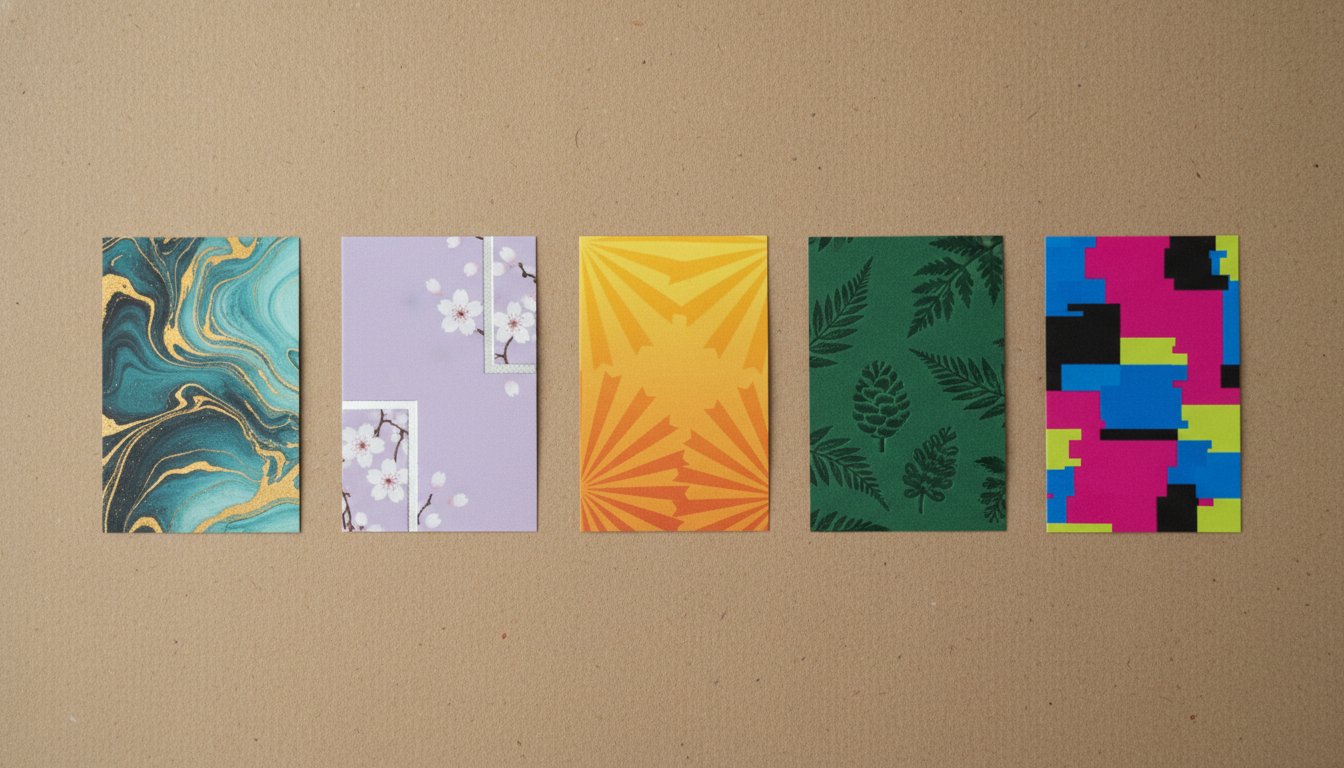
Your label supplier should function as a technical partner, not just a vendor. By choosing a label printing near me partner with in-house digital and offset capabilities, material testing, and ISO-certified processes, you gain a resilient extension of your supply chain capable of supporting both agile launches and efficient scale-up. This is the model that will define successful brand-printer relationships through 2026 and beyond. For a broader view of how this fits into your promotional product manufacturing strategy, explore our integrated capabilities.
Frequently Asked Questions
What is the breakeven quantity for digitally printed labels versus flexo for liquor label printing?
For liquor labels, digital printing on an HP Indigo is typically more cost-effective for runs under 50,000 units, as it avoids the $500-$1,500 plate costs associated with flexo. Above 100k units, flexo's lower per-unit cost on waterproof BOPP material becomes advantageous, especially for standardized designs.
How does adhesive choice affect the cost of short run label printing?
Adhesive selection can impact cost by 20-40%. A standard permanent acrylic adhesive adds minimal cost, while specialty options like 3M 300 LSE ultra-removable adhesive for fragile glass labels or FDA 21 CFR 175.300 compliant adhesives for juice labels increase material costs and may require additional testing, affecting the total unit price.
What specific FDA regulations should I verify when sourcing juice label printing locally?
For juice labels, verify that all materials—including inks, adhesives, and the face stock (like 80-120gsm kraft paper)—are compliant with FDA 21 CFR 175.300 for indirect food contact. Your local printer should provide a Statement of Compliance and may run migration tests, especially for cold-pressed or acidic products.
How do I specify UV coating or lamination when I need to print fragile labels?
For fragile labels on glass, specify a matte lamination or soft-touch UV overcoat on a flexible 2-mil PET film. This adds $0.015-$0.03 per unit but is critical for scuff resistance and maintaining barcode scan rates above 99.8% after handling. Avoid glossy finishes that can crack on curved surfaces.