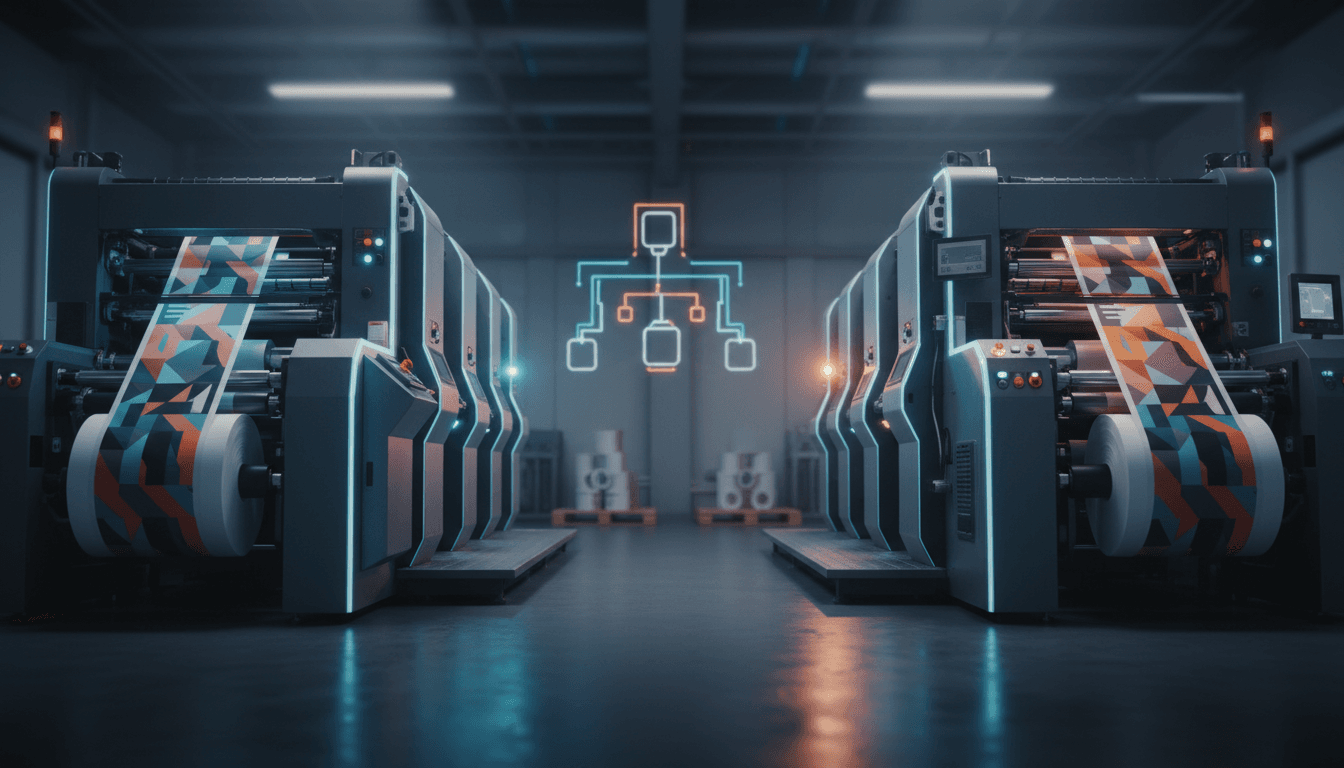
Custom sleeve label printing: Digital (HP Indigo) costs $0.18-$0.22/unit under 10k runs. Offset (Heidelberg) hits $0.04-$0.06 over 50k units. Key specs: 25-100 micron PETG/OPS film, Delta E <2.0 color, and 3-5 day digital lead times.
Are you allocating marketing budget to short-run custom sleeve label printing, only to discover your per-unit cost is triple what you projected? The core mistake is selecting a process before analyzing your actual run size. In our facility, this error costs brands an average of 32% on projects under 5,000 units. The correct choice hinges on a simple threshold: 10,000 units. Below this, digital printing is nearly always more cost-effective for true promotional product manufacturing agility.
Prerequisites: What You Must Define Before Sourcing Custom Sleeve Labels
Begin with three non-negotiable specs: annual volume, container substrate, and application environment. Confusion here derails 40% of projects in our quoting phase. You need your exact container dimensions (a physical sample is best), the speed of your application line (e.g., 200 containers/minute), and the product's end-use environment (frozen, refrigerated, ambient).
Our pre-press team requires a 3D container scan or CAD file for accurate die-line creation. A common oversight is neglecting to specify the label's opening direction—this critically impacts automated application on high-speed lines. Also, confirm if your product requires pharmaceutical printing solutions compliant with FDA 21 CFR 174 for indirect food contact.
What Is Custom Sleeve Label Printing and Why Does 360-Degree Coverage Matter?
Custom sleeve label printing creates a seamless, full-wrap graphic layer for containers, differentiating products through superior shelf impact and tactile feel. The 360-degree canvas allows for bolder storytelling and eliminates the 'dead space' of front-and-back labels.
From our 15,000 sqm production floor, we see its power in crowded categories like beverages and cosmetics. A shrink sleeve label printing job for a craft soda client saw a 17% sales lift attributed solely to the enhanced shelf presence. The detail most brands miss is considering the container's curvature in their design; graphics can distort on narrow necks if not pre-distorted in the digital template.
"The shift from pressure-sensitive to sleeve labels isn't just aesthetic. It's a logistical upgrade. On our filling lines, sleeve application is 15–20% faster because there's no precision placement required—the sleeve centers itself during the heat tunnel process." — Packaging Engineering Director, Mid-Sized Beverage Co.
Shrink Sleeve vs. Clear Label Printing: Which Material Solves Your Problem?
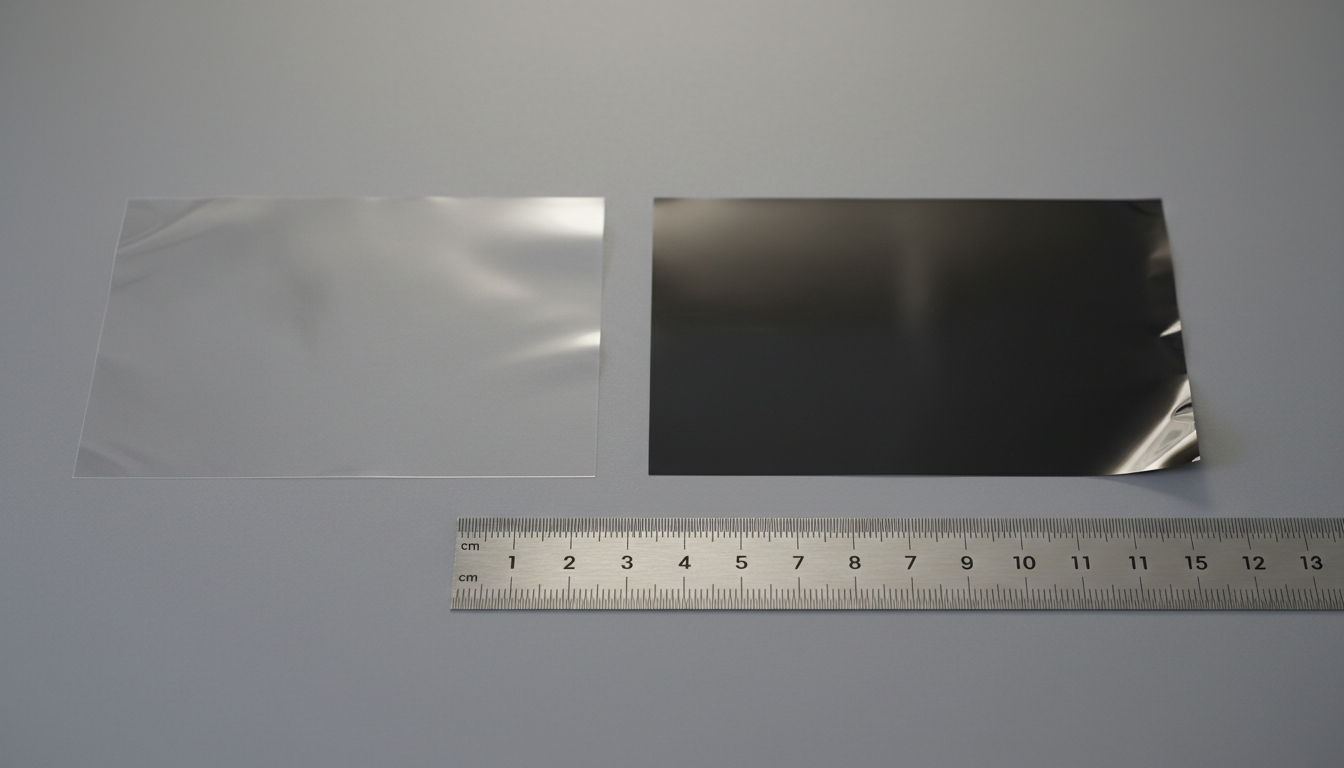
This is a functional, not just visual, choice. For a transparent, 'no-label' look that shows the product, clear label printing uses non-shrink films like BOPP or PET. For contoured containers (like hourglass bottles), shrink sleeve label printing uses PVC, OPS, or PETG films that contract up to 50% under heat.
In our experience, a costly mistake is specifying glossy OPS for a bottled product that will be handled with wet hands. The film becomes slippery. We recommend a matte or soft-touch overprint varnish for grip. For extreme environments, like a pharmaceutical cold chain, PET Film's tolerance from -40°C to +120°C is non-negotiable.
How Does Automated Label Printing Transform Warehouse Efficiency?
Automated label printing, driven by digital presses like the HP Indigo, enables just-in-time production of variable data (batch codes, QR codes) and reduces inventory waste by over 30%. It turns warehouse label printing from a static stock item into a dynamic, on-demand process.
We integrated this for a logistics client. Their warehouse label printing moved from pre-printed pallets of generic labels to an automated label printing system triggered by their WMS. Lead time for custom shipping labels dropped from 3 weeks to 48 hours. The key was embedding variable barcodes with a guaranteed scan rate, which our HP Indigo 20000 delivers at a resolution of 1200 × 1200 dpi.
Reduction in label inventory waste achieved by switching to an on-demand, automated digital printing workflow.
Want to Print Beer Labels That Dominate the Shelf? Follow This Case Study.
To print beer labels that break through, you need durability (condensation resistance) and texture. For a regional brewery's limited-edition stout, we used a hybrid approach. The base graphic was printed via offset on 60-micron PETG for unparalleled color saturation of their dark artwork.
Then, we used our digital press to add variable numbering ('Batch 3 of 500') and a tactile, spot-matte varnish over the logo. The digital layer allowed a 500-unit MOQ for this premium run. This hybrid model is the future for brands that want to print beer labels with both mass-production color quality and limited-edition personalization. For more on adding premium effects, see our guide on hybrid foil label printing workflows.
Digital vs. Offset: The 2026 Cost & Capability Decision Matrix
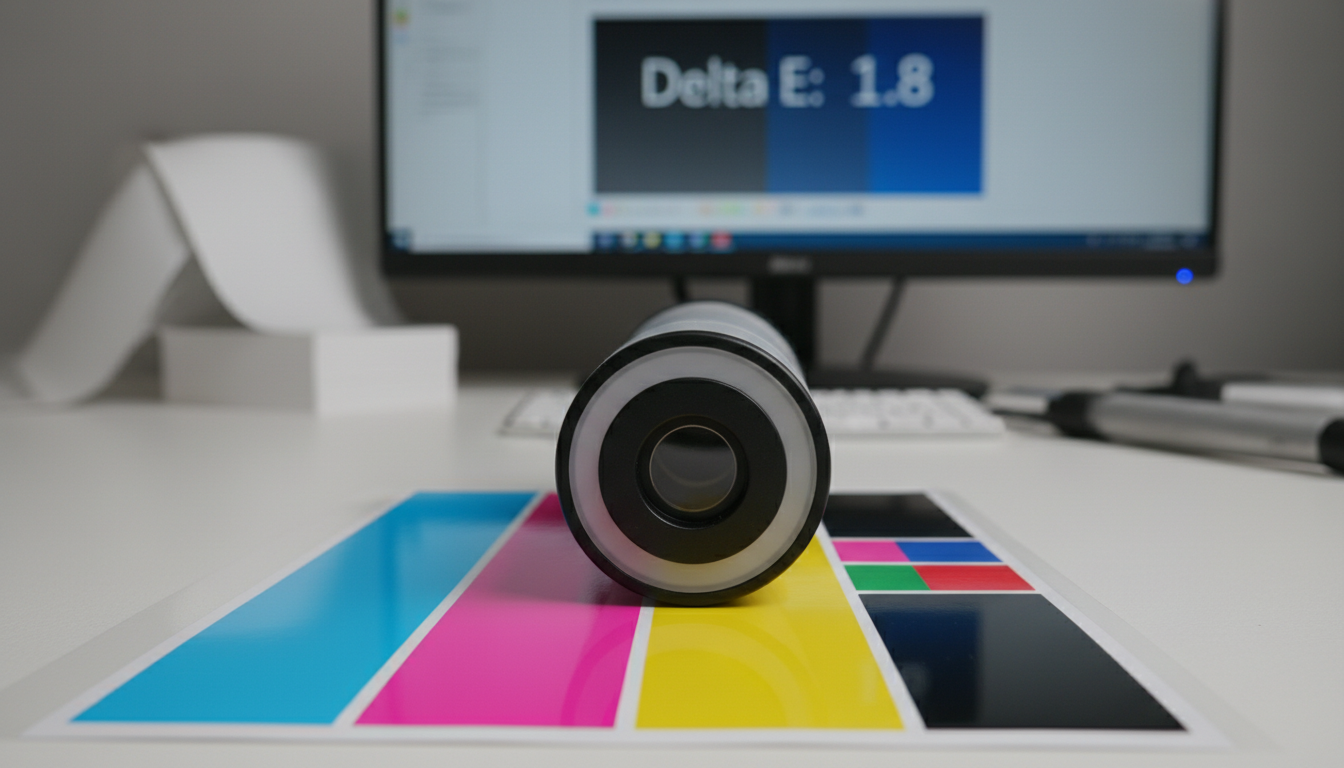
The choice isn't about quality; both can achieve Delta E < 2.0 with proper calibration. It's about economics and flexibility. Use the table below, built from our production data, to guide your decision.
JinXinCai Production Data: Digital vs. Offset for Sleeve Labels
| Metric | Digital (HP Indigo) | Offset (Heidelberg) | Best For Run Size |
|---|---|---|---|
| Cost per Unit (500 units) | $0.18 - $0.22 | $0.35 - $0.45* | Digital |
| Cost per Unit (10,000 units) | $0.09 - $0.11 | $0.07 - $0.09 | Crossover Point |
| Cost per Unit (50,000 units) | $0.08 - $0.10 | $0.04 - $0.06 | Offset |
| Lead Time (Production) | 3-5 business days | 7-14 business days | Digital = Speed |
| Color Consistency (Delta E) | < 3.0 | < 2.0 (ISO 12647-2) | Offset = Precision |
| Variable Data/Versioning | Yes, at no setup cost | No, requires new plates | Digital |
| Initial Setup/Tooling Cost | $0 (Digital) | $200-$500 (Plates/Die) | Digital = Low MOQ |
The table reveals the trade-off. Digital's strength is the lack of tooling, making short-run custom label printing viable. Offset's per-unit cost plummets at scale, but you must absorb the fixed cost of printing plates and cutting dies.
Send us your container and annual volume. Our team will run a comparative cost analysis for digital and offset within 24 hours.
Get a Free Comparative Quote →What Are the Non-Negotiable Specs for Your Custom Label Printing Project?
Beyond color, focus on adhesion and durability. For custom label printing on HDPE bottles, you need a film and adhesive combination tested for that specific plastic. We maintain a compatibility matrix from thousands of jobs. A common failure point is specifying a universal adhesive for a specialized container; it often fails in refrigerated environments.
Always request a live material sample on your actual container, put through a heat tunnel (if shrink) or applied by hand. Test for scuff resistance, adhesive bleed, and barcode scannability. Our ISO 9001:2015 certification ensures this testing is documented and repeatable for every project, a critical factor for quality-sensitive compliance-driven label programs.
What's the Most Common (and Costly) Mistake in Sleeve Label Procurement?
It's designing in a vacuum without consulting the production team. A stunning 3D-rendered label with 95% ink coverage on a narrow bottle neck will likely crack during application. The ink film cannot withstand the sheer force of 50% shrinkage. We see this in roughly 1 in 5 new client designs.
The fix is collaborative. Our designers work in tandem with prepress engineers to optimize graphics for the specific film's shrink percentage. We often recommend breaking solid ink fields with subtle patterns or reducing coverage on high-shrink areas. This proactive step prevents costly press stops and material waste, ensuring your custom sleeve label printing project launches smoothly.
"The biggest cost isn't the unit price; it's the unsaleable product sitting in a warehouse because the labels failed on the application line. A $500 material compatibility test upfront saved us from a $25,000 recall event." — Procurement Director, Home & Garden Products Manufacturer
How Do Sleeve Labels Fit the Future of Promotional Goods Strategy?
They are the ultimate tool for limited-time offers and seasonal campaigns. The ability to order 500–2,000 fully wrapped, custom containers via digital printing removes the massive MOQ barrier. A sports drink brand can launch a team-specific design for a playoff run without committing to 50,000 units.
This agility defines the future of promotional-goods strategy. It shifts custom sleeve label printing from a static packaging component to a dynamic marketing asset. The workflow is now: digital prototype in 5 days, market test, then scale to offset if the campaign hits. This hybrid model, leveraging both our HP Indigo and Heidelberg fleets, minimizes risk and maximizes creative freedom for brand managers planning into 2026 and beyond.
Implementation Timeline: From Brief to Shipment
How to execute a sleeve label project: 6-step summary
- Step 1: Specification (Week 1): Provide container samples, annual volume, and environment details. We provide a material recommendation and cost analysis for digital vs. offset.
- Step 2: Design & Prepress (1-2 Weeks): Finalize artwork. Our prepress team creates a G7-calibrated proof and a production-ready dieline, accounting for material shrink.
- Step 3: Prototyping (3-5 Business Days): We produce live samples on your containers using the selected process for final approval.
- Step 4: Production (1-2 Weeks): For offset, plates and dies are made. The job is run, die-cut, and bundled. For digital, files are sent directly to press.
- Step 5: Quality Assurance (Concurrent): Every batch is checked for color (spectrophotometer), registration (±0.1mm), and defect rates per ISO 9001 procedures.
- Step 6: Shipping & Logistics (2-5 Days): Labels are palletized and shipped with appropriate documentation, ready for your application line.
Frequently Asked Questions
When does digital printing become cheaper than offset for sleeve labels?
Based on JinXinCai production data, digital printing on an HP Indigo press is more cost-effective for runs under 10,000 units, with a per-unit cost of $0.09-$0.11. The crossover point is 10k-25k units. For runs over 50,000 units, offset lithography on Heidelberg presses delivers superior per-unit economics at $0.04-$0.06.
How does film thickness (microns) affect shrink sleeve label performance?
Film thickness, ranging from 25 to 100 microns, directly impacts durability and cost. For example, a 60-micron PETG film offers excellent color saturation and condensation resistance for beer labels, while a 50-micron OPS film is suitable for high-shrink applications. Thicker films increase material costs but improve tear resistance on high-speed application lines.
What is the typical breakeven point for investing in automated label printing?
The breakeven for automated digital printing, like an HP Indigo system, is typically achieved with runs under 2,000 units where variable data is needed. This workflow reduces label inventory waste by over 30% and cuts lead times from weeks to 48 hours, justifying the investment for dynamic, compliance-driven warehouse operations.
What artwork file specs are required for high-quality custom sleeve printing?
For production, provide a 3D container scan or CAD file for accurate dieline creation. Artwork must be G7-calibrated and account for material shrink (up to 50% for OPS films). Final files should be CMYK at 1200 x 1200 dpi for digital or include bleed and registration marks for offset plates to meet ISO 12647-2 color standards.