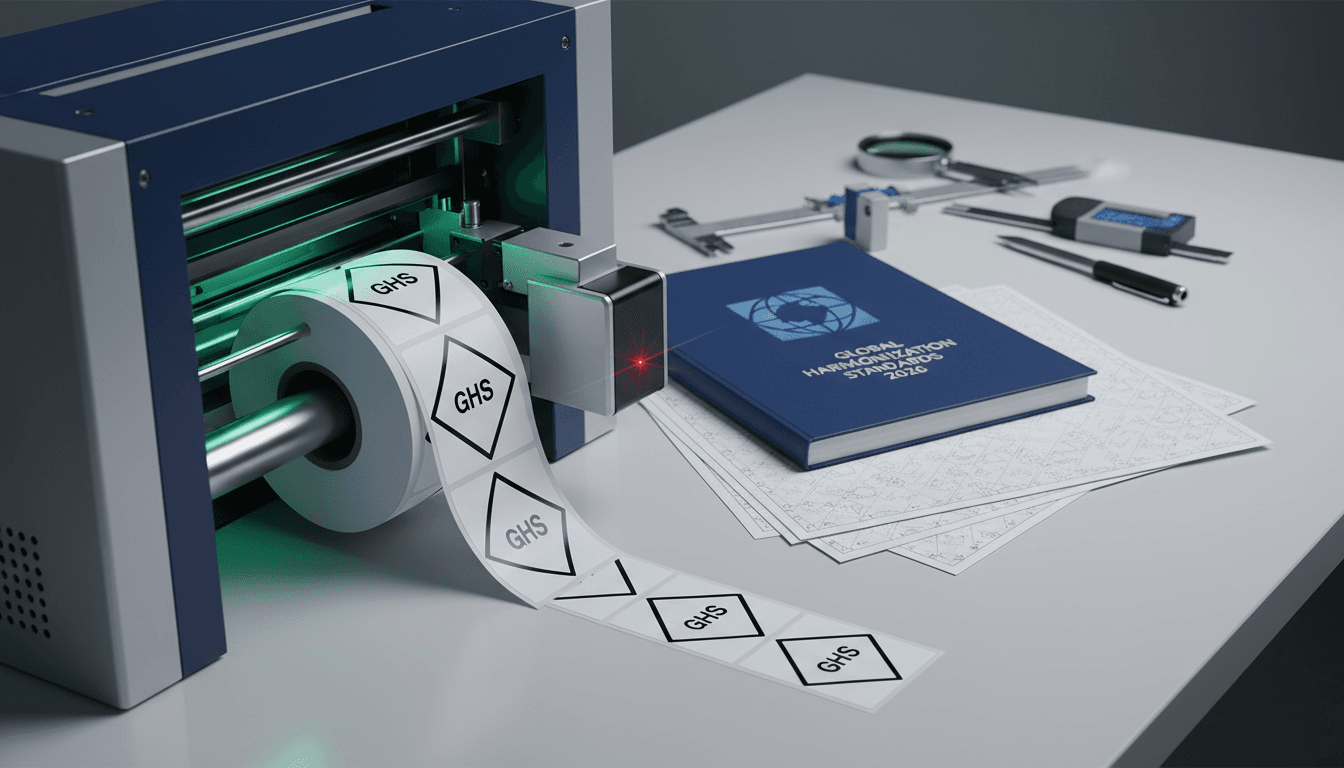
Avoid $15,625 OSHA fines. Hybrid GHS label printing uses HP Indigo digital for runs under 5,000 and offset/flexo for volumes over 25k. Lithium battery labels require 75-micron PET film per UN 38.3. Integrate UPC barcodes at 1200 dpi.
Did you know the average OSHA fine for a GHS label printing violation in 2023 was $15,625 per incident? For manufacturers of chemicals, batteries, and cleaners, this isn't just a compliance checkbox—it's a direct threat to your bottom line and supply chain velocity. Treating hazard communication as a last-minute task leads to non-compliant pictograms, adhesive failures in chemical environments, and shipment holds. In 2026, your promotional product and packaging strategy must integrate compliance printing from the start.
What Are the Most Common (and Costly) GHS Label Printing Mistakes?
The most costly mistakes are using incorrect materials that degrade in chemical environments and failing to maintain precise color for pictograms. This leads to unreadable warnings, failed audits, and OSHA fines starting at $15,625 per violation.
From our pre-press checks, the number one error is material mismatch. A paper label with a standard acrylic adhesive will simply dissolve when applied to a solvent bottle. We specify chemical-resistant facestocks like BOPP Synthetic Polypropylene and aggressive permanent adhesives like 3M 300LSE for such duty.
Average initial penalty per OSHA violation for Hazard Communication Standard (1910.1200) in fiscal year 2023.
The second pitfall is color inaccuracy. A faded or off-hue flame pictogram is non-compliant. Our Heidelberg presses are calibrated to ISO 12647-2 with a Delta E < 2.0, ensuring the red in your pictogram matches Pantone 186 C every time. The detail most overlook? Specifying UV laminates for outdoor chemical drums—without it, sun exposure bleaches critical hazard information in months.
Flexo vs. Digital Label Printing: Which is Right for Your GHS Compliance?
Choose flexo label printing for long runs (>25,000 units) requiring extreme chemical/abrasion resistance. Choose digital for short runs (<5,000), complex versioning, or when rapid compliance updates are critical. A hybrid approach often delivers the optimal balance of cost and flexibility.
Flexographic printing excels in durability. Using photopolymer plates and high-viscosity inks, it lays down a thicker, more resistant film. This is mandatory for labels on industrial chemical drums that face weather, abrasion, and frequent handling. The trade-off is longer lead times (10–14 days) and higher upfront plate/tooling costs (~$500).
Our HP Indigo Digital Press, conversely, has no plates. We can produce a compliant, digitally printed label batch in 3–5 days, perfect for initial product launches or urgent regulatory updates. The limitation? While digital inks have advanced, they may not match the absolute chemical resistance of cured flexo inks on certain substrates. For most warehouse and transport environments, however, they are more than sufficient.
| Technology | Best for Run Size | Lead Time | Cost per Unit (10k units) | Key Strength for GHS |
|---|---|---|---|---|
| Digital (HP Indigo) | 1 – 5,000 | 3–5 business days | $0.08 – $0.12 | Zero versioning cost; rapid updates |
| Flexographic | 25,000 – 1M+ | 10–14 business days | $0.03 – $0.06 | Maximum durability/chemical resistance |
| Offset Lithography | 5,000 – 500,000 | 7–12 business days | $0.04 – $0.07 | Superior color accuracy for pictograms |
"We switched to a hybrid model for our 12 regional GHS variants. Digital handles the low-volume EU-specific versions, while offset runs the core 100k unit batch. Our audit compliance is 100%, and we saved 35% versus printing all versions offset." — Client Solutions Architect, JinXinCai Printing
How Do You Print a Lithium Battery Label That Meets Global Transport Standards?
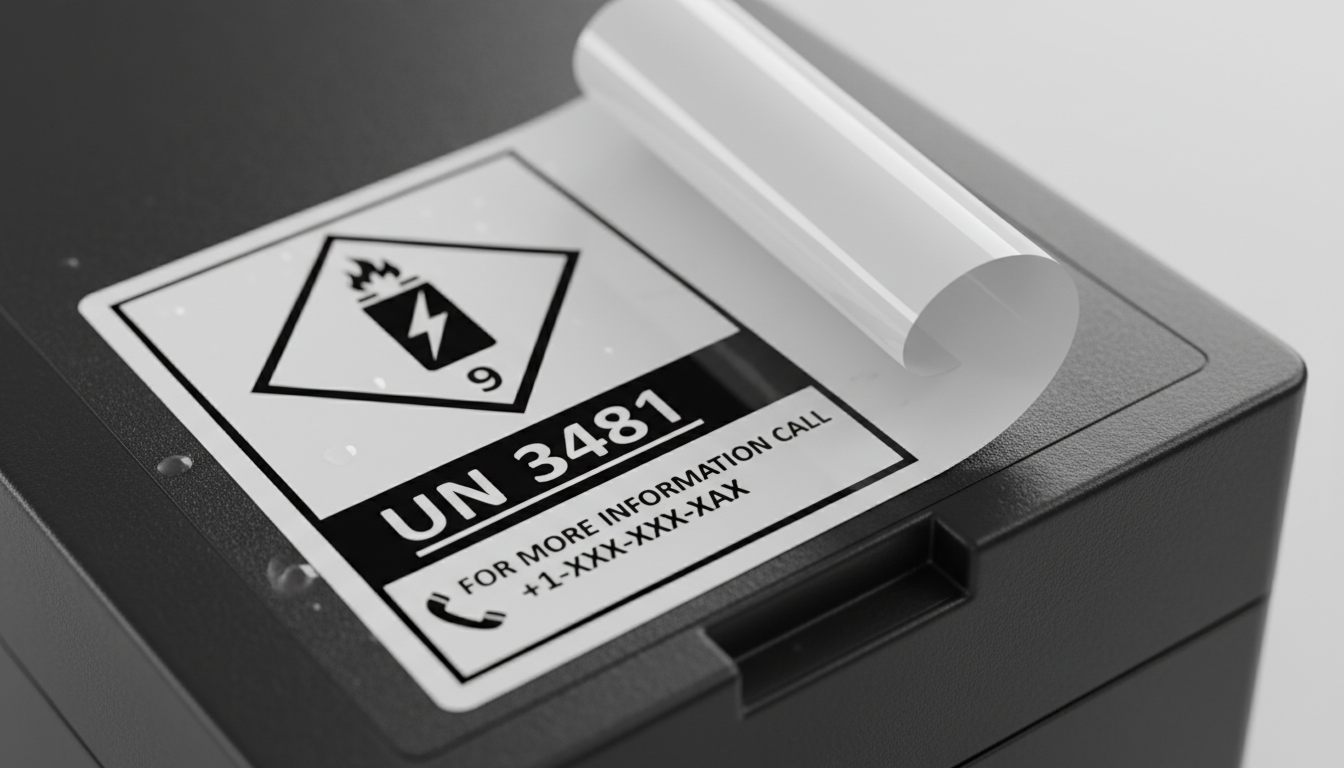
To print a lithium battery label that passes IATA and UN 38.3 regulations, material selection is non-negotiable. The label must survive extreme temperatures from -40°C to +120°C without cracking, lifting, or becoming illegible. Ordinary paper or even vinyl will fail.
How to Specify a Compliant Lithium Battery Label: 4-Step Checklist
- Material: Specify a 50–75 micron white polyester (PET) film facestock. PET provides the mandatory dimensional stability and temperature range.
- Adhesive: Use a permanent, high-tack acrylic adhesive engineered for low-surface-energy plastics common on battery casings.
- Printing & Legibility: Ensure the Class 9 hazard pictogram, UN number, and telephone number are printed at a minimum 1200 x 1200 dpi resolution and over-laminated for abrasion resistance.
- Testing Validation: Require your printer to provide a Certificate of Compliance stating materials meet the relevant sections of UN Model Regulations, Rev. 21 for transport of dangerous goods.
In our facility, we run lithium battery labels on our HP Indigo for prototype validation (checking adhesive performance) before moving to high-volume offset production. This two-step process catches potential application failures before committing to 50,000 labels. The polyester (PET) film is the critical entity for a successful lithium battery label, a relationship our material engineers verify on every order.
Pre-Printed Labels vs. On-Demand: When Does Each Strategy Save Money?
Stockpiling pre printed labels seems efficient, but warehousing costs and the risk of obsolete inventory can erase the upfront per-unit savings. The breakeven analysis is straightforward.
Pre-printing via offset or flexo becomes cost-effective when your monthly usage consistently exceeds the minimum order quantity (MOQ), typically 5,000–10,000 units. The unit cost can be 25–35% lower than digital. However, you must account for a $200–$500 die tooling charge and 2-4 weeks of lead time.
JinXinCai Production Data: Total Cost of Ownership Analysis
| Cost Factor | Pre-Printed (Offset, 50k units) | On-Demand (Digital, as-needed) | Notes |
|---|---|---|---|
| Unit Production Cost | $0.045 | $0.095 | At 50k volume |
| Tooling/Setup | $450 (one-time) | $0 | Die and plate costs |
| Monthly Warehousing | $1.50 per 1000 labels | $0 | Climate-controlled, palletized |
| Risk of Obsolescence | High (regulatory change) | None | Major cost variable |
| Lead Time for Reorder | 14 days | 3 days | From approved artwork |
The hidden cost of pre printed labels is obsolescence. A single OSHA update can render a warehouse pallet worthless. Our recommendation for 2026 is a hybrid core: pre-print your high-volume, stable SKUs via offset, but keep low-volume or volatile SKUs on digital on-demand.
Get a detailed TCO analysis for your specific GHS label volumes and compliance risk profile.
Get a Free Quote →Why is Custom Sleeve Label Printing Critical for Chemical Container Safety?
For hazardous liquids in non-standard or rounded containers, a custom sleeve label printing approach is often the only way to achieve 360-degree hazard communication and secure fit. A poorly applied wrap can peel, obscuring critical first aid information.
The process starts with precise container templating. We then print on BOPP Synthetic Polypropylene—its inherent waterproof and chemical-resistant properties make it ideal for labs or industrial settings. Using our large-format UV flatbed printer, we can produce single-piece sleeves up to 2,500mm, eliminating seams that are potential failure points.
"For a concentrated acid line, we moved from a front-and-back label to a full custom sleeve label. This provided complete hazard coverage and reduced application errors on the filling line by 90%." — Packaging Engineer, Specialty Chemical Manufacturer
The key to a successful sleeve is material memory and seam strength. The BOPP Synthetic Polypropylene sleeve must contract snugly after application and be sealed with a solvent-bonded seam, not just adhesive. This ensures the label survives both chemical splash and physical handling throughout the container's lifecycle.
What Should You Look for in Label Printing Services in NYC?
Choosing label printing services in NYC (or any major logistics hub) requires evaluating three factors beyond geography: regulatory expertise, true speed-to-market, and material sourcing agility. Local is only an advantage if it brings these.
First, demand proof of compliance expertise. The partner should readily cite OSHA 29 CFR 1910.1200 and ANSI Z535.4 standards. Our ISO 9001:2015 certification, audited by SGS, provides our clients with an auditable trail for their own OSHA compliance, a critical entity relationship for risk management.
of packaging professionals cite "regulatory knowledge" as the top criterion when selecting a new label printing partner, above cost and lead time.
Second, verify their capacity for true rapid turnaround. A shop with both digital and offset capabilities can pivot. We've taken files for a print lithium battery label job at 4 PM and had digital proofs approved by 10 AM the next day for a client facing a port hold. Finally, assess their material inventory. A robust stock of food-grade films, chemical-resistant BOPP, and polyester ensures they aren't waiting on a supplier to start your job.
How to Seamlessly Integrate UPC Labels with GHS Hazard Information?
Combining scannable UPC labels with legally mandated GHS information on one label face saves application time and reduces errors. The technical challenge is maintaining barcode precision (per ISO/IEC 15416) while printing complex, multi-color hazard pictograms.
The common mistake is designing the barcode in a vector program without considering the final print technology's resolution. To print UPC labels that grade "A," the bars must have sharp edges and high contrast. On our offset presses, we achieve this with precise registration (±0.1mm). On digital, the 1200 x 1200 dpi native resolution of the HP Indigo is critical.
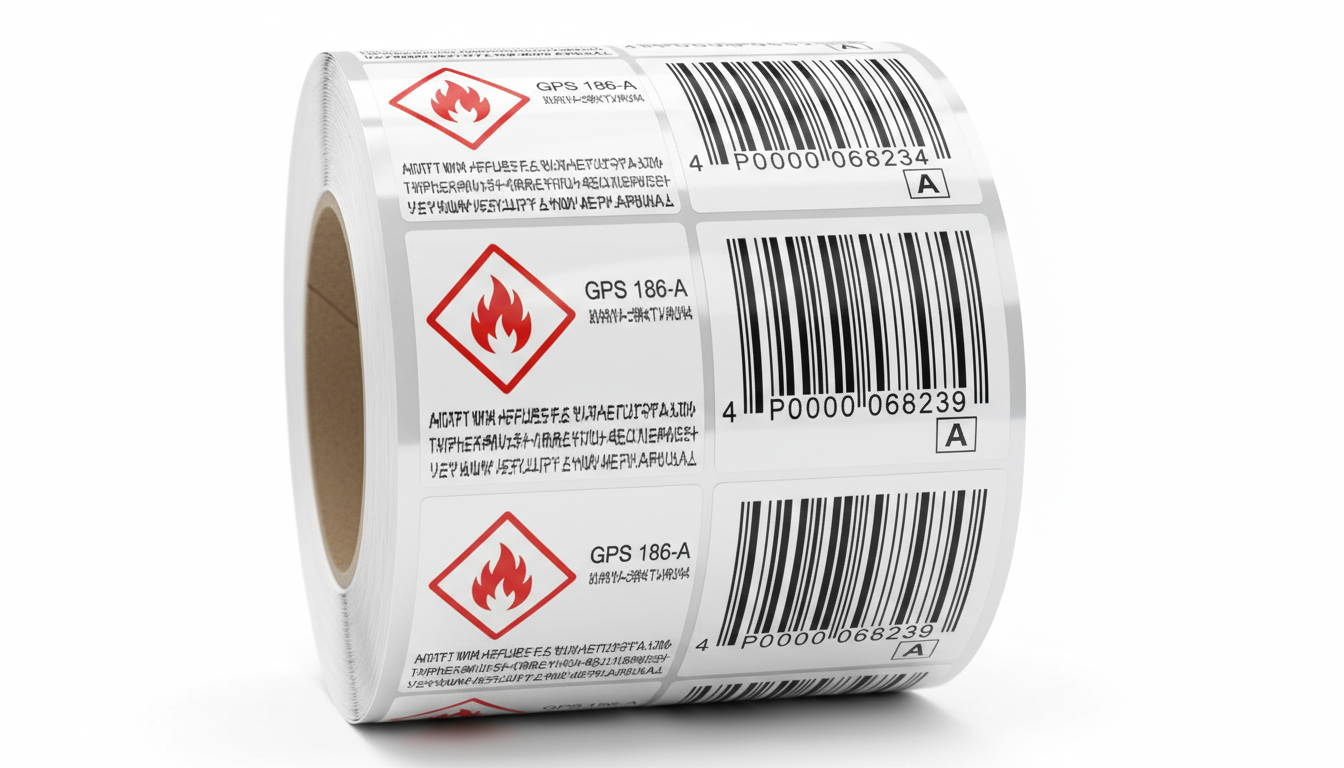
Our prepress team always outputs a digital proof with a verification scan for the client. We recommend placing the UPC/GS1 data in a consistent zone separate from the GHS pictograms, often along the bottom or top edge. Using variable data digital printing, we can even serialize barcodes for track-and-trace within a high-volume GHS label run—a growing requirement in pharma and high-value chemicals.
Decision Framework: Building a Future-Proof GHS Label Printing Workflow
Your GHS label printing workflow is a strategic supply chain function. This framework helps you select technology, materials, and partners based on volume, risk, and change frequency.
Decision: Choosing Your Primary GHS Label Printing Technology
- If your product is in development OR regulations change frequently → Start with digital printing. Benefit: No plates or tooling; update artwork overnight for under $500.
- If your annual volume per SKU exceeds 50,000 AND the formulation is stable → Switch to offset or flexo label printing. Benefit: Unit cost drops 25–35%; superior durability for harsh environments.
- If you have 5–20 regional/linguistic variants of a high-volume product → Use a hybrid approach. Print the core GHS data via offset, then use digital to add the variable text (or vice-versa).
- If the label contacts hazardous chemicals or faces extreme temps → Specify polyester (PET) film or BOPP. Never use paper. Always add a protective overlaminate.
Implementation starts with a full SKU and volume audit. Map each product's annual volume, change frequency, and hazard level to the framework above. Then, partner with a printer whose certifications (ISO 9001:2015) and equipment mix (both digital and offset) can execute the hybrid model your audit dictates.
Frequently Asked Questions
What is the exact cost difference between flexo and digital GHS label printing for a 10,000-unit run?
For 10,000 units, digital printing on an HP Indigo costs $0.08–$0.12 per label with no setup fees. Flexographic printing costs $0.03–$0.06 per label but requires a ~$500 photopolymer plate charge. The breakeven for flexo is typically above 25,000 units, making digital more economical for this volume.
What GSM or material thickness is required for a durable lithium battery transport label?
Lithium battery labels require a 50–75 micron white polyester (PET) film facestock to meet UN 38.3 testing for temperatures from -40°C to +120°C. This thickness provides mandatory dimensional stability; paper or standard vinyl will crack and fail, causing non-compliance.
How do I ensure my custom sleeve labels for chemical containers are chemically resistant?
Specify BOPP (Biaxially Oriented Polypropylene) Synthetic film for custom sleeve labels. This material is inherently waterproof and chemical-resistant. Ensure the printer uses a solvent-bonded seam, not just adhesive, and a UV laminate to protect printed GHS pictograms from degradation by chemical splash.
What are the minimum order quantities (MOQs) for pre-printed GHS labels using offset printing?
Typical MOQs for pre-printed labels via offset lithography are 5,000–10,000 units, with a one-time plate/die cost of $200–$500. This strategy yields a 25–35% lower unit cost versus digital but requires 7–12 day lead times and carries inventory obsolescence risk if regulations change.