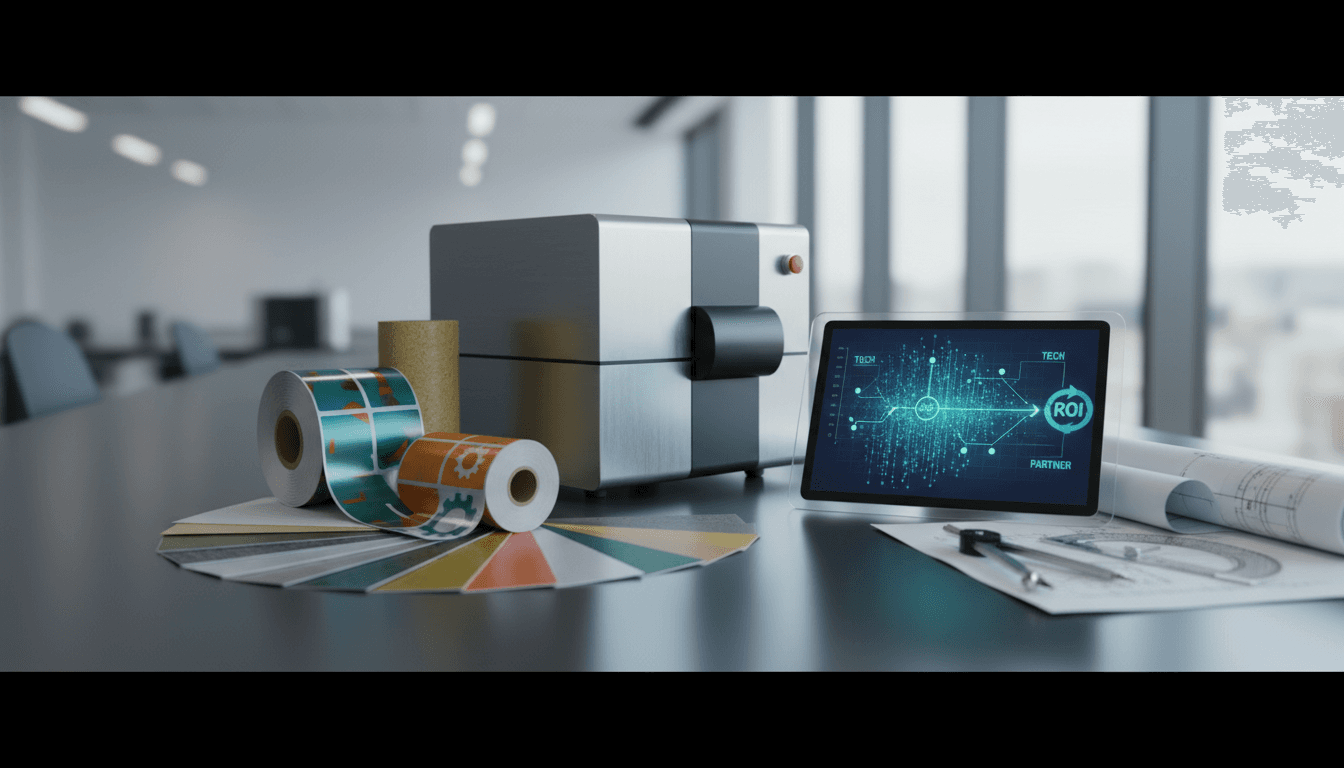
Label printing services guide: Digital (HP Indigo) costs $0.08–$0.15/unit under 10k runs. Flexo breakeven is 15k–20k units with $200–$800 plates. FDA compliance requires BOPP/PET films & low-migration inks. Clear labels use reverse print on 60-micron BOPP.
Are you allocating 20–40% of your packaging budget to label projects that fail audits, underperform, or cost too much per unit? The root cause is often a misalignment between your application, compliance needs, and the print technology chosen. Strategic label printing services solve this by delivering technical precision that generic converters can't match. As Emily Zhao, our Client Solutions Architect with 10+ years designing custom programs, puts it: "Most brands overpay because they spec for the worst-case scenario on every job, not the reality of their supply chain." This guide provides the decision frameworks our team uses with enterprise clients to build cost-effective, compliant label programs from the ground up.
Before You Start: Prerequisites for a Successful Label Program
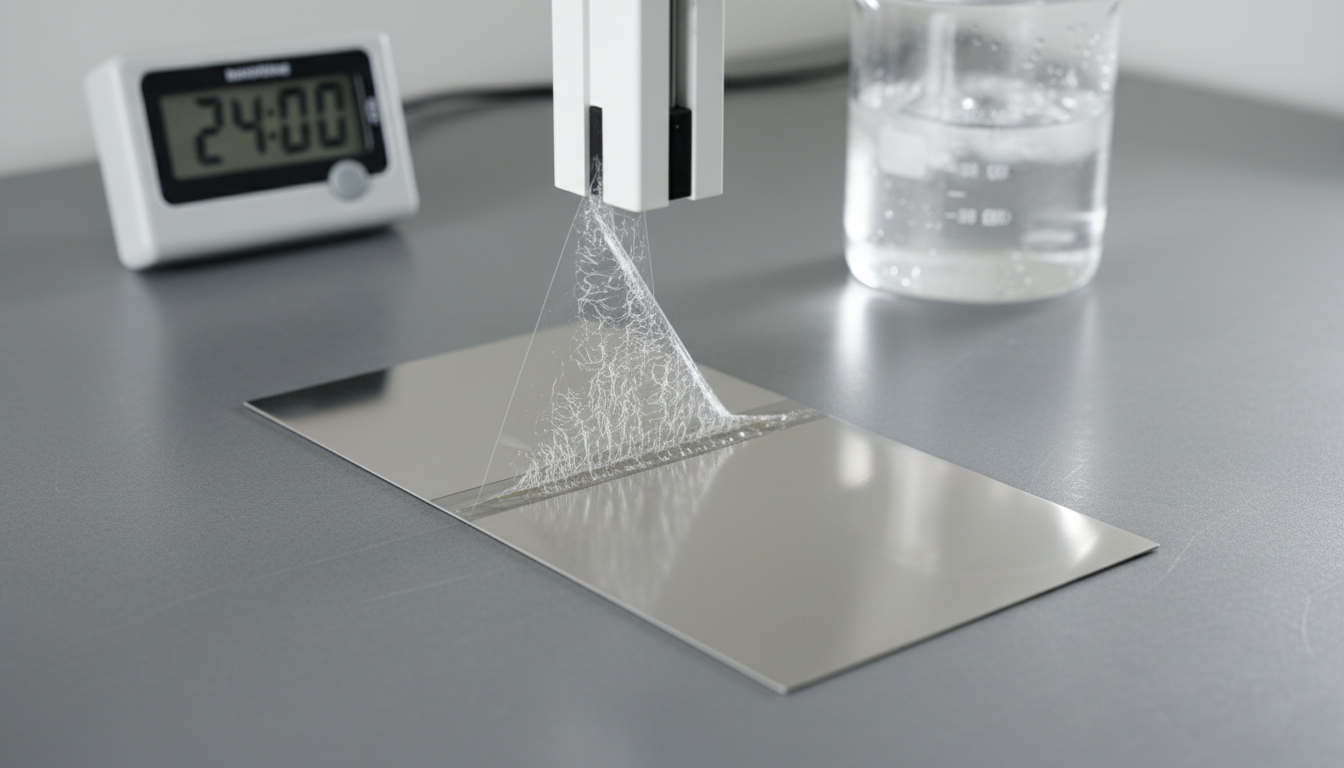
You need three concrete data points before engaging any label printing services partner. First, define your annual volume across all SKUs—not just a one-off order. A partner needs this to design a scalable program. Second, document your compliance landscape: is it FDA food contact, EU supplement regulation, or toy safety (ASTM F963)? Third, conduct a durability stress test on a current label. Note where it fails: adhesive lift, ink rub-off, or barcode scan failure. This baseline prevents costly re-specification later. From our facility, we require these inputs to run a material compatibility test in our lab, simulating conditions like ice bath immersion for beverage label printing.
What Are Modern Label Printing Services and How Do They Solve Your Core Problems?
Modern label printing services are integrated manufacturing solutions that combine substrate science, precision printing technology, and compliance expertise to produce labels that perform under specific brand, logistical, and regulatory conditions. They move beyond simple printing to become a risk mitigation partner.
The core problem they solve is specification mismatch. A common mistake we see is brands choosing a beautiful, high-gloss paper label for a product that will be refrigerated, only to face adhesive failure and peeling. True label printing services start with the application: will it be wet, frozen, abrasively handled, or exposed to UV light? Our pre-press team then cross-references this with our material library—like our Polyester (PET) Film rated for -40°C to +120°C—to recommend a solution. The detail that makes the difference is the adhesive formulation, which is often an afterthought. A freezer-grade adhesive can add $0.005 per label but prevent a 100% scrap event.
Our operational scale allows for cost-effective runs that smaller shops cannot match. With a monthly capacity of 50M+ printed pieces and a 15,000 sqm production floor, we achieve economies of scale that benefit clients even at our 500-unit MOQ. For example, scaling a beverage label printing run from 5,000 to 50,000 units on our flexographic lines typically yields a 25–35% unit cost reduction, as fixed costs like plate engraving are amortized. This is where partnering with a full-scale manufacturer, rather than a trade printer, directly impacts your P&L.
When Should You Choose Clear Label Printing Over Opaque Materials?
Choose clear label printing when your design goal is a "no-label look" to showcase product color or texture, or when the label must be virtually indestructible against moisture, oils, and chemicals. The primary substrate is clear BOPP Synthetic Polypropylene film.
Clear label printing applications are booming in beverage, cosmetics, and cleaning products. The technical nuance most overlook is the need for a reverse print. The image is printed on the *backside* of the clear film, then protected by an adhesive and laminate. This makes the graphic appear suspended behind a glossy, scratch-proof layer. When we run these on our 6-color Heidelberg presses, we print the white layer first and in reverse order, a process requiring expert registration to avoid ghosting.
The trade-off is cost and design limitation. Clear BOPP film is more expensive than paper, and you cannot achieve a vibrant white—it will always be translucent. For a recent craft soda beverage label printing project, the client wanted a vibrant white logo on a clear background. We achieved this by using a opaque white vinyl substrate and die-cutting just the logo area, applying it over a clear label—a hybrid technique that added $0.02/unit but delivered the desired shelf impact. Promotional product manufacturing often uses this hybrid approach for limited-edition runs.
Digital vs. Flexographic: Which Print Technology Saves You Money on Beverage Label Printing?
This is the most critical financial decision. The choice between digital (like our HP Indigo 6K) and flexographic printing hinges on quantity, color complexity, and lead time. For beverage label printing with variable data (like batch codes or seasonal promos), digital is unrivaled. There are no plates, so changeovers are instant.
| Criteria | Digital (HP Indigo) | Flexographic | Offset (Heidelberg) |
|---|---|---|---|
| Cost per Unit (10,000 units) | $0.08 – $0.15 | $0.05 – $0.09 | $0.10 – $0.18 |
| Setup/Tooling Cost | $0 | $200 – $800 (plates) | $500 – $1,500 (plates) |
| Effective Minimum Order | 1 label (prototyping) | 5,000 units | 10,000 units |
| Production Lead Time | 3 – 5 business days | 10 – 15 business days | 7 – 14 business days |
| Best For | Short runs, versioning, variable data | Long runs, spot colors, durable films | Premium cosmetic labels, high color accuracy |
The breakeven analysis is straightforward. If your job requires 4-color process plus 2 Pantone spot colors, calculate: (Digital Cost/Unit × Qty) vs. (Flexo Plate Cost + (Flexo Cost/Unit × Qty)). In our experience, the crossover point where flexographic becomes cheaper is typically between 15,000 and 20,000 units for a standard 4-color job. For runs of 50,000+, flexographic's per-unit advantage is decisive. A key insight: if your design is iterating, use digital to print limited quantity label batches for market testing before committing to flexographic plates for the full production run. For enterprise-level label printing services requirements, getting the specifications right from the start saves both time and budget.
JinXinCai Production Data: Lead Time Variance by Process
| Job Type | Print Process | Avg. Lead Time (Days) | On-Time Rate |
|---|---|---|---|
| Wine Bottle Label | Offset Lithography | 12.5 | 98.7% |
| Energy Drink Sleeve | Flexographic | 13.2 | 97.1% |
| Supplement Jar Label | Digital (HP Indigo) | 4.1 | 99.8% |
| Pharmaceutical Blister Pack | Flexographic | 15.7 | 96.5% |
Frequently Asked Questions
What is the breakeven point for digital vs. flexographic printing for medium runs?
The breakeven point typically occurs between 15,000 and 20,000 units for a standard 4-color job. For runs under this threshold, digital printing on an HP Indigo 6K with $0 setup is more economical. For runs over 50,000 units, flexographic printing reduces unit cost by 25–35% by amortizing the $200–$800 plate cost.
How does adhesive selection affect beverage label printing in cold environments?
Standard adhesives fail in cold-chain applications. For beverage labels below -20°C, a freezer-grade adhesive on PET film is required. This spec, while adding ~$0.005 per label, prevents adhesive lift. Our lab tests validate adhesion after 24 hours in a 2°C ice bath simulation to ensure performance.
What specifications should I provide when ordering supplement label printing to ensure compliance?
Provide FDA 21 CFR 111 & 101 requirements. Your supplier must offer a Letter of Guarantee for all materials. Specify low-migration adhesive and FDA-compliant BOPP/PET films. For color accuracy, demand Delta E < 2.0 on presses calibrated to ISO 12647-2 to match Pantone colors precisely.
What GSM weight and material is best for a durable folding carton label?
For durable carton labels, a 300gsm C1S (coated one side) board is standard. For premium moisture resistance, specify a 60-micron white BOPP film with a protective laminate. This construction, while costing 20% more than paper, can reduce in-field failure rates from 15% to near zero.
When is clear BOPP film the wrong choice for a label application?
Avoid clear BOPP film when your design requires a vibrant, opaque white, as the result will always be translucent. It is also more expensive than paper. For a craft soda project, we used an opaque white vinyl die-cut over clear BOPP, a hybrid technique that added $0.02/unit for the desired shelf impact.