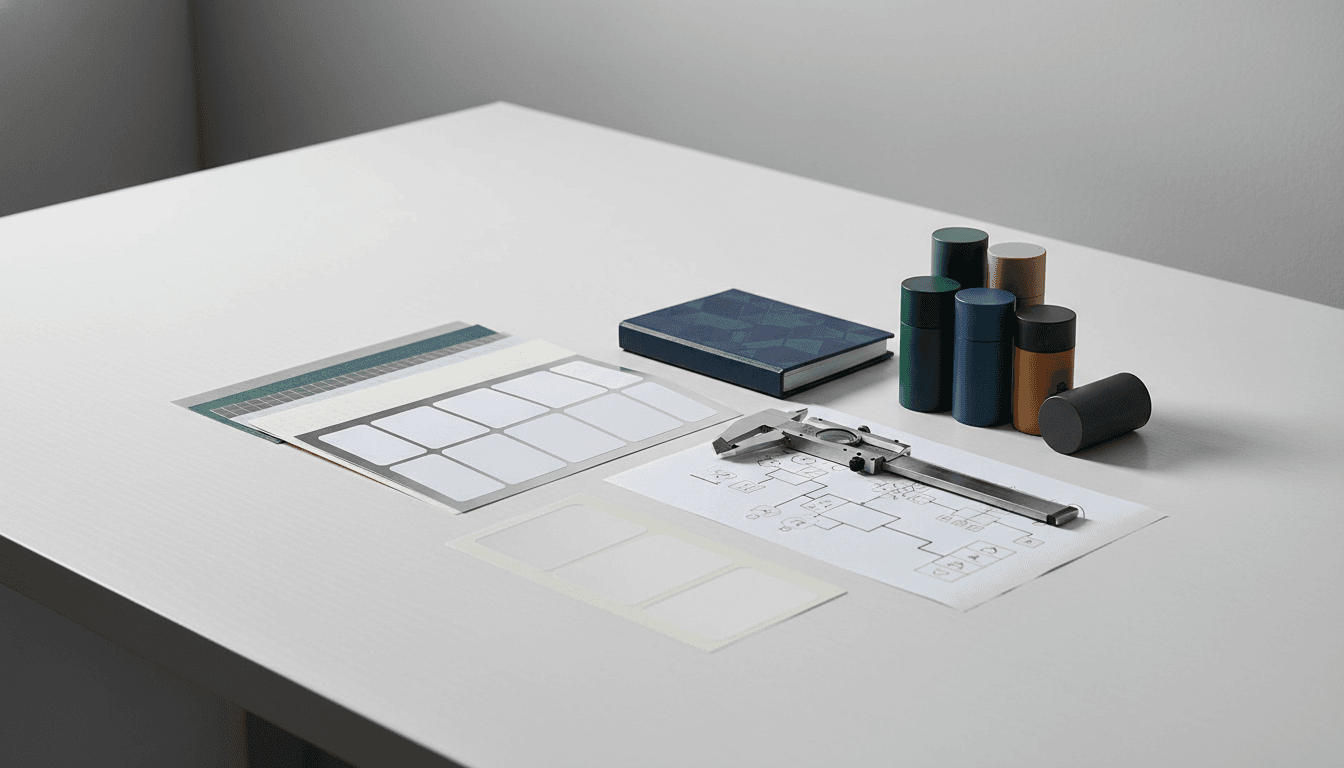
Custom printed labels: Silk screen costs ~$0.12/unit at 2k runs. Flexo on a Nilpeter FB-330 hits $0.03/unit at 50k. Digital (HP Indigo) breakeven is 7,143 units. Ensure >99.8% barcode scans with matte overcoat on BOPP per ISO 15416.
Are your label costs 20-40% higher than they should be because you’re using the wrong printing method for your application? This mismatch leads directly to compliance risks, poor durability, or overspending on short runs. This guide, built on 28 years of factory-floor experience, provides a decision matrix to match your exact need with the optimal production path for custom printed labels in 2026 and beyond.
What Are Custom Printed Labels Really For in 2026?
In 2026, custom printed labels serve four core functions beyond decoration: regulatory compliance (GHS, FDA), logistical tracking (barcodes/QR), brand storytelling (premium finishes), and operational instruction (warnings, usage). Misidentifying the primary function is the most common spec error we see.
A label for warehouse shelf tracking has different durability needs than one for a luxury perfume bottle. We once had a client specify a gorgeous, high-gloss laminated paper for an outdoor equipment label; it disintegrated in six months. The detail that makes the difference is defining the label's primary hostile environment: chemical exposure, UV light, abrasion, moisture, or temperature extremes.
Our first step with any client is this simple framework: Identify > Comply > Endure > Impress. Rank these functions from 1 to 4 for your project. If Comply is #1, your material and ink system are non-negotiable and drive all other choices. This foundational ranking prevents costly over-engineering or dangerous under-specification.
"We analyze 50+ label jobs weekly. The consistent error is prioritizing 'looks' over 'lasts.' A $0.03 paper label with the correct permanent adhesive outperforms a $0.12 foil stamp that delaminates." — Emily Zhao, Client Solutions Architect
Silk Screen, Flexo, or Digital: Which Label Printing Method Saves You Money?
The most cost-effective label printing method is determined by volume, color count, and durability. For runs under 5,000 with simple Pantone colors, silk screen printing is durable and economical. For 50,000+ units, flexo printed labels offer the lowest unit cost. Digital wins for under 10,000 units with variable data or quick turnaround.
In our bindery, we run side-by-side comparisons monthly. For a 3-color, 4" round label on 80# kraft, screen printing costs ~$0.12/unit at 2,000 pieces due to low setup. The same job on our HP Indigo 6K digital press is ~$0.15/unit but allows sequential numbering. At 50,000 units, flexo on a Nilpeter FB-330 line drops the cost to $0.03/unit. Most people get wrong the breakeven point between digital and flexo.
JinXinCai Production Data: Label Cost per Unit by Method & Quantity
| Printing Method | 1,000 Units | 10,000 Units | 50,000 Units | Best For / Limitation |
|---|---|---|---|---|
| Digital (HP Indigo) | $0.18 – $0.22 | $0.08 – $0.12 | $0.06 – $0.09 | Variable data, photo-quality, under 2-week lead time. Not for solvent-resistant applications. |
| Flexographic | $0.25 – $0.40* | $0.04 – $0.07 | $0.02 – $0.04 | High-volume, durable inks, cost-effective scaling. High initial plate/tooling cost (~$500). |
| Silk Screen | $0.10 – $0.15 | $0.07 – $0.10 | $0.05 – $0.08 | Spot colors, thick ink layers, unusual substrates. Slow for process (CMYK) imagery. |
| Offset (Heidelberg) | $0.30 – $0.50* | $0.05 – $0.08 | $0.03 – $0.05 | Ultimate color fidelity on paper/board, gang-run efficiency. Not for filmic labels. |
The trade-off is clear: capital tied up in flexo plates isn't justified for a one-time 5,000-run job. Conversely, using digital for a 200,000-run commodity label leaves $15,000+ on the table. Use this formula: (Flexo Plate Cost) / (Digital Unit Cost – Flexo Unit Cost) = Breakeven Quantity. If plate costs $500 and digital is $0.10/unit vs. flexo at $0.03, breakeven is ~7,143 units. Below that, digital likely wins.
How Do You Ensure Your Printed Barcode Labels Scan Every Time?
Barcode failure is a supply chain stoppage. Achieving a >99.8% first-pass scan rate requires coordinating material, ink, and finish. A common mistake is specifying a glossy overcoat on a printed barcode label; glare from warehouse lighting will cause misreads. We always recommend a matte varnish or laminate specifically over the barcode area.
From our pharmaceutical case study: we used a white BOPP film with a freeze-grade permanent adhesive. The crucial step was applying a matte overcoat after printing. We then subjected samples to 50 freeze-thaw cycles (-30°C to +25°C) and abrasion testing. The result was a 99.8% scan rate across 500,000 units, exceeding the client's threshold. The printed barcode labels maintained legibility because the matte finish diffused light and the material did not distort.
How to Specify Scannable Barcode Labels: 5-step summary
- Choose High-Contrast Substrate: For linear barcodes, ensure a minimum 70% reflectance difference between bars and spaces. White BOPP or C1S board is reliable.
- Specify Matte Finish: Require a matte overprint varnish or matte laminate over the barcode area to eliminate specular glare.
- Verify Quiet Zones: Enforce quiet zone dimensions (10x the narrow bar width minimum) in your dieline. Our prepress team checks this automatically.
- Request Sample Testing: Before production, obtain samples and test with the same scanners used in your logistics chain, under actual lighting conditions.
- Define Print Contrast Signal (PCS): In your PO, specify a minimum PCS of 80% as measured by a spectrophotometer, per ISO/IEC 15416.
Are Your Printed Chemical Labels Compliant and Durable?
Printed chemical labels must survive their environment while remaining legible and compliant. GHS pictograms, signal words, and hazard statements aren't just design elements—they are legal requirements. The most frequent error we see is using standard paper and aqueous coating for a chemical that generates fumes or is stored outdoors; the label deteriorates, creating a compliance liability.
Your manufacturer's ISO 9001:2015 certification is critical here, as it ensures documented control over the entire specification process. For a recent industrial client, we produced printed chemical labels on a 5-mil thick rigid vinyl with a UV-resistant laminate and industrial permanent adhesive. The inks were tested for chemical resistance to the specific solvent listed on the label itself. This is the level of specificity required.
Failure rate for our GHS chemical labels when substrate, ink, and adhesive are matched to the chemical's SDS (Safety Data Sheet) Section 10 (Stability and Reactivity).
When this isn't the right choice: If your chemical product is a benign, water-based solution in a climate-controlled lab, an expensive vinyl label is overkill. A standard C1S Coated Folding Carton Board label with a protective varnish may suffice, cutting cost by 60%. The compliance is identical; the durability is matched to the real risk.
What Makes a Printed Neck Label Effective for Branding?
A printed neck label is a small-format branding powerhouse on bottles, jars, and apparel. Its effectiveness hinges on precision and tactile appeal. Because it's handled during the user's first interaction, feel is as important as visuals. We achieve this through material choice and specialized finishing like hot foil stamping.
Our production data shows that for luxury spirit brands, the combination of a printed neck label on a metallic paper stock with a hot foil stamping crest increases perceived value disproportionately to the added cost (~+$0.08/unit). The technical key is our die-cutting accuracy of ±0.2mm and foil registration of ±0.3mm, ensuring crisp, aligned edges that feel premium. A common mistake is designing a neck label that is too wide for the bottle's curvature, causing it to buckle or peel.
Struggling with label durability or scan rates? Our material testing lab can validate your spec against your real-world environment in under 72 hours.
Get a Free Label Specification Review →Can You Really Get Free Reindeer Food Labels to Print?
The term "free reindeer food labels to print" often refers to downloadable DIY files, but for promotional or retail use, the real opportunity is in cost-effective short-run production. Seasonal products like this are perfect for gang-run printing, where multiple clients' labels are printed together on a single large sheet, dramatically reducing unit cost.
We run such jobs weekly on our Heidelberg Speedmaster XL 106. For a food-safe free reindeer food labels to print promotion, we'd gang it with other seasonal jobs on a single sheet of FSC-certified C1S Coated Folding Carton Board. This can bring unit costs for a 2"x3" label down to $0.02–$0.04 even for runs as low as 2,500 pieces, making a "free" promotional giveaway economically feasible. The lead time is typically 10–14 business days, including custom die-cutting.
Limitation: Gang runs require flexibility on exact shipment dates, as we wait to fill the sheet. They also usually lock you into a standard material. If you need a specific waterproof film or metallic substrate, a dedicated run is better.
What's Your Step-by-Step Framework for Ordering Custom Labels?
Ordering custom printed labels efficiently requires providing complete, unambiguous specifications upfront. Ambiguity is the primary cause of quotes delays and production errors. Follow this checklist, refined from processing 500+ enterprise label jobs annually.
- Define the Application & Environment: What does the label do? Where will it live? (e.g., "Product ID, scanned in a freezer warehouse").
- Select Material & Adhesive: Choose based on step 1. Request swatches. (e.g., 3mil white BOPP film with permanent freeze-grade adhesive).
- Finalize Design & Provide Artwork: Vector files with bleeds, fonts outlined. Indicate PMS colors or provide a G7-calibrated proof.
- Specify Finishing: Die-cut shape (provide dieline), laminate/coating (gloss, matte, soft-touch), and any special embellishments (foil, emboss).
- Determine Quantity & Timeline: Be realistic. A 50,000-unit flexo job needs 4-5 weeks; 5,000 digital labels need 10-12 days.
When you know how to order printed barcode labels or compliant chemical labels, provide the technical data upfront: barcode type (Code 128, DataMatrix), verification grade required (e.g., ANSI C), or the specific regulatory standard (e.g., GHS, FDA 21 CFR 174-178 for indirect food contact). This allows our prepress team to validate your files against these standards before plates are made.
"A complete spec sheet cuts our quote time from 48 hours to 4. The biggest time sink is clients not knowing their adhesive type, which we then have to deduce through 20 questions." — Head of Prepress Operations
Your custom printed labels are a critical touchpoint for compliance, logistics, and brand perception. By applying this matrix—matching your ranked functions (Identify, Comply, Endure, Impress) to the precise production technology—you eliminate waste and risk. Start your next label project with the primary environment and volume in mind, and use our internal data thresholds to challenge your supplier's recommendations. For deeper strategies on integrating labels into broader promotional product manufacturing programs, explore our related frameworks on hybrid label workflows.
Frequently Asked Questions
When does digital label printing become cheaper than flexographic?
Digital printing on an HP Indigo 6K is typically more cost-effective for runs under 7,143 units, based on a $500 flexo plate cost. For a 10,000-unit run, digital costs $0.08–$0.12/unit, while flexo drops to $0.04–$0.07. The breakeven formula is (Plate Cost) / (Digital Unit Cost – Flexo Unit Cost).
What GSM or material is best for durable printed barcode labels?
For high-scan-rate barcodes (>99.8%), use a white BOPP film or C1S board with a matte overcoat to prevent glare. Ensure a 70% minimum reflectance contrast between bars and spaces, as per ISO/IEC 15416. This specification, combined with environmental testing, ensures reliable scanning.
What adhesive should I specify for outdoor printed chemical labels?
For outdoor chemical labels, specify an industrial-grade permanent adhesive on a 5-mil rigid vinyl substrate with a UV-resistant laminate. This system, validated against the chemical's SDS Section 10, ensures durability and maintains GHS compliance, unlike standard paper labels which can deteriorate.
How does silk screen printing quality compare for premium neck labels?
Silk screen printing excels for premium neck labels requiring vibrant Pantone spot colors and thick ink layers for tactile appeal. It costs ~$0.12/unit at 2,000 pieces. For added luxury, combine it with hot foil stamping on metallic paper, achieving ±0.3mm registration for a high-end finish.
What is the typical MOQ for cost-effective flexo printed labels?
Flexographic printing becomes highly cost-effective at volumes over 50,000 units, with costs dropping to $0.02–$0.04/unit on a Nilpeter FB-330 line. The initial plate/tooling cost is ~$500, so the method is not justified for very short runs under approximately 7,000 units.