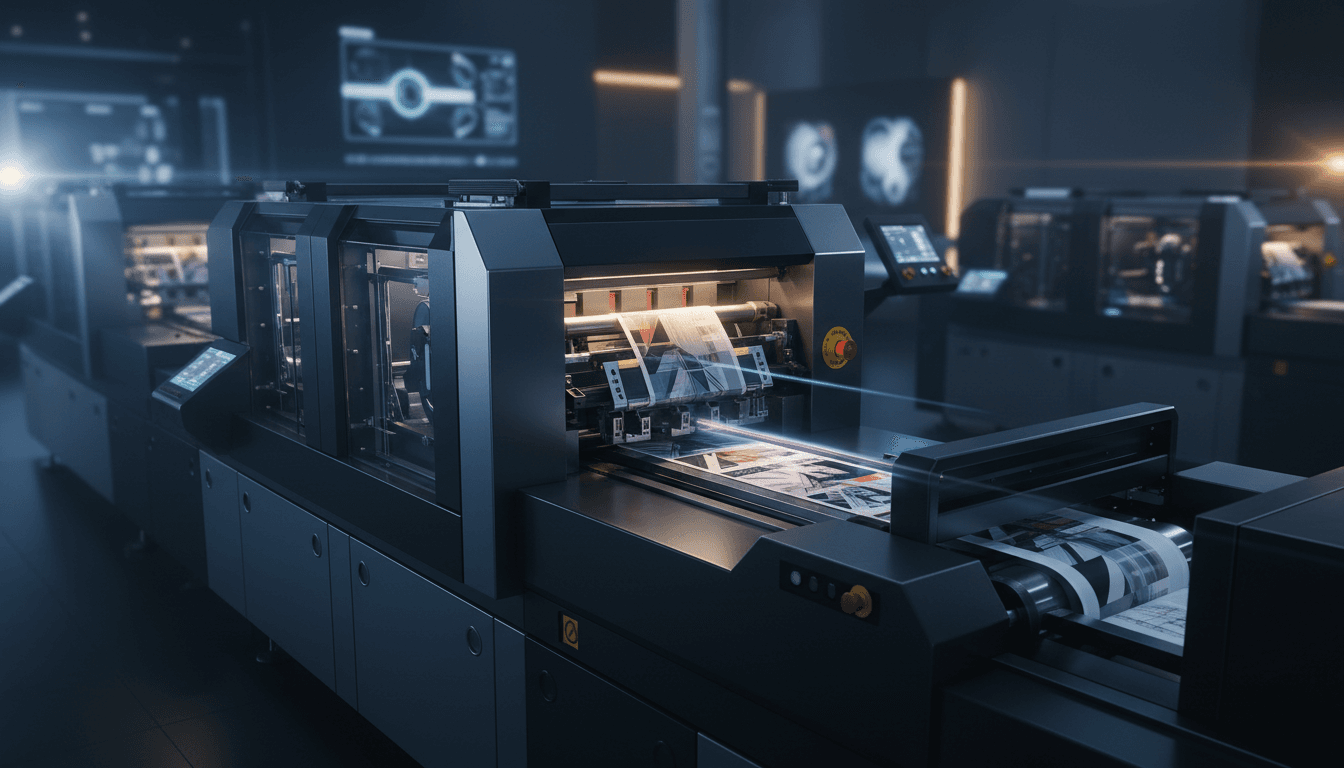
A hybrid product label printing workflow bridges digital (HP Indigo) for under 10k units and offset (Heidelberg) for scale, cutting lead time 40% via G7 calibration. It requires precise label printing rolls (±0.5mm) for automated applicators and PET film for pharmaceutical compliance.
Does your current product label printing process create a costly 3-4 week bottleneck when scaling from a digital prototype to a multi-million-unit offset run? This disconnect between agile proofing and stable mass production wastes budget, delays launches, and risks compliance failures. The solution is an architectured hybrid workflow, where digital and offset processes are designed to complement each other from the start. Our team, led by Client Solutions Architect Emily Zhao, has managed this transition for hundreds of clients, including a recent 2M-unit retail program delivered in 6 weeks with a 22% per-unit cost reduction through optimized gang-run scheduling on our Heidelberg presses. The goal isn't just faster promotional product manufacturing; it's predictable, scalable, and brand-safe production.
Prerequisites: What You Need Before Architecting Your Hybrid Workflow
Successful hybrid product label printing requires upfront alignment. First, secure final brand artwork with embedded ICC profiles and Pantone references. Second, define your volume thresholds: digital is optimal for runs under 10,000 units, while offset becomes cost-effective beyond that. Third, gather all compliance requirements, especially for food and beverage packaging or pharmaceutical uses. Finally, audit your supply chain's tolerance for versioning; this dictates your need for variable label printing capabilities. Without these inputs, your workflow will lack the necessary guardrails for a smooth scale-up.
Why Is Your Product Label Printing Workflow Failing at Scale?
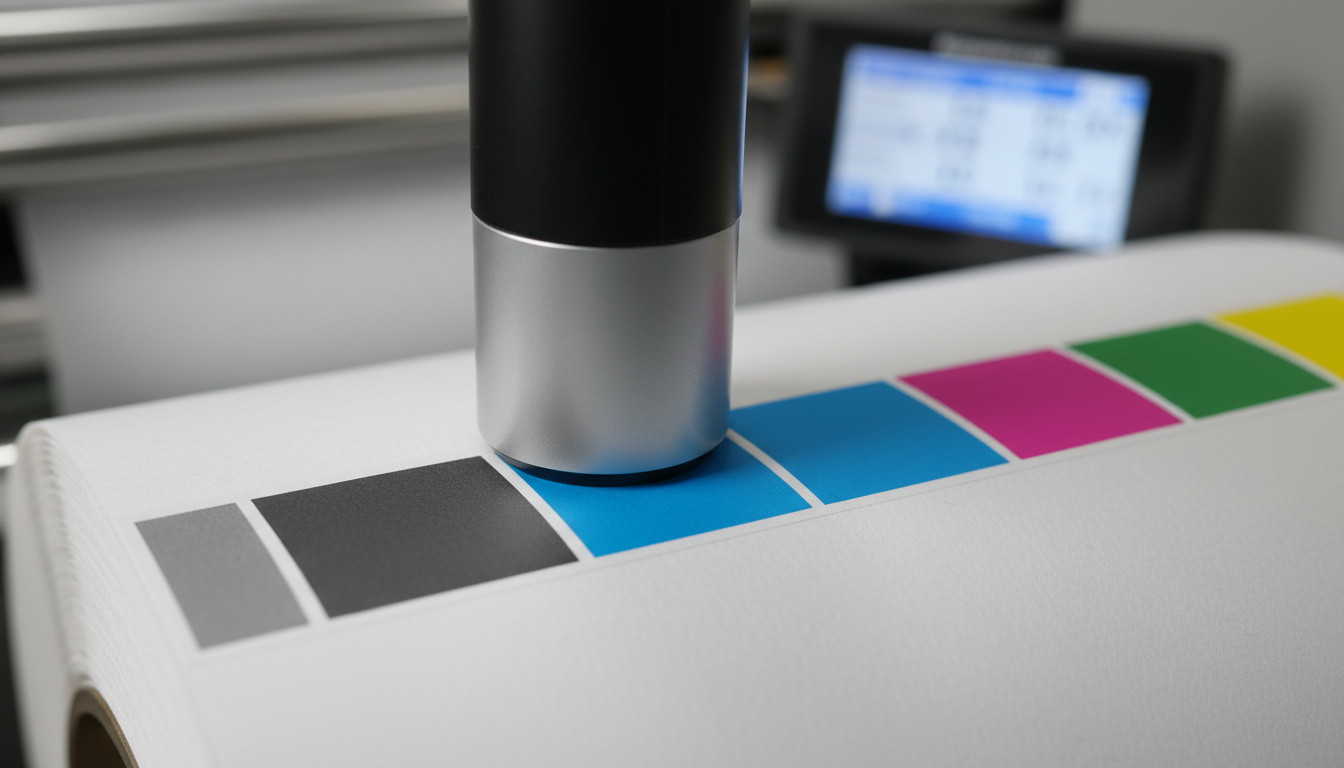
Your workflow fails because digital prototyping and offset production are treated as separate silos, using different color standards, materials, and approval processes. This creates a 3-4 week re-engineering delay and a 22% average cost penalty when scaling.
The core failure is a material and color disconnect. A brand manager approves a stunning proof on 80gsm gloss paper from a digital vendor. Then, procurement orders 2 million units on a 300gsm C1S board for durability on a print and apply label applicator. The colors shift, the adhesive performs differently, and the entire job stalls. In our prepress department, we see this weekly. The detail that makes the difference is specifying the exact production substrate for your digital proofs. We run all our HP Indigo proofs on the same label printing roll stock slated for the Heidelberg offset run, calibrated to ISO 12647-2.
Average cost penalty from non-optimized scaling due to material/color re-work.
Material Selection: How Do You Choose the Right Label Printing Roll for Compliance?
Selecting a label printing roll is a balancing act between marketing appeal, functional durability, and machine compatibility. The most common mistake is choosing a substrate for aesthetics alone, which then jams high-speed print apply labeling systems. For automated application, you need consistent tensile strength and a precise roll width tolerance of ±0.5mm.
How to Specify a Label Printing Roll: 4-Step Summary
- Define the End-Use Environment: For freezer-to-oven cycles, specify BOPP or PET film (-40°C to +120°C range). For eco-appeal, use FSC-certified Kraft paper (80–300 gsm).
- Check Applicator Compatibility: Confirm the core size (3" or 6"), outer diameter, and winding direction with your print and apply label applicators supplier.
- Validate Adhesive & Liner: Permanent acrylic adhesives need a 60# kraft release liner. For removable labels, specify a lighter adhesive coat weight.
- Prototype on Production Stock: Insist your printer makes the digital proof on the exact roll material (e.g., 50-micron BOPP) you'll use for the offset run.
For pharmaceutical label printing, the non-negotiable is often a white, opaque PET film (25–100 micron). It provides the chemical resistance needed for sterilization and the dimensional stability to prevent skewing in automated packaging lines. This is where our ISO 9001:2015-certified sourcing procedures prevent downstream liability.
When Does Automation Pay Off? Integrating Print Apply Labeling Systems.
Automated print apply labeling systems deliver ROI when your monthly volume exceeds 50,000 labels, your line speed is above 30 products/minute, or your labor costs for manual application exceed $0.05 per label. The breakeven is typically 12-18 months.
The integration point most brands miss is the label printing roll specification. An applicator from Weber or Label-Aire isn't just a machine; it's part of a system. If the labels are poorly die-cut, inconsistently wound, or have adhesive bleed, the system will fault continuously. We've had clients see a 30% reduction in line stoppages simply by tightening our slitting tolerance to ±0.15mm and implementing 100% roll inspection before shipping.
"Integrating print apply labeling systems isn't just a capital expense. It's a total cost-per-applied-label equation. We've seen brands reduce their applied label cost from $0.15 to $0.04 by combining offset-printed rolls with high-speed applicators, achieving payback in under a year." — Director of Packaging Engineering, Mid-West CPG Brand
Here’s the trade-off analysis between manual, semi-automatic, and fully integrated systems:
JinXinCai Production Data: Total Applied Label Cost Analysis
| Application Method | Avg. Labor Cost/Label | Avg. Machine Rate/Label | Typical Line Speed | Best For Volume |
|---|---|---|---|---|
| Manual Application | $0.08 – $0.12 | $0.00 | 10-20/min | < 10,000/month |
| Semi-Auto Applicator | $0.02 – $0.04 | $0.01 – $0.02 | 30-60/min | 10K – 100K/month |
| Fully Integrated System | $0.005 – $0.01 | $0.02 – $0.03 | 100+/min | > 100,000/month |
Specialty Finishes: Is Foil Label Printing Worth the Investment?
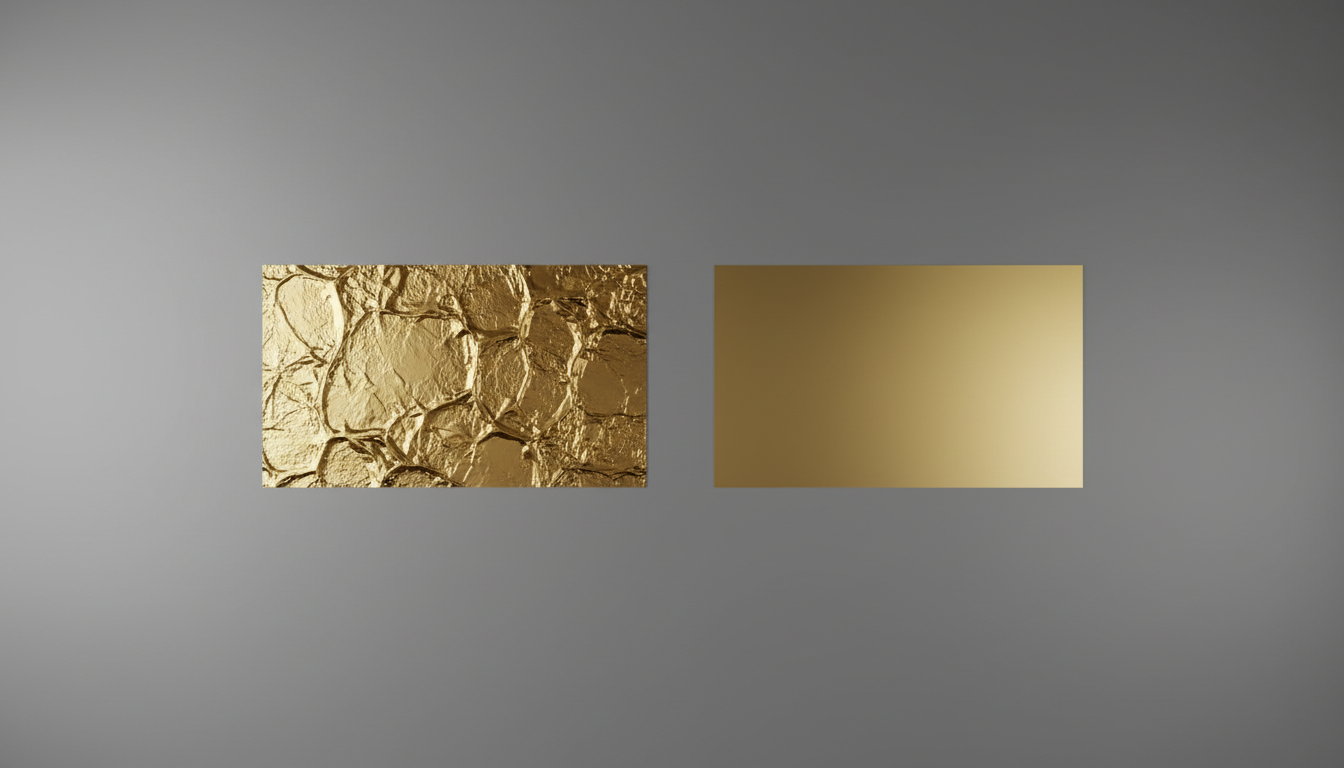
Foil label printing elevates premium products, but its cost drivers are often misunderstood. The expense isn't just the foil material (+$0.01–0.03/unit); it's the additional tooling and press time for foil stamping or cold foil application. For brand managers, the key question is permanence: stamped foil is embedded into the substrate, while laminated foil can delaminate in humid environments.
On our Heidelberg presses, we achieve registration for foil label printing within ±0.1mm. The detail most get wrong is designing foiled elements with ultra-fine detail or tight registration to four-color process elements. This leads to inevitable variance and rejection. A better approach is to use foil as a large, bold accent and keep process colors separate. For runs under 5,000, digital foil simulation on an HP Indigo can be a cost-effective alternative, though it lacks the tactile depth.
Struggling to calculate the true cost of foil, automation, or compliance for your next label run? Our solutions team provides a detailed cost-breakdown model based on your specific volumes and material specs.
Get a Free Quote →The Pharmaceutical Label Printing Compliance Checklist: Beyond the Basics
Compliance in pharmaceutical label printing extends far beyond correct text and symbols. It encompasses material safety, traceability, and production environment controls. While many suppliers mention ISO 9001, our ISO 14001:2015 certification governs how we source and handle materials like PET film to prevent chemical contamination from the outset.
The red flag is a printer who cannot provide a Certificate of Analysis (CoA) for their label stock, specifically for indirect food contact (FDA 21 CFR 175.105 for adhesives) or pharmaceutical packaging. For serialization and track-and-trace, variable label printing on a digital press like the HP Indigo is essential. But the data must be flawless; a single incorrect barcode can trigger a recall. Our preflight checks include validating variable data files against GS1 standards before a single label is printed.
"In pharmaceutical labeling, the substrate is your first line of defense. We mandate 60-micron white PET film for its inert properties and resistance to isopropyl alcohol wipes. Any printer not starting that conversation isn't thinking about patient safety." — Regulatory Affairs Manager, Global Pharma Manufacturer
How to Leverage Variable Label Printing for Supply Chain Agility
Variable label printing on digital presses is your primary tool for combating SKU proliferation and enabling late-stage customization. The capability of an HP Indigo to change every label—with unique QR codes, serial numbers, or promotional messaging—without stopping the press transforms inventory management. Lead times for these jobs are consistently 3–5 business days, regardless of complexity.
The insider knowledge is about data file hygiene. A common mistake is supplying a spreadsheet with leading zeros dropped from GTIN numbers or barcode fields formatted as numbers instead of text, which corrupts the scannable output. Our prepress team runs all variable data through a proprietary validation script that flags these errors before the job hits the press floor, saving an average of 8 hours of press downtime per job. This makes variable label printing a reliable agility tool, not a risk.
Label Production Paths: Digital, Offset, or Hybrid?
Choosing a path requires matching technology to volume, timeline, and brand requirements. This decision framework uses concrete thresholds from our production data.
| Workflow | Best For Volume | Cost per 10K Units* | Typical Lead Time | Key Strength | Key Limitation |
|---|---|---|---|---|---|
| Digital-Only (HP Indigo) | < 10,000 units | $350 – $600 | 3–5 business days | Zero tooling, infinite versioning | Higher per-unit cost at scale |
| Offset-Only (Heidelberg) | > 50,000 units | $180 – $300 | 14–21 business days | Lowest cost per unit at high volume | High upfront plate/tooling cost (~$500) |
| Hybrid (Digital → Offset) | 10K – 2M+ units | $250 – $400** | 10–15 business days | 40% faster scale-up, consistent color | Requires coordinated pre-planning |
*Cost based on 4-color process on 80gsm white gloss paper, 3” x 4” label. **Hybrid cost includes digital proofing and offset production.
Decision: Which Product Label Printing Path is Right For You?
- If your run is under 10,000 units AND you need versioning/short lead time → Choose a Digital-Only workflow.
- If your run is over 50,000 units AND your artwork is final for 12+ months → Choose a traditional Offset-Only workflow.
- If you need to prototype quickly, then scale to 50K–2M+ units within 6 weeks → You need a Hybrid workflow. This is the core of modern product label printing strategy.
Future-Proofing: Smart Labels and Sustainable Materials
Looking toward 2026, two trends will impact your product label printing ROI: smart label integration and sustainable substrates. Smart labels (NFC, RFID) require conductive inks and delicate inlays that must be incorporated during the converting process. Not all print and apply label applicators can handle the increased thickness, so future compatibility must be discussed now.
Sustainable materials like PCR (post-consumer recycled) films and compostable papers are gaining mandate. However, their performance in print apply labeling systems can vary. We test new sustainable rolls for tensile strength, adhesive anchorage, and feed reliability before recommending them for high-speed lines. Our ISO 14001:2015 system ensures this evaluation is documented and repeatable, turning a sustainability goal into a reliable specification.
Implementation Timeline & Limitations
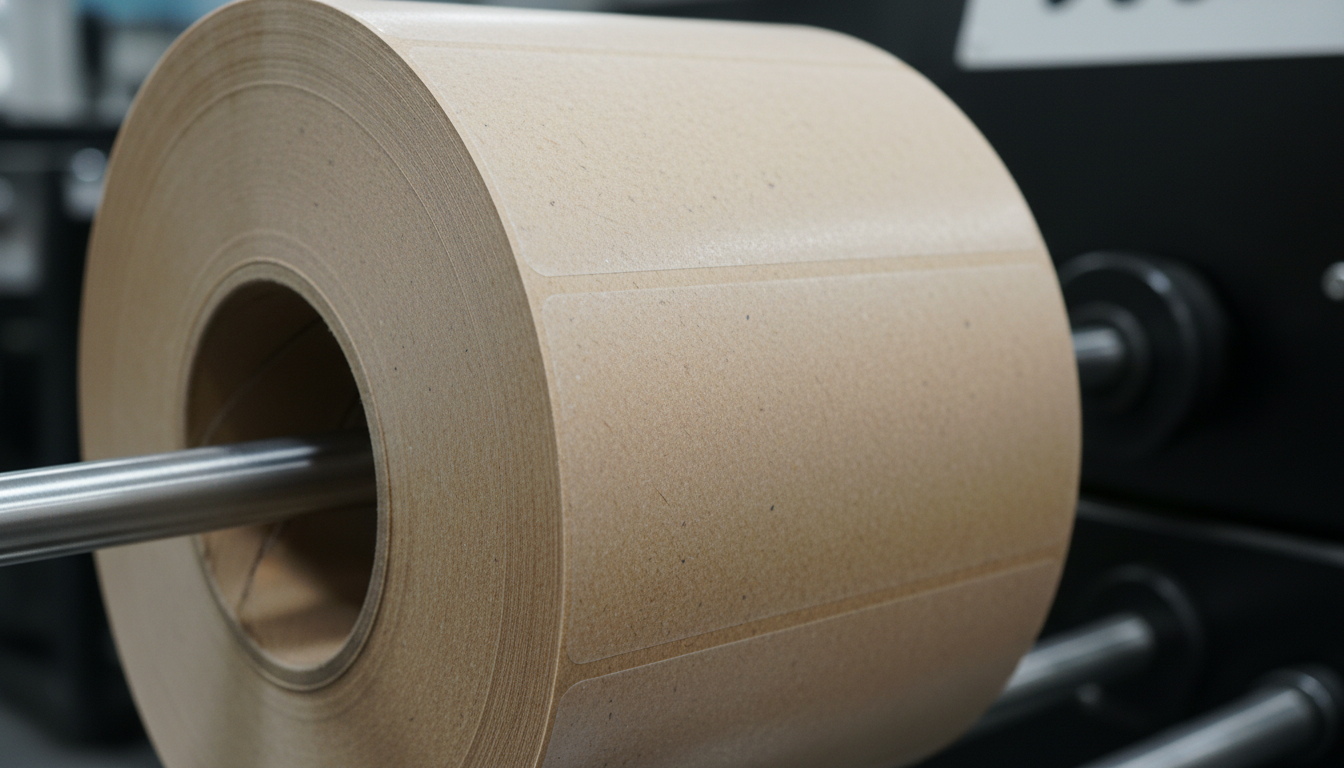
To deploy a hybrid workflow this quarter, follow this 6-week timeline: Week 1-2: Finalize artwork and conduct a pre-production meeting with your printer to align on substrates (like your label printing roll spec) and color standards. Week 3: Approve a G7-calibrated digital proof on production material. Week 4-5: Offset plates are made and the long production run commences. Week 6: Finished rolls are shipped, inspected, and integrated with your print apply labeling systems.
When This Isn't the Right Choice: A hybrid workflow requires more upfront coordination than a simple one-off print job. If your label is a single, static run of 5,000 units with no future repeats, a pure digital path is simpler. Similarly, if your volumes are consistently in the millions with no need for prototyping, a dedicated offset run is more efficient. The hybrid model excels when agility, scale, and brand consistency must coexist. For more on regulated labeling, see our guide on GHS label printing and compliance strategy.
By architecting your product label printing process as an integrated hybrid system—not a series of isolated orders—you transform a cost center into a scalable, brand-consistent competitive advantage. The goal is to make the transition from one label to one million feel seamless.
Frequently Asked Questions
How does the choice between roll and sheet-fed label printing affect my total cost of ownership?
Roll-fed printing on Heidelberg presses is essential for automated print apply labeling systems, reducing labor costs to $0.005–$0.01 per label. Sheet-fed is for manual application but incurs higher handling costs. The key is specifying a label printing roll with ±0.5mm width tolerance to prevent jams in high-speed applicators, ensuring system ROI.
What is the typical lead time difference between standard and foil label printing?
Standard 4-color offset printing on a Heidelberg has a 14–21 day lead time. Foil label printing adds 3–5 days for tooling and precise (±0.1mm) hot-stamp registration. For runs under 5,000 units, digital foil simulation on an HP Indigo offers a 3–5 day lead but lacks the tactile depth of stamped foil.
What adhesive specifications should I require for cold chain pharmaceutical label printing?
For cold chain, specify a permanent acrylic adhesive with a 60# kraft release liner on a 25–100 micron white PET film substrate. This combination maintains bond strength from -40°C to +120°C and complies with FDA 21 CFR 175.105 for indirect food contact, preventing label failure during sterilization and transport.
When does digital printing become cheaper than offset for product labels?
Digital printing on an HP Indigo is cost-effective for runs under 10,000 units, with a cost of $350–$600 per 10k. Offset on a Heidelberg becomes cheaper above 10,000 units, dropping to $180–$300 per 10k, despite a ~$500 plate charge. The breakeven is volume-dependent.