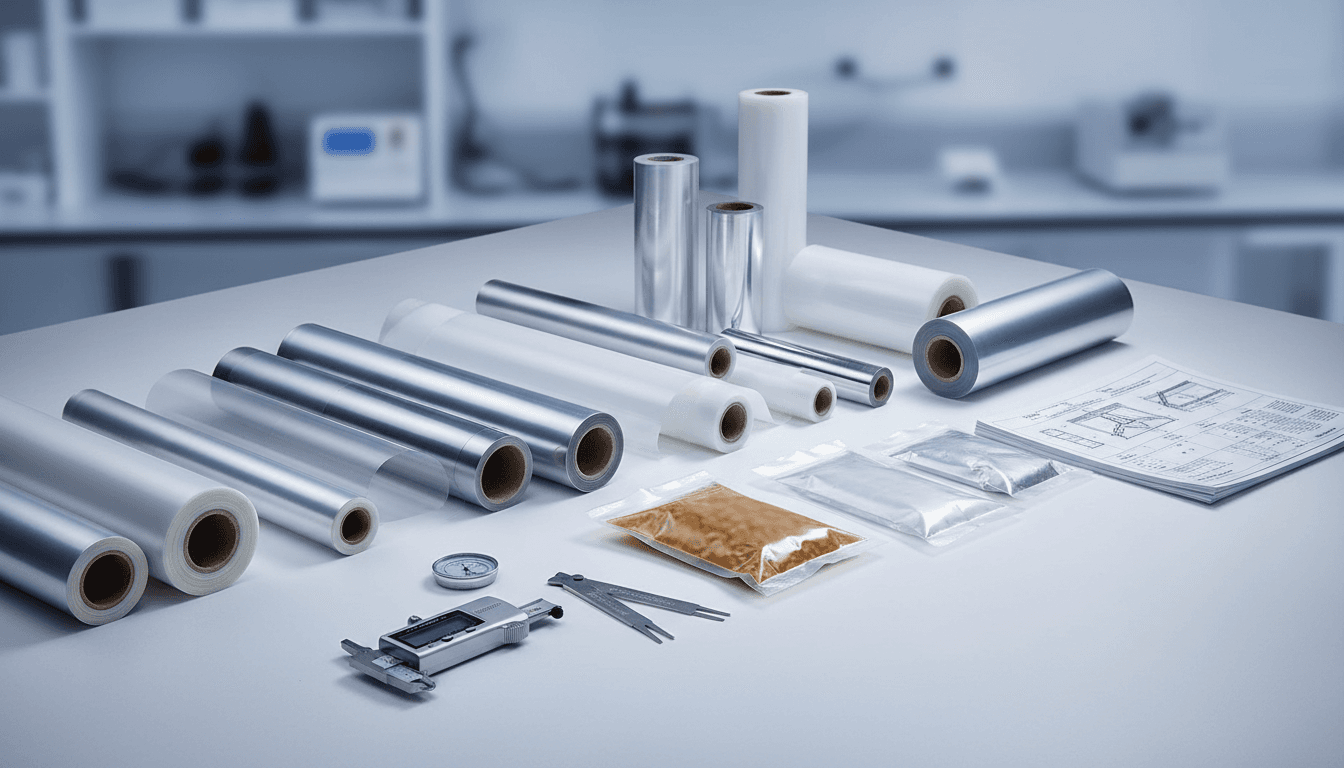
Choosing the wrong film thickness can increase your packaging costs by 40% and compromise barrier integrity. This guide provides a decision framework based on real production data.
Specifying the correct thermal lamination film thickness for food packaging is not an aesthetic choice—it’s a critical barrier specification that directly impacts product shelf life, compliance, and your bottom line. A common mistake we see is brands defaulting to a standard 12-micron BOPP film for all applications, only to discover moisture ingress or seal failures during accelerated aging tests. At JinXinCai, our material testing lab has processed over 500 packaging programs, and the most frequent cause of lamination-related rejects stems from mismatched film thickness to the product’s actual environmental stress. This guide provides a forward-looking implementation framework, using specific cost data and barrier metrics, to help you specify thermal lamination with confidence for your 2026 packaging strategy.
- Film thickness directly correlates with barrier performance: a 20-micron PET film can reduce moisture vapor transmission rate (MVTR) by over 60% compared to a 12-micron BOPP film.
- The breakeven point for upgrading from a 12-micron to a 20-micron film is typically at a 15% reduction in product spoilage or a run exceeding 50,000 units.
- FDA 21 CFR and EU 10/2011 compliance requires not just film material certification, but also validation of the adhesive system and any printing inks beneath the laminate.
- Thermal lamination cost per square foot in 2024 ranges from $0.08 to $0.25, driven primarily by material (PET vs. BOPP) and thickness, not the laminating process itself.
- For runs under 10,000 units, digital finishing with spot UV or flood coating may offer a 25-35% cost advantage over thermal lamination, despite lower durability.
What is Thermal Lamination and Why is it Critical for Modern Packaging?
Thermal lamination is a process where a thin plastic film is bonded to a printed substrate using heat, pressure, and adhesive. Unlike liquid coatings, it provides a consistent, impermeable barrier. The critical question for 2026 is not if to laminate, but how to specify it as a functional component of your packaging system. In our experience running gloss, matte, and anti-scuff lamination lines, the primary driver has shifted from pure aesthetics to integrated protection. For instance, a pharmaceutical client needed tamper-evident, waterproof labels capable of surviving -30°C to +25°C cold-chain logistics. Our solution used a custom 25-micron PET film with a freeze-grade adhesive, tested through 50 freeze-thaw cycles. The outcome was zero label failures across 500,000 units and a 99.8% barcode scan rate, proving that precise film specification is an operational necessity, not just a finishing step.

BOPP vs PET vs CPP: A Durability and Cost Comparison for 2026
How do BOPP, PET, and CPP films compare for durability and cost? PET offers superior moisture and oxygen barrier properties with high stiffness, BOPP provides excellent clarity and moisture barrier at a lower cost, while CPP is primarily used as a heat-sealable layer in flexible packaging. Your choice dictates the entire performance envelope of your package.
The most common specification error we see is selecting BOPP for applications requiring long-term moisture barrier or high abrasion resistance. While BOPP film is cost-effective and offers good initial gloss, its oxygen transmission rate (OTR) is typically 5-10 times higher than equivalent thickness PET. For a shelf-stable dry food product, this could shorten shelf life by months. According to Smithers Pira’s 2025 Flexible Packaging Report, PET film demand is growing at 4.2% annually, driven by brand needs for extended shelf life and recyclability initiatives.
| Factor | BOPP Film | PET Film | CPP Film |
|---|---|---|---|
| Typical Cost per sq ft (2024) | $0.08 - $0.15 | $0.12 - $0.25 | $0.10 - $0.18 |
| Moisture Barrier (MVTR g/m²/day) | 4-8 (12 micron) | 1-3 (12 micron) | 15-25 (25 micron) |
| Oxygen Barrier (OTR cc/m²/day) | 1000-1500 | 80-120 | 2500-4000 |
| Max Service Temp | 120°C | 150°C | 100°C |
| Primary Application | Cartons, Labels, Bags | Medical, Frozen Food, Premium | Inner Seal Layer, Flexible Packs |
| Recyclability (Monolayer) | Challenging | Easier (PET stream) | Challenging |
Our head of material sourcing, with 18 years in polymer films, notes: "The BOPP vs PET thermal lamination durability comparison often misses the adhesive layer. A high-performance PET film laminated with a standard adhesive will fail at the bond, not in the film. Always specify the adhesive glass transition temperature (Tg) relative to your storage conditions."
How to Specify Film Thickness and Finish for Your Application
Specifying thermal lamination for moisture barrier and aesthetics requires balancing micron thickness, finish, and adhesive. Thickness is measured in microns (µm), where 1 micron = 0.001 mm. A critical but often overlooked factor is the relationship between film thickness and the substrate. Laminating a thick, 30-micron film to a lightweight 200gsm paper can cause curling and processing issues on high-speed packaging lines.
For frozen food packaging, the standard is shifting from 12-micron to 18-20 micron BOPP or PET films. The thicker film provides a more robust barrier against condensation and physical abrasion in transit. The trade-off analysis is straightforward: a 20-micron PET film may cost $0.18/sq ft versus $0.12/sq ft for a 12-micron BOPP film. However, if the thicker film prevents a 2% spoilage rate on a $10 product, the breakeven point is reached at just 3,000 units. We recommend conducting real-world testing: our ISO 9001:2015 certified process includes ASTM D3359 adhesion testing at controlled temperatures and humidities to validate your specification before full production.
FDA and EU Compliance Checklist for Food Contact Lamination
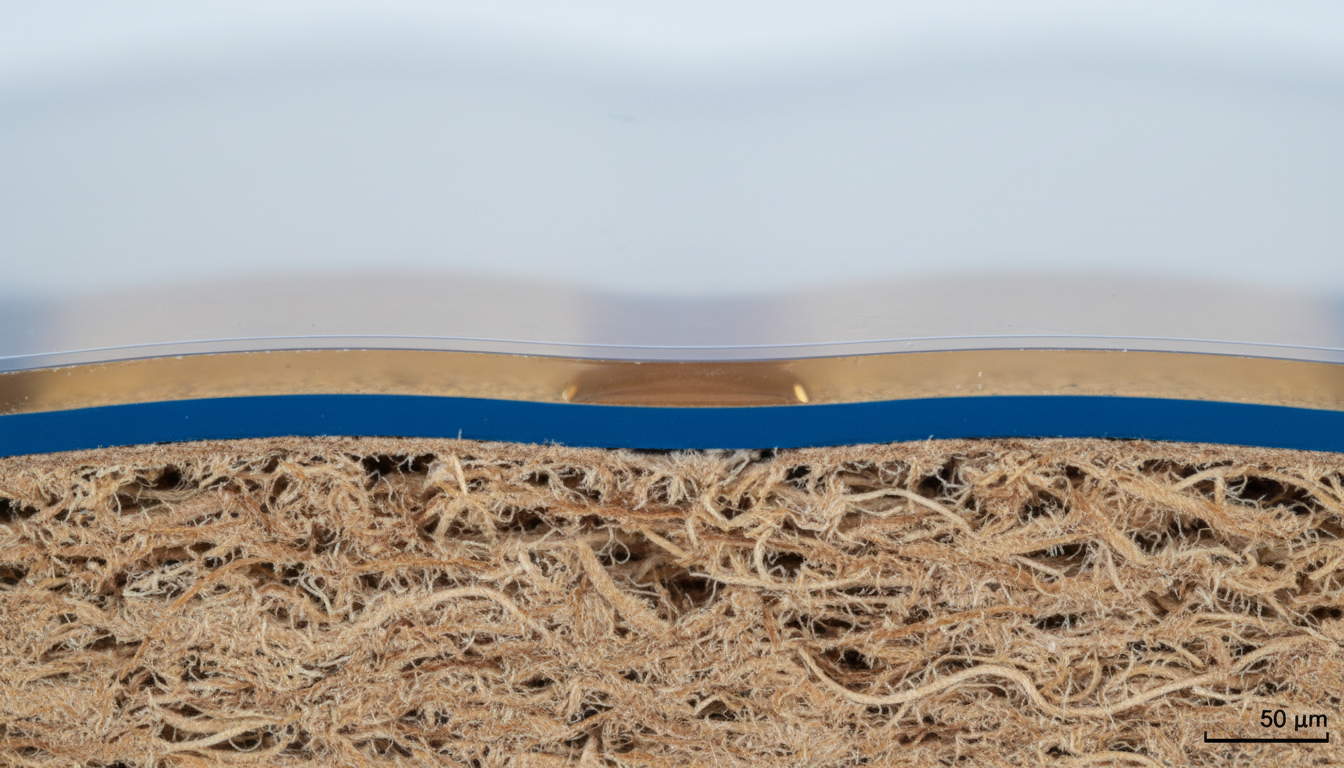
Compliance is a system, not a material certificate. FDA compliant thermal lamination film specifications must encompass the film, adhesive, and any components that may migrate. Simply using an FDA-listed film is insufficient if the adhesive or printing inks are not also approved for indirect food contact. The FDA 21 CFR 175.300 addresses adhesives, while EU Regulation 10/2011 sets specific migration limits for plastics.
Your compliance checklist must include:
- Film Material Declaration: Request a Certificate of Compliance (CoC) stating compliance with FDA 21 CFR 177.1520 (for olefins like BOPP/CPP) or 177.1630 (for PET).
- Adhesive System Validation: Ensure the adhesive is formulated for food contact and its migration limits are documented.
- Overall Migration Testing: For EU compliance, the finished laminated structure must pass overall migration limits (10 mg/dm²).
- Supplier Audits: Verify your laminator’s quality management system. Our ISO 14001:2015 certification, for instance, ensures traceability and controlled material sourcing.
"I've seen projects delayed by six months because brands assumed 'FDA-grade film' meant the entire laminate was compliant," says Michael Chen, our Regulatory Affairs Manager. "The 2025 update to EU 10/2011 introduces new simulants for alcoholic foods. Your 2026 specifications must account for this, requiring testing with ethanol as a food simulant for products above 10% ABV."
Case Study: Reducing Rejects in Frozen Food Packaging
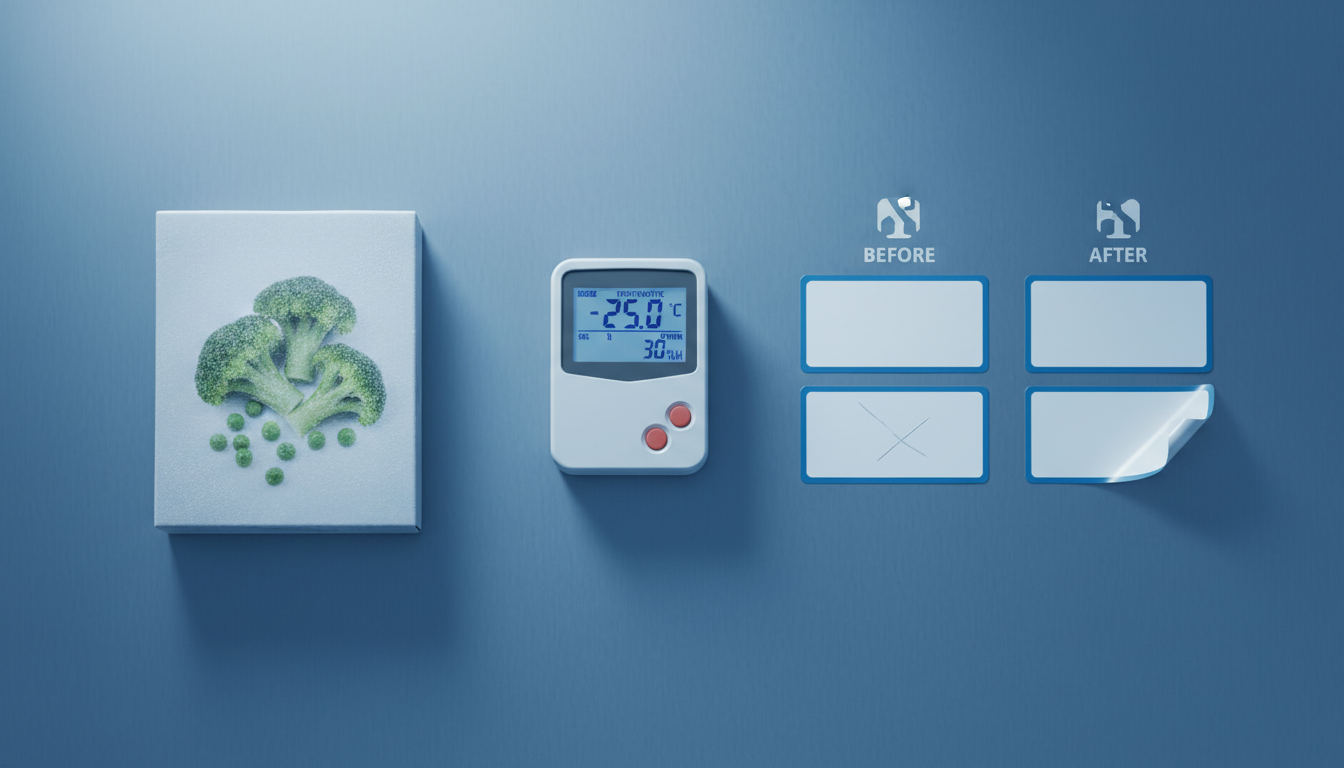
A mid-sized frozen vegetable brand was experiencing a 5% rejection rate due to label delamination and ink smudging after freezer storage. The problem was a 12-micron gloss BOPP film specified primarily for its appearance. The film’s moisture vapor transmission rate (MVTR) was too high for the humid, sub-zero environment, allowing condensation to compromise the adhesive bond.
Our material lab conducted a side-by-side test of three options: an 18-micron BOPP film, a 15-micron PET film, and the incumbent 12-micron BOPP. All were subjected to 30 cycles between -25°C and room temperature at 85% relative humidity. The 15-micron PET film showed no adhesion loss and maintained perfect barcode scanability. The cost increase was $0.04 per label. However, eliminating the 5% reject rate saved the client over $25,000 per production run, achieving a full ROI in the first order. This underscores that the true cost of lamination is in total cost of ownership, not just the thermal lamination cost per square foot.
Optimize your packaging barrier and cut reject rates with data-driven film specification. Send us your product details and storage requirements for a free laminate analysis.
Get a Free Quote →Decision Framework: Selecting the Right Thermal Lamination Partner
Choosing a partner goes beyond price per square foot. It requires evaluating technical capability, compliance rigor, and scalability. A partner with a 15,000 sqm facility and 50M+ monthly capacity, like JinXinCai, can handle peak demands, but the real differentiator is in the pre-production validation process.
Use this decision flow to evaluate potential partners:
Decision: Is Thermal Lamination the Right Choice for Your Project?
- If your run is under 5,000 units and requires high scratch resistance → Consider digital UV coating or soft-touch varnish for a 25-35% cost saving, accepting slightly lower chemical resistance.
- If your product requires a moisture barrier (MVTR < 5 g/m²/day) or will experience temperature cycling → Thermal lamination is necessary. Proceed to material selection.
- If your primary need is oxygen barrier (OTR < 200) for shelf-stable foods → Specify PET film. Start with 12-micron, but test 18-micron if shelf life exceeds 18 months.
- If your budget is constrained and moisture barrier is the only concern → Specify BOPP film. Use 18-20 micron for frozen food, 12-15 micron for ambient dry goods.
- If your product has direct or indirect food contact → Your partner must provide full migration testing documentation for the film, adhesive, and ink system, not just material certificates.
When auditing a partner, ask for their standard operating procedure for laminator temperature settings, nip pressure, and web tension control. Consistent settings within ±2°C and ±5 psi are critical for uniform adhesion. Also, review their waste reduction practices aligned with ISO 14001:2015, as film waste can account for 8-12% of material cost in inefficient operations.
Conclusion: Implementing Your 2026 Thermal Lamination Strategy
Specifying thermal lamination film thickness for food packaging is a strategic decision that impacts shelf life, compliance, and profitability. The move for 2026 is toward data-driven specification: using barrier targets (MVTR, OTR) and total cost modeling, not just aesthetic preferences or historical choices. Begin by testing your current packaging against your actual distribution stresses. Then, use the comparison frameworks here to select the optimal material and thickness. Finally, partner with a converter that demonstrates rigorous process control and compliance expertise, not just the lowest price per unit. At JinXinCai, our integrated approach—from G7-calibrated printing to ASTM-tested lamination—ensures your packaging performs as designed, from our facility in Shenzhen to your customer’s hands.
Frequently Asked Questions
How does film thickness affect the moisture barrier in frozen food packaging?
Film thickness is directly proportional to moisture barrier performance. A 20-micron BOPP film typically has a Moisture Vapor Transmission Rate (MVTR) of 3-5 g/m²/day, while a 12-micron film is around 6-8 g/m²/day. For frozen food, where condensation is a constant threat, the thicker film reduces moisture ingress by approximately 40-50%, significantly lowering the risk of label adhesive failure, ink run, and substrate degradation during freeze-thaw cycles.
What is the cost difference between 12-micron and 20-micron BOPP lamination?
The material cost difference is typically $0.03 to $0.06 per square foot. A 12-micron BOPP film may cost $0.08-$0.12/sq ft, while a 20-micron film ranges from $0.11-$0.18/sq ft. The breakeven for upgrading occurs when the added cost is offset by a reduction in spoilage or rejects. For example, if the thicker film prevents a 1.5% defect rate on a product with a $5 unit cost, the upgrade pays for itself on runs as small as 10,000 units.
What adhesive specifications should I request for high-gloss retail boxes?
For high-gloss retail boxes, specify a transparent, high-clarity adhesive with a glass transition temperature (Tg) above 50°C to prevent hazing or 'orange peel' effect. Request an adhesive with excellent lay-flat properties to prevent curling on heavyweight board. Crucially, ensure it is compatible with your ink system—solvent-based inks may require a different adhesive than UV-cured inks. Our prepress team always runs a bond test sample using your exact substrate and ink before production.
How does thermal lamination compare to UV coating for scratch resistance?
Thermal lamination provides superior scratch and chemical resistance. A 12-micron PET film can withstand over 1,000 double rubs in a Taber abrasion test, while even a high-performance UV coating typically fails between 200-400 rubs. However, UV coating is more cost-effective for short runs (under 5,000 units) and allows for selective (spot) application. The decision hinges on durability needs vs. budget and quantity; for long-lasting retail packaging that sees handling, lamination is the definitive choice.