Factory-floor analysis of 2026 pet food packaging: how FDA 21 CFR 174-186, high-barrier materials, and hybrid printing models will define procurement, with actionable frameworks to reduce costs and mitigate risk.
Forget generic market reports. By 2026, selecting a pet food packaging partner will be a high-stakes decision defined by validated compliance, material science, and production agility. The recent Pet Food Packaging Market Size, Share & Trends Report, 2035 projects growth, but the real story is in the operational details. Based on thousands of production runs, we see three non-negotiable shifts: regulatory documentation as a baseline, barrier specifications over material names, and hybrid production for cost control. Here’s how to prepare.
Key Takeaways for 2026:
- Compliance is Table Stakes: By 2026, expect major retailers to require third-party validation of FDA 21 CFR 174-186 and EU 10/2011 compliance for all food-contact materials and inks.
- Barrier Specs Trump Brand Names: Procurement will shift from asking for "a foil pouch" to specifying MVTR < 0.5 g/m²/24h and grease resistance > Kit 12, backed by supplier test data.
- Hybrid Printing Becomes Standard: A 2026 best practice will be digital for variants/pilots (<10K runs) paired with flexo/gravure for core SKUs, reducing total cost by 25-35%.
- Mono-Material Deadlines Loom: Major brand commitments will make commercially viable, high-barrier mono-material (e.g., recyclable PE) structures a procurement requirement by 2026-2027.
Why FDA & EU Compliance is the Non-Negotiable Foundation
What’s happening is a legal hardening. FDA 21 CFR 174-186 and EU Regulation 10/2011 aren't new, but enforcement and buyer expectations are tightening. This moves compliance from a back-office checklist to a frontline procurement criterion.
Why it matters is brand survival, not just legality. A non-compliant component—like an ink with unapproved photoinitiators—can trigger a recall. A 2021 report by the Food Safety Magazine estimated the average cost of a food recall at $10M, not including brand equity loss.
“The detail most brands get wrong is assuming ‘food-safe’ ink is enough. For direct or near-contact packaging, you need low-migration inks with documented compliance for the specific substrate and printing process,” notes David Chen, our Head of Pre-Press and Compliance. “We run G7-calibrated proofs with these inks on every job to ensure predictability.”
How to prepare starts with auditing potential partners. Don’t just ask for ISO certificates. Demand evidence of direct compliance.
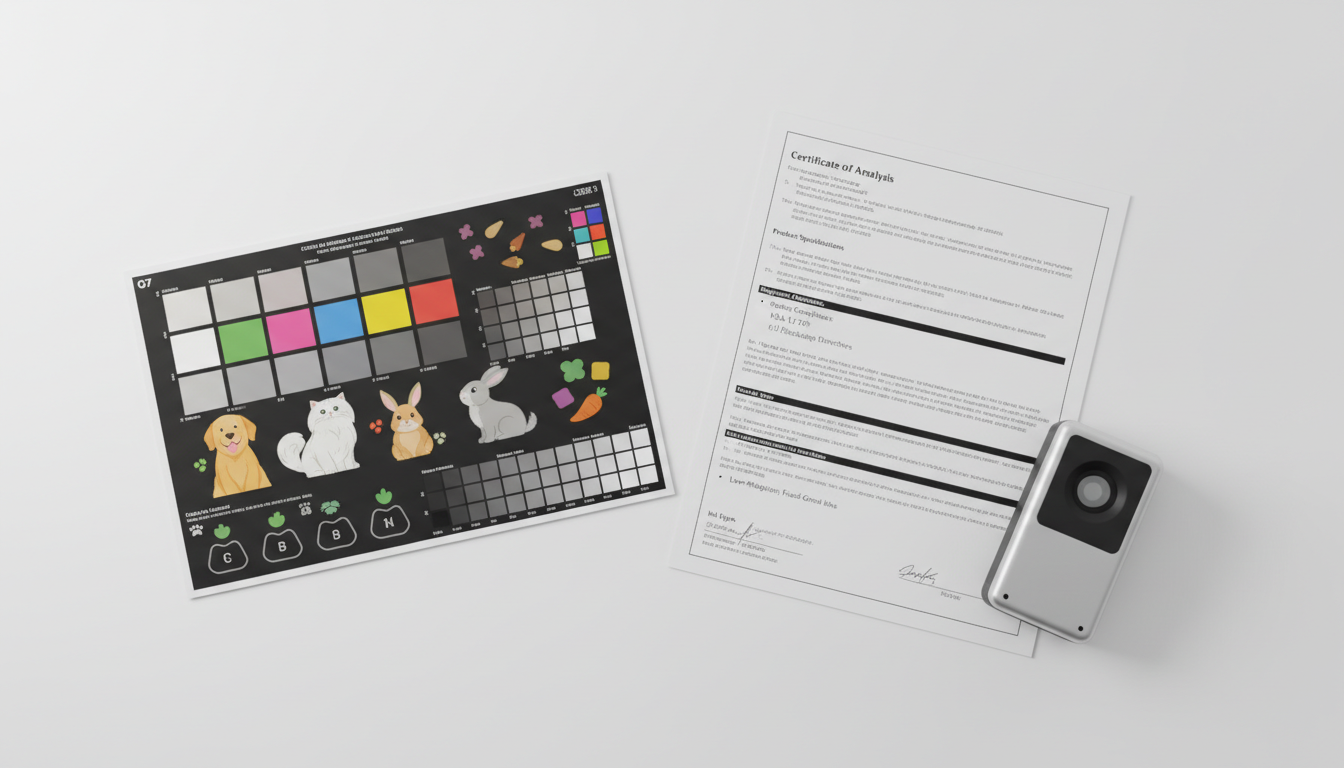
- For Inks: Request Certificates of Analysis (CoA) specifying compliance with FDA 21 CFR 174-178 and EU 10/2011 migration limits. Verify they are formulated for your specific print process (e.g., UV offset, flexo).
- For Substrates: For folding cartons, ensure the board supplier provides a FDA Letter of Guarantee for food-contact specialty material options like C1S or SBS. For films, request statements on the compliance of all layers (print, barrier, seal).
Decision: Evaluating a Supplier's Compliance Readiness
- If they provide only general ISO 9001 certificates → Request specific FDA/EU documentation for your job's inks and substrate.
- If they provide compliance letters for materials only → Verify the same for inks, coatings, and adhesives used in finishing.
- If all documentation is in order → Ask for their internal process (e.g., pre-press checks, batch tracking) to ensure compliance is maintained run-to-run.
In our experience running 6-color Heidelberg presses for a food-beverage client, the solution was FDA-compliant C1S board paired with certified food-grade inks. This foundational step enabled safe market entry in both the US and EU.
Material Selection: Decoding Barrier Specs vs. Cost Reality
What’s happening is a shift from flexible packaging growth to intelligent flexible packaging specification. The trend isn't just toward pouches; it's toward materials engineered for specific fat, moisture, and aroma barriers.
Why it matters is total cost of failure. A material that saves $0.02 per unit but allows oxidation or moisture ingress can ruin a $500,000 product batch and erode consumer trust. Performance must be quantified.
Estimated average total cost of a food recall
How to prepare requires moving beyond generic names. You must understand and specify the key metrics.
- Water Vapor Transmission Rate (MVTR): Measured in g/m²/24h. For dry kibble, target < 5.0. For semi-moist, target < 1.0 or lower. Always test at 38°C/90% RH to simulate realistic conditions.
- Grease Resistance: Use the Kit Test (1-12). Pet foods high in fats and oils often require a rating of Kit 10-12 to prevent unsightly grease spots and maintain integrity.
- Oxygen Transmission Rate (OTR): Critical for preservative-free or premium foods. Target < 5 cm³/m²/24h for extended shelf life.
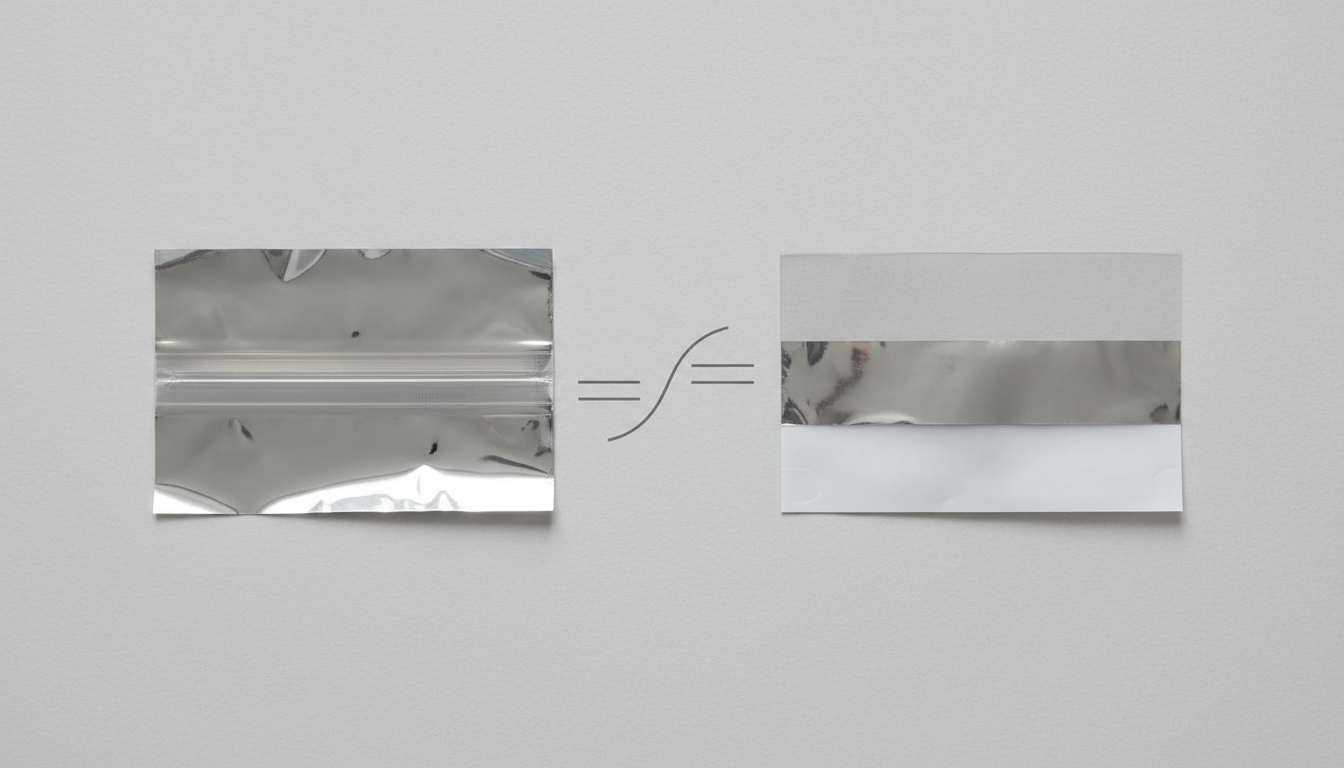
A common mistake we see is clients specifying "metallized" without defining the substrate. Metallized BOPP is cost-effective but can be prone to pinholing. A PET/AL/PE laminate offers superior barrier but at a 40-60% higher material cost. The right choice depends on your product's sensitivity and target shelf life.
| Material Structure | Approx. MVTR (g/m²/24h) | Grease Resistance (Kit) | Relative Cost per 1000 Bags | Best For |
|---|---|---|---|---|
| Metallized BOPP / PE | 0.8 - 1.5 | 10-12 | $ Base | Dry kibble, standard shelf life |
| PET / Metallized PET / PE | 0.4 - 0.8 | 12 | +20-30% | High-fat treats, extended freshness |
| PET / Aluminum Foil (7µm) / PE | < 0.1 | 12 | +40-60% | Premium wet food toppers, maximum barrier |
The trade-off is clear: incremental barrier improvement costs incrementally more. The breakeven analysis isn't just material cost vs. material cost. It's: (Cost of Barrier Upgrade) vs. (Risk of Shelf-Life Failure × Probability of Occurrence × Cost of Recall/Write-Off). For high-margin, sensitive products, the upgrade is almost always justified.
Printing & Production: Optimizing for Run Length and Compliance
What’s happening is the death of the monolithic production run. Brands need agility: regional variants, limited editions, and rapid new product launches, all while maintaining core SKU economies of scale.
Why it matters is total cost of ownership. Producing 12 low-volume variants all on separate flexo plates is financially ruinous. Producing a million core bags on digital presses is equally inefficient. Smart procurement segregates production by volume and need.
How to prepare requires understanding the cost drivers of each print method and building a hybrid model.
- Flexographic Printing: Ideal for long runs (>50K units). High plate cost (~$250-500/color), but minuscule per-unit cost. Best for stable, high-volume SKUs. Achieves excellent ink laydown on films.
- Rotogravure Printing: For ultra-long runs (>500K units). Exceptional color consistency and image quality. Cylinder costs are very high ($2K+/color), making short runs prohibitive.
- Digital Printing (e.g., HP Indigo): Zero plate costs. Ideal for runs under 10K units, personalization, or rapid iteration. While per-unit cost is higher, the ability to print 12 different versions in one pass with no setup changes is transformative.
The detail that makes the difference is the hybrid model. We executed this for a food brand needing EU and US variants. We printed 100,000 core cartons on our Heidelberg Speedmaster XL 106 offset press. Then, we used digital printing for 12 regional label variations at 5,000 units each. This hybrid digital+offset approach saved them 35% versus separate offset runs for each variant, while maintaining full FDA and EU compliance across all pieces.
The formula for evaluating hybrid vs. single-method is: Total Hybrid Cost = (Digital Setup + (Digital Run Cost × Qtyvar)) + (Traditional Setup + (Traditional Run Cost × Qtycore)). Compare this to the cost of producing everything traditionally or everything digitally. For any product line with a 4:1 ratio of core to variant volume, hybrid typically wins.
Sustainability & The Mono-Material Future
What’s happening is the commercialization of high-barrier mono-material structures. The industry is moving beyond theoretical recyclability to functional, PE-based films that can match the performance of traditional multi-layer laminates.
Why it matters is impending mandate. Major retailers and global brands have made 2025-2030 commitments for 100% reusable, recyclable, or compostable packaging. By 2026, these commitments will become concrete supply chain requirements. Our guide on biodegradable vs. compostable materials explores related challenges.
“The red flag is a supplier who promises ‘recyclable’ packaging without discussing the collection and recycling infrastructure for that specific material in your target markets. Design for recycling is pointless without systems in place,” says Lisa Wang, our Sustainability Materials Manager.
How to prepare is to engage in prototyping now. The trade-off is performance at price parity.
- Current State: Mono-material PE structures can achieve MVTRs around 1.0-2.0 g/m²/24h—suitable for many dry goods but not yet equivalent to foil laminates for ultra-high barrier applications.
- Cost Impact: Development and material costs are currently 15-30% higher than standard multi-layer non-recyclable structures.
- Action: Work with a partner like us, leveraging our ISO 14001 certified processes, to run pilot batches. Test for shelf life, machinability (seal integrity, run speed), and confirm recyclability claims with third-party agencies.
| Trend | Current Adoption (2024) | 2026 Projection | Impact Level |
|---|---|---|---|
| Validated FDA/EU Compliance Docs | Leading 20% of suppliers | Standard RFP Requirement | High (Risk Mitigation) |
| Barrier Spec-Driven Procurement | Growing in Technical Teams | Standard in PO Specifications | High (Product Integrity) |
| Hybrid Digital/Traditional Printing | Early Adopter Phase | Best Practice for Portfolio Brands | High (Cost Optimization) |
| Commercial Mono-Material Barriers | Pilot/R&D Phase | Scaling for Dry & Semi-Moist | Medium-High (Compliance/Sustainability) |
Navigating the 2026 packaging landscape requires a partner with frontline production experience and certified systems. Our ISO 9001 & 14001 facility, with expertise from folding cartons to flexible materials, is built for this complexity.
Get a Free Quote & FDA Compliance Review →Action Items for Your 2026 Procurement Strategy
To move from insight to action this quarter, prioritize these steps.
- Conduct a Compliance Audit: Gather all CoAs and Letters of Guarantee for your current packaging. Identify any gaps in ink, substrate, or adhesive compliance for your key markets. This is your baseline risk assessment.
- Benchmark Your Barrier Specs: Work with your R&D team to define the minimum acceptable MVTR and grease resistance for each product type. Then test your current materials against these specs. You may be over or under-specifying.
- Model a Hybrid Production Run: Take one product line with a core SKU and 2-3 variants. Request quotes from suppliers for three scenarios: all flexo, all digital, and a hybrid approach. The cost differential will clarify your path forward.
- Explore Mono-Material Prototypes: Engage with at least two suppliers on next-generation recyclable structures. Factor the potential cost premium and extended timeline into your 2026-2027 packaging roadmap.
At our facility, founded in 1996, we've built our 15,000 sqm production floor around this precise blend of rigor and flexibility. From G7-calibrated pre-press checks on every job to our HP Indigo digital lines that enable 500-unit MOQs for testing, we operationalize these trends daily. The goal isn't just to sell packaging, but to build a supply chain that is compliant, cost-optimized, and future-ready.
The 2026 leader in pet food won't be the one with the slickest marketing. It will be the brand whose packaging procurement is as sophisticated as its product formulation. Start building that foundation now.
Frequently Asked Questions
How does ink selection affect FDA compliance for direct food contact layers?
Ink selection is critical. For direct or near-contact layers, you must use low-migration inks with documented compliance for the specific substrate and printing process. Request Certificates of Analysis (CoA) proving compliance with FDA 21 CFR 174-178 and EU 10/2011 migration limits to avoid recall risks.
What is the breakeven run length for rotogravure vs. flexographic printing on stand-up pouches?
Rotogravure becomes cost-effective for ultra-long runs exceeding 500,000 units due to high cylinder costs (~$2,000+ per color). Flexographic printing is ideal for long runs over 50,000 units, with plate costs of $250-$500 per color. For runs under 10,000 units, digital printing with zero plate costs is typically the most efficient choice.
What specific tests should I require from my converter for moisture and oxygen barrier validation?
Require validated test data for Water Vapor Transmission Rate (MVTR) and Oxygen Transmission Rate (OTR). For dry kibble, target an MVTR < 5.0 g/m²/24h tested at 38°C/90% RH. For extended shelf life, specify an OTR < 5 cm³/m²/24h. Always request supplier test reports, not just generic material claims.
How do zipper and spout attachments impact overall barrier integrity and testing?
Zipper and spout attachments create potential failure points for barrier integrity. They require specific seal integrity testing, such as burst or leak tests, beyond standard laminate testing. Ensure your converter provides validation data for the complete finished pouch, including all closures, to guarantee the required MVTR and OTR are maintained.