A 22% cost reduction on a 2-million-unit run reveals the real drivers of packaging pricing. Our 2026 framework shows when to choose offset or digital based on your specific quantity, color, and material needs.
You've just received a quote for 10,000 custom folding cartons. The per-unit price seems reasonable, but you're left wondering: could you have saved 20% by switching to digital, or was offset the right call? The real cost drivers in custom packaging are often hidden in the specifications, not the headline price. A common mistake we see is brands locking into a printing method based on outdated rules of thumb, leaving thousands in efficiency savings on the table each year. At JinXinCai, our pre-press team analyzes over 500 packaging programs annually, and the most frequent oversight is failing to model the total cost per piece across its entire lifecycle—from plate charges and make-ready time to the impact of substrate choice on finishing yields.
- Offset printing becomes cost-effective at approximately 2,800 units when factoring in plate charges and superior color consistency for reprints.
- Specifying a minimum order quantity for custom folding cartons below 500 units often triggers digital pricing, which can be 2-3x higher per piece.
- A 4-color process job on a Heidelberg Speedmaster XL 106 has a make-ready time of 45-60 minutes; poor file preparation can double this, adding $200-$400 to your run.
- Using a 300gsm C1S SBS board instead of 350gsm can reduce your material cost by 18% without compromising structural integrity for most retail applications.
- For waterproof label material for cold chain logistics, BOPP film with a 2.5 mil thickness and permanent acrylic adhesive maintains adhesion at -20°C, preventing label failure.
The Real Cost Drivers in Custom Packaging
Understanding your true cost per piece starts with dissecting the four pillars of packaging pricing: materials, pre-press, press time, and finishing. Most procurement models focus only on the first and third, creating blind spots. In our facility, we track that for a standard 18pt folding carton, material constitutes 45-55% of the total cost. However, the remaining 45-55% is where strategic specification creates savings or triggers waste.
A critical specification is the minimum order quantity for custom folding cartons. Our standard MOQ is 500 units, but the economic logic shifts at 5,000. Below this threshold, digital printing's lack of plates often wins. Above it, the fixed costs of offset—like the $300-$600 for a set of Kodak thermal plates for our Heidelberg Speedmaster XL 106—amortize across more units, driving the per-piece cost down dramatically. The choice of substrate, like a 300gsm C1S SBS board versus a 24pt coated solid bleached sulfate (SBS), can alter material costs by 25% and directly affect finishing yields on die-cutting lines.
Finishing is the most frequently underestimated cost driver. Adding a spot UV coating or embossing requires additional tooling and machine passes. According to our head of finishing, with 12 years on Bobst systems, "A single embossing die can cost $800-$1,200. If your run is 5,000 units, that adds $0.16-$0.24 to each box before we even run the sheet through the press." This is why a holistic how to calculate print packaging cost per piece model must include every conversion step.
Offset vs Digital: When Does Each Make Financial Sense? (2026 Update)
The breakeven point between offset and digital printing hinges on three variables: quantity, color complexity, and required consistency over time. For 2026, with advancements in digital toner adhesion and offset press automation, the decision framework has sharpened.
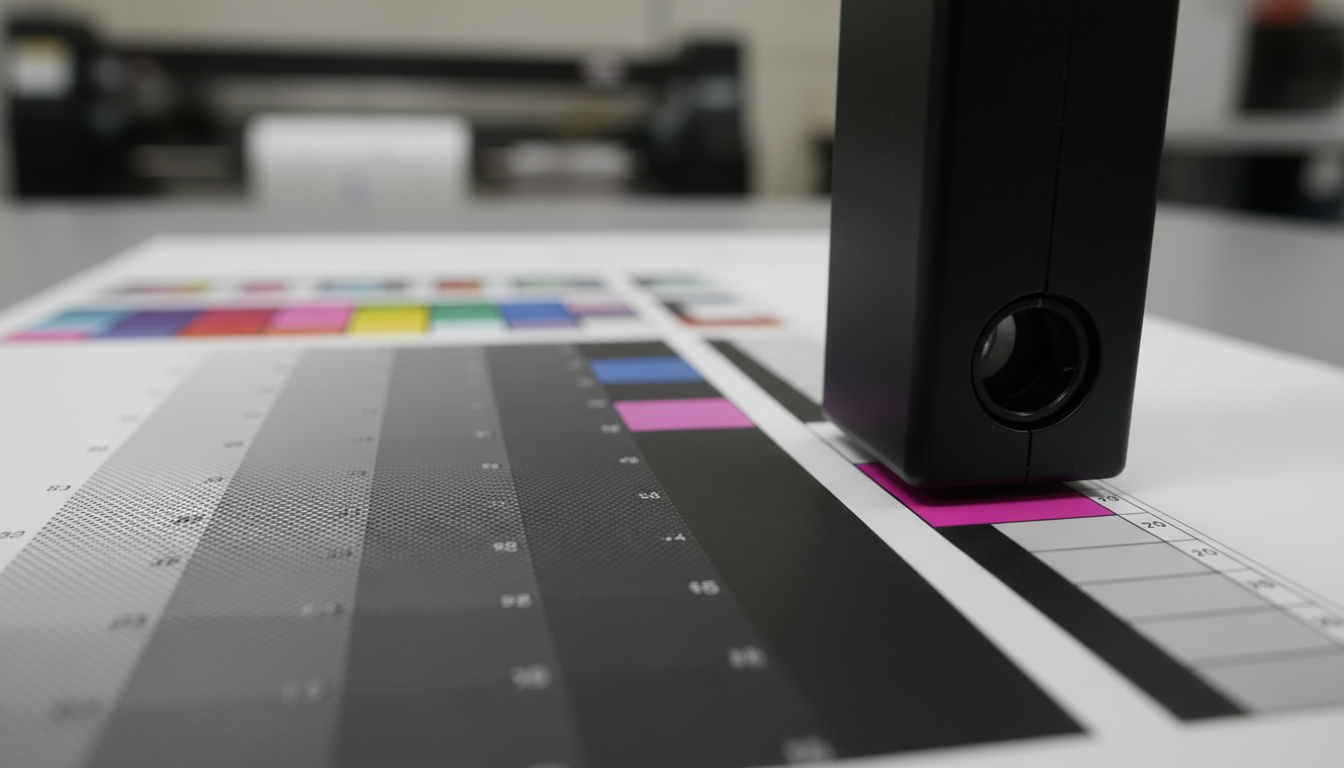
Choose offset lithography when your run exceeds 5,000 units, requires exact Pantone spot colors, or needs identical color across multiple reprints over 12+ months. Our Heidelberg Speedmaster XL 106, with its inline spectrophotometer, maintains a Delta E tolerance of less than 1.5, which is critical for brand integrity. Choose digital printing (like on an HP Indigo 12000) for runs under 3,000 units, when versioning or personalization is required, or for rapid prototypes where a 3–5 business day lead time is mandatory.
| Factor | Offset Printing | Digital Printing |
|---|---|---|
| Effective Cost Per Unit (2026) | $0.08 – $0.25+ (highly volume dependent) | $0.25 – $0.80+ |
| Economic Run Length | > 2,800 – 5,000 units | < 3,000 units |
| Color Accuracy & Consistency | Superior (Delta E < 1.5 achievable with G7 calibration) | Very Good (Delta E < 3.0), can drift between batches |
| Make-Ready Time & Cost | 45-90 min, $300-$600 plate charges | Near zero, no plates |
| Best For | Long runs, brand colors, multi-substrate campaigns | Short runs, versioning, fast turnaround proofs |
The trade-off analysis is mathematical. Let's assume a 4-color job on 300gsm board. Offset has plate charges of $450 and a per-unit cost of $0.12. Digital has no plate cost but a per-unit cost of $0.35. The breakeven formula is: (Plate Cost) / (Digital Unit Cost - Offset Unit Cost) = Breakeven Quantity. $450 / ($0.35 - $0.12) = ~1,957 units. However, if you need two Pantone spots, adding two plates at $150 each changes the math: $750 / ($0.35 - $0.12) = ~3,261 units. This is why the offset vs digital printing cost per unit 2026 question cannot be answered without your specific color count.
How to Calculate Your True Cost Per Piece: A Step-by-Step Model
To move beyond supplier quotes and build your own cost model, you need to isolate each variable. This is the core of how to calculate print packaging cost per piece accurately. Start with material cost per thousand sheets (based on your specified GSM and finish), then add the printing cost (offset: plate cost/quantity + run cost/unit; digital: flat digital rate/unit).
Next, add finishing costs. Die-cutting a complex shape from a 24pt board has a lower yield per sheet than from an 18pt board, increasing waste. We calculate a nesting efficiency percentage—often between 70-85%—for every dieline. A 10% drop in efficiency can increase your effective material cost by 12%. Finally, factor in compliance and testing. For a food packaging FDA compliance audit checklist, you must document that all inks and coatings comply with FDA 21 CFR Part 175 for indirect food contact. This verification process, while essential, adds 2-3% to pre-production administrative costs.
Here is a simplified model for a 10,000-unit run of a 4-color folding carton on 300gsm C1S:
1. Material: $420 per 1000 sheets, 2-up nesting = $2,100.
2. Offset Printing: 4 plates @ $120 = $480. Run cost @ $18 per 1000 sheets = $180.
3. Finishing: Die-cutting & glueing @ $250 per 1000 = $2,500.
4. Compliance/Admin: 2.5% of subtotal (~$130).
Total Cost: ~$5,390. Cost Per Piece: ~$0.54.
This model reveals that finishing (46%) and materials (39%) dominate, not printing (12%).
Case Study: Reducing Unit Cost 22% on a 50,000 Run
A national retail chain approached us with a critical challenge: produce 2 million packaging units for 400+ store locations within 6 weeks. The previous supplier used a digital-first approach for speed, resulting in a high per-unit cost and slight color variance between substrate batches. The pain point was the offset vs digital printing cost per unit trade-off at massive scale.
Our solution was a hybrid approach. We used our HP Indigo 12000 for rapid digital prototyping and client approval within 48 hours, locking in the exact Pantone colors. For production, we switched to gang-run scheduling on our 6-color Heidelberg Speedmaster XL 106 presses. By ganging multiple SKUs with similar color profiles onto single large sheets (720 × 1,020 mm), we maximized sheet utilization and amortized plate costs across several clients' jobs. This required meticulous G7 color calibration and spectrophotometer verification on-press to ensure a Delta E of less than 1.5 across all substrates, from C1S board to coated paper.
Optimize your next packaging run. Share your specs, quantity, and timeline for a detailed cost analysis and gang-run feasibility check.
Get a Free Quote →The outcome was the delivery of all 2 million units on schedule with unprecedented color consistency. The strategic shift from a purely digital model to optimized offset gang runs resulted in a 22% reduction in per-unit cost compared to their previous supplier. This case underscores that for large runs, the efficiency of high-speed offset, combined with intelligent scheduling, is unrivaled. The key was treating the 2-million-unit order not as one job, but as a series of gang-run opportunities.
What Specifications Lock In Your Pricing? (GSM, Colors, Finishes)
Your RFQ specifications are a financial commitment. Three areas most directly lock in your cost: substrate weight (GSM), color separation, and finishing complexity. A move from a 300gsm C1S SBS board to a 350gsm version increases material cost by approximately 15-20%. More critically, heavier board can reduce the number of units we can nest on a standard sheet during die-cutting, lowering yield and increasing cost per piece by a further 5-10%.
Color specification is paramount. A 4-color process job is standard. Each additional Pantone spot color requires a separate printing plate, ink formulation, and press station. According to Smithers Pira's 2025 Global Print Market report, surveying 800+ converters, adding one spot color increases total job cost by an average of 8-12% for mid-size runs. For finishes, embossing or foil stamping requires custom brass dies, which are a fixed cost regardless of quantity. A complex embossing die can take 15-20 hours to engrave at a cost of $50/hour.
For labels, especially in demanding environments, material choice dictates performance and cost. For a waterproof label material for cold chain logistics, you need a substrate that maintains adhesion and legality through temperature cycles. A 2.5 mil BOPP film with a permanent acrylic adhesive is standard. However, if your product will experience condensation, you must specify an adhesive rated for cold chain adhesive performance and a face material with a low moisture vapor transmission rate (MVTR). Testing to ASTM F1980 for accelerated aging can validate this, but adds to the timeline and cost.
The 2026 Facility Investment: What It Means for Lead Times & MOQs
The recent announcement that SunDance is adding a production facility in 2026 signals a broader industry trend: consolidation of capacity and a push toward greater automation to compete on speed and flexibility. For brand managers, this means two things. First, lead times for standard offset jobs may compress as regional capacity increases. Second, the economic minimum order quantity for custom folding cartons may become more flexible as factories use advanced scheduling software to pool smaller orders into efficient gang runs.
At JinXinCai, our 15,000 sqm facility is already geared for this shift. Our investment in Heidelberg's Prinect workflow software allows us to schedule jobs with unprecedented granularity. In practice, this means we can sometimes accommodate runs below our stated 500-unit MOQ by placing them in a planned gang run with complementary jobs, offering a near-digital turnaround at a closer-to-offset price. This capability is directly tied to our ISO 9001:2015 certified processes, which ensure quality consistency even in these mixed-production environments.
"The future isn't offset versus digital; it's integrated workflow management," says Li Wei, our Head of Production Planning with 18 years of experience. "Our Prinect system analyzes substrate, color, and finishing requirements across all pending jobs to build the most efficient production queue. A client's 5,000-unit order might run alongside a 50,000-unit job if the color profiles align, saving both parties money."
This operational model directly impacts your how to calculate print packaging cost per piece. The potential for cost-sharing on make-ready and plate amortization in a gang-run scenario can lower your effective cost by 5-15%, but it requires flexibility on exact scheduling and a collaborative approach with your manufacturer.
Your Decision Checklist: 5 Questions Before You Place the PO
Before you approve your next packaging order, use this checklist to validate your cost and method decisions. This framework incorporates the material, compliance, and logistical factors that define 2026 production.
- What is your total lifecycle volume? If you'll reorder this SKU multiple times over 2 years, offset's superior color consistency (Delta E < 1.5) is worth the initial plate investment, even for a first run of 3,000 units.
- Have you validated material compliance? For any food, cosmetic, or pharmaceutical application, your food packaging FDA compliance audit checklist must include certificates of compliance for inks (FDA 21 CFR Part 175) and substrates. Don't assume—audit.
- Is your label material fit for purpose? If your product ships in a cold chain, specify a waterproof label material for cold chain logistics like 2.5 mil BOPP and request adhesive performance data at -20°C.
- Can your design be manufactured more efficiently? Ask your supplier for a nesting analysis of your dieline. A 5% improvement in yield on a 100,000-unit run can save thousands in material waste.
- Have you explored gang-run potential? Inquire if your manufacturer can slot your job into a scheduled gang run. This may add a few days to lead time but can significantly reduce your offset vs digital printing cost per unit 2026 calculation.
Implementing this checklist requires a partnership with a manufacturer that has both the technical depth and the operational transparency to provide these insights. It moves the conversation from a simple per-unit quote to a total value analysis.
The landscape of offset vs digital printing cost per unit 2026 is defined by integration, not isolation. The lowest cost per piece comes from a precise alignment of your quantity, color, and material specs with a manufacturer's capabilities and scheduling intelligence. The investment in facilities like the new SunDance plant points to an industry optimizing for this very alignment. Your next step is to move from generic RFQs to collaborative specification. Provide your potential supplier with your volume projections, compliance requirements, and performance needs. A partner like JinXinCai can then model the true cost across offset, digital, and hybrid pathways, showing you the breakeven points and hidden efficiencies specific to your job. This is how you control packaging costs in 2026 and beyond.
Frequently Asked Questions
How does the number of colors affect the breakeven point between offset and digital?
Each additional Pantone spot color in offset requires a separate printing plate, typically costing $120-$150 each. This increases the fixed cost. For example, adding two spot colors to a 4-color process job raises plate costs from ~$480 to ~$780. This shifts the breakeven quantity higher. Using the formula (Total Plate Cost) / (Digital Unit Cost - Offset Unit Cost), the breakeven point can increase from ~2,000 units to over 3,200 units, making digital relatively more attractive for lower quantities of complex color jobs.
What should I specify on my RFQ to get accurate per-unit pricing?
Provide these seven specifics: 1) Exact quantity and projected annual reorder volume, 2) Substrate type and GSM/caliper (e.g., 300gsm C1S SBS), 3) Final trimmed dimensions and a print-ready PDF with dieline, 4) Color breakdown (e.g., 4-color process + 2 Pantone spots), 5) All finishing requirements (coating, embossing, die-cutting), 6) Any compliance standards (e.g., FDA 21 CFR Part 175), and 7) Required ship date. This allows for precise material, plate, and machine time costing, avoiding later change orders.
How does substrate choice (e.g., 18pt vs 24pt board) impact the cost model?
Heavier board (like 24pt vs 18pt) increases raw material cost by 25-35%. More significantly, it reduces the number of units ("nesting yield") that can be cut from a single press sheet during die-cutting. A yield drop from 85% to 75% effectively increases your material cost per piece by over 13%. Furthermore, heavier board may require slower press speeds or additional drying time. For a 50,000-unit run, choosing 18pt over 24pt board can lead to total savings of 15-20% when factoring in material, yield, and production efficiency.
What are the hidden cost factors in finishing (embossing, spot UV)?
Beyond the per-unit runtime cost, finishing adds significant fixed costs. A custom embossing die costs $800-$1,200 to engrave and has a setup time of 1-2 hours. Spot UV requires creating a separate plate and precise registration on-press, adding 20-30 minutes of make-ready time. For a short run of 2,000 units, these fixed costs can add $0.40-$0.60 to each piece. Always request a line-item breakdown of finishing costs to understand the fixed (tooling/setup) versus variable (per-unit runtime) components.