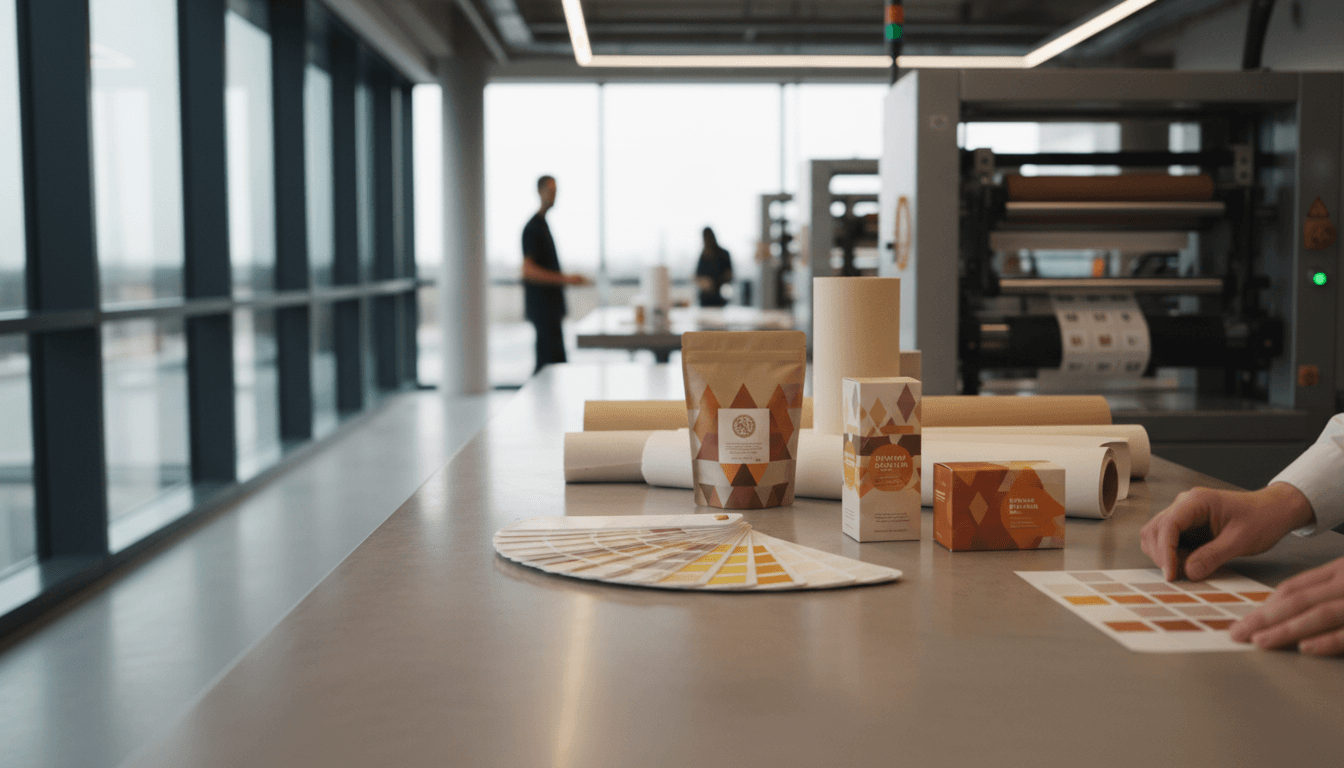
The label printing machine market is growing at 7.2% CAGR. Discover key drivers, technology trends, and strategic insights to optimize your packaging operations.
- The global label printing machine market is projected to grow at a 7.2% CAGR through 2033
- Digital label press adoption is accelerating due to demand for short runs and variable data printing
- Food & beverage, pharmaceuticals, and e-commerce are the primary demand drivers
- Flexographic printing still dominates high-volume applications despite digital growth
- Strategic equipment investment requires balancing volume needs, flexibility, and compliance requirements
If you're managing packaging operations, procurement, or brand strategy, you're facing a critical decision: how to invest in labeling equipment that meets today's demands while preparing for tomorrow's challenges. The label printing machine market is transforming rapidly, with new technologies, shifting consumer expectations, and regulatory pressures creating both opportunities and risks. A 7.2% compound annual growth rate signals strong demand, but also intense competition and technological disruption. This comprehensive analysis provides the strategic insights you need to navigate this evolving landscape and make informed decisions about your labeling infrastructure.
What Is the Current State of the Label Printing Machine Market?
The global label printing machine market represents a dynamic ecosystem of manufacturers, technologies, and applications that form the backbone of modern packaging operations. From simple price tags to complex pharmaceutical labels with security features, these machines enable brand communication, regulatory compliance, and supply chain efficiency across virtually every industry.
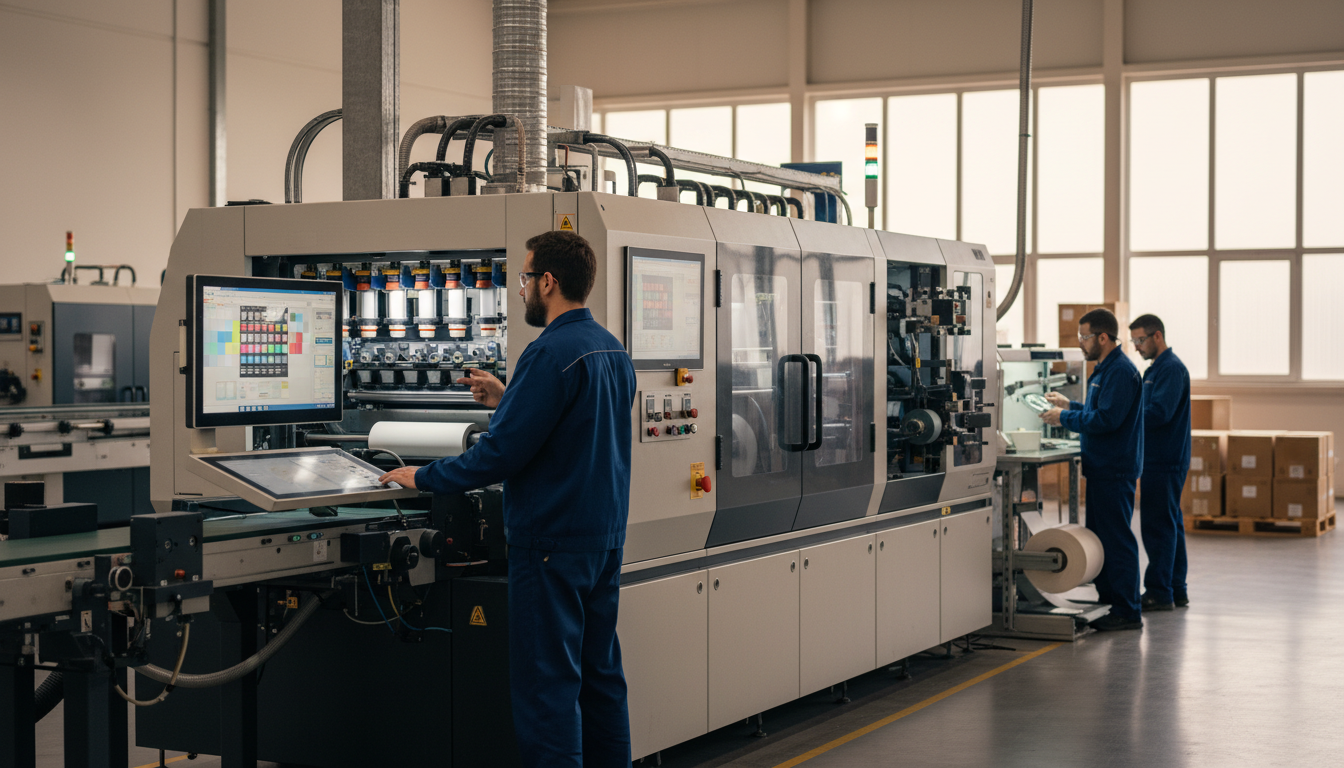
The market has evolved from mechanical stamping devices to sophisticated digital systems capable of printing millions of unique labels with variable data, QR codes, and security features. This transformation reflects broader trends in manufacturing, including Industry 4.0 integration, sustainability pressures, and the demand for personalization. Understanding this market requires examining not just the machines themselves, but the entire value chain—from raw material suppliers to end-user applications across diverse sectors.
What Are the Market Size, Share & Growth Projections?
The label printing machine market is experiencing robust expansion, with a projected compound annual growth rate of 7.2% through 2033. This growth trajectory reflects both increasing demand across key industries and technological advancements that enable new applications.
Projected compound annual growth rate for the label printing machine market through 2033
Market share distribution reveals interesting patterns: North America and Europe currently hold approximately 60% of the global market share, driven by established manufacturing bases and stringent labeling regulations. However, the Asia-Pacific region is growing at nearly double the global average rate, with China, India, and Southeast Asian nations investing heavily in packaging infrastructure. The label printer market size expansion isn't uniform across technologies—digital systems are growing at 12-15% annually, while traditional flexographic equipment maintains steady 3-4% growth in established applications.
Several factors contribute to this label printer CAGR 7.2% projection: increasing e-commerce penetration (requiring more shipping labels), pharmaceutical serialization mandates, food labeling regulations, and brand differentiation through premium packaging. The market isn't just growing—it's becoming more sophisticated, with higher-value systems commanding increasing portions of total revenue.
What Are the Key Drivers and Industry Trends?
Understanding the forces shaping the label printing equipment trends requires examining both demand-side pressures and supply-side innovations. These drivers create a complex landscape where strategic decisions about equipment investment can significantly impact operational efficiency and competitive positioning.
The primary drivers include:
- Regulatory Compliance: Pharmaceutical serialization, nutritional labeling requirements, and sustainability certifications are mandating more sophisticated labeling capabilities
- E-commerce Growth: Every shipped package requires at least one label, with many requiring multiple labels for tracking, handling instructions, and branding
- Brand Differentiation: In crowded retail environments, labels serve as critical brand communication tools, driving demand for higher-quality printing and special effects
- Supply Chain Efficiency: Automated label applicator systems and integrated printing/application solutions reduce labor costs and improve accuracy
- Sustainability Pressures: Reduced waste, recyclable materials, and energy-efficient operations are becoming competitive advantages
"The most successful packaging operations aren't just buying machines—they're investing in labeling ecosystems that integrate with their ERP systems, support sustainability goals, and enable rapid adaptation to market changes. The equipment decision has become a strategic business decision." — Packaging Industry Analyst
Emerging trends include the integration of artificial intelligence for quality control, cloud-based management of distributed labeling operations, and hybrid systems that combine the best of digital and traditional technologies. Companies like JinXinCai Printing are responding to these trends by offering integrated solutions that combine their offset printing services with digital label capabilities, providing clients with flexibility across different production volumes and complexity levels.
What Types of Label Printing Machines & Technologies Dominate?
The technology landscape for label printing is diverse, with each method offering distinct advantages for specific applications. Understanding these options is crucial for making informed investment decisions that align with your production requirements, quality standards, and budget constraints.
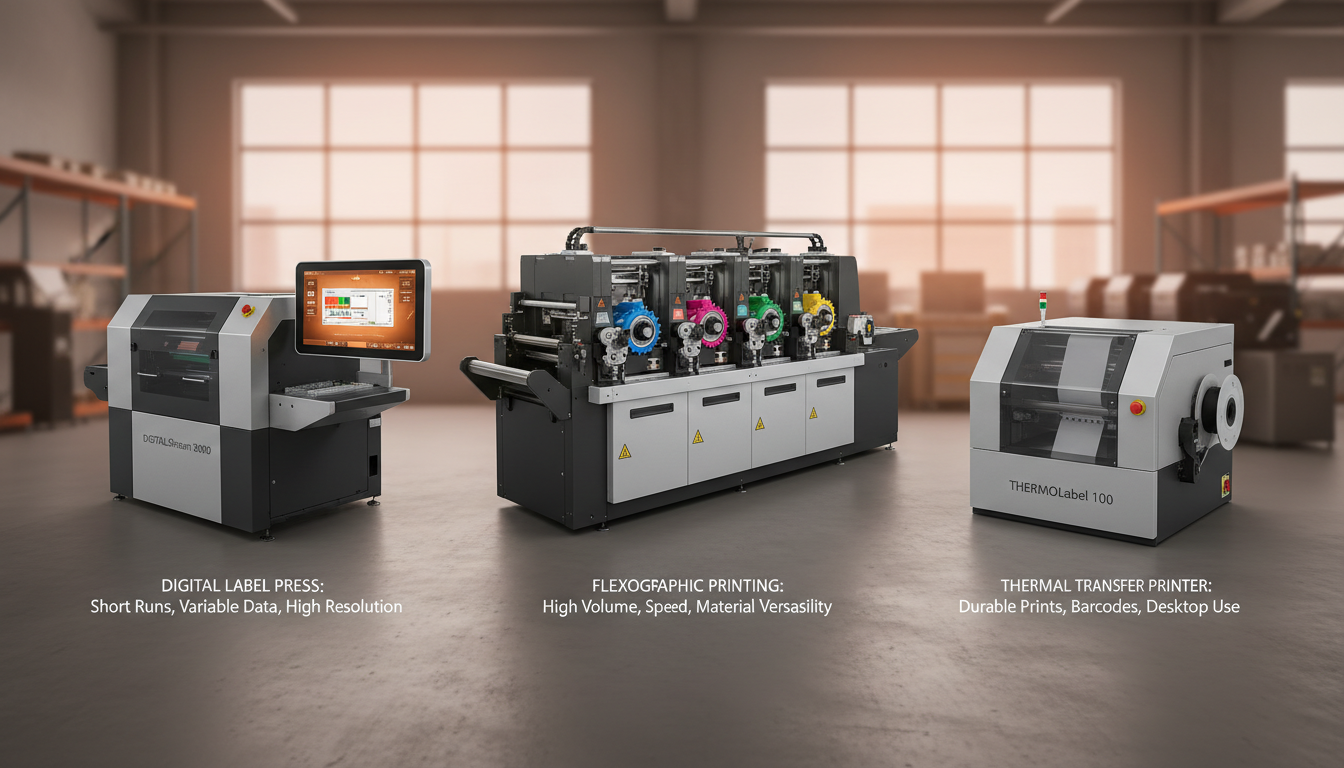
Digital Label Press technology has revolutionized the industry by eliminating plates and enabling true variable data printing. These systems excel at short to medium runs (typically 50-5,000 labels), rapid changeovers, and personalized content. The digital label press market segment is growing fastest because it addresses the increasing demand for customization, versioning, and just-in-time production.
Flexographic Printing remains the workhorse for high-volume applications, particularly in the food and beverage packaging sector. Modern flexo presses offer improved quality through advanced plate technology and closed-loop color control, making them competitive for premium applications that previously required offset printing.
Thermal Transfer Printer systems dominate applications requiring durability and resistance to environmental factors. These are particularly common for industrial labeling, chemical containers, and outdoor applications where labels must withstand temperature extremes, moisture, and UV exposure.
Other technologies include:
- Inkjet Systems: For high-speed variable data and coding applications
- Letterpress: Still used for certain premium wine and spirits labels
- Screen Printing: For special effects like thick ink layers and metallic finishes
- Hybrid Systems: Combining multiple technologies on a single platform
The choice between these technologies involves trade-offs between setup costs, running costs, quality, flexibility, and speed. For example, a company producing 100,000 identical beverage labels monthly would likely choose flexographic printing, while a pharmaceutical company needing 50,000 labels with unique serial numbers would opt for digital. Many operations are adopting a mixed-fleet approach, using different technologies for different product lines or order characteristics.
Who Are the Leading Manufacturers and What's the Competitive Landscape?
The label printing machine market share is distributed among several key players, each with distinct strengths and strategic positions. Understanding this competitive landscape helps procurement teams evaluate options and negotiate effectively.
The market leaders include:
- Industrial-scale manufacturers like Mark Andy, Nilpeter, and Omet dominate the flexographic segment with sophisticated multi-substrate presses
- Digital specialists including HP Indigo, Xeikon, and EFI lead in toner- and inkjet-based digital label presses
- Integrated solution providers like Domino and Videojet offer printing and coding systems for production line integration
- Regional players serving specific geographic markets with cost-competitive alternatives
The key manufacturers are increasingly competing on total cost of ownership rather than just purchase price, offering service contracts, training programs, and software integration. Many are developing "industry 4.0 ready" systems with IoT connectivity, predictive maintenance capabilities, and cloud-based management platforms.
Consolidation has been a notable trend, with larger companies acquiring smaller innovators to gain access to new technologies or market segments. This has created both opportunities (more integrated solutions) and challenges (potential vendor lock-in) for buyers. When evaluating label printing equipment, it's crucial to consider not just the machine specifications, but the manufacturer's stability, service network, and roadmap for future development.
Need help selecting the right label printing technology for your specific volume, quality, and compliance requirements? Our experts can guide you through the decision matrix.
Get a Free Quote →Which End-User Applications Drive Demand Growth?
The end-user industries for label printing machines represent a diverse range of applications with varying requirements for quality, durability, compliance, and volume. Understanding these applications helps align equipment capabilities with actual business needs.
Food & Beverage represents approximately 35% of total demand, driven by several factors:
- Increasing regulatory requirements for nutritional information, ingredient lists, and origin labeling
- Brand competition requiring premium finishes and special effects
- Sustainability initiatives driving demand for recyclable and compostable label materials
- Private label growth in retail creating demand for flexible, short-run capabilities
Pharmaceutical & Healthcare applications are growing at above-average rates due to:
- Global serialization mandates requiring unique identifiers on drug packaging
- Increasing use of smart labels with NFC or RFID capabilities for authentication
- Growth in clinical trial labeling with complex variable data requirements
- Medical device labeling regulations in major markets
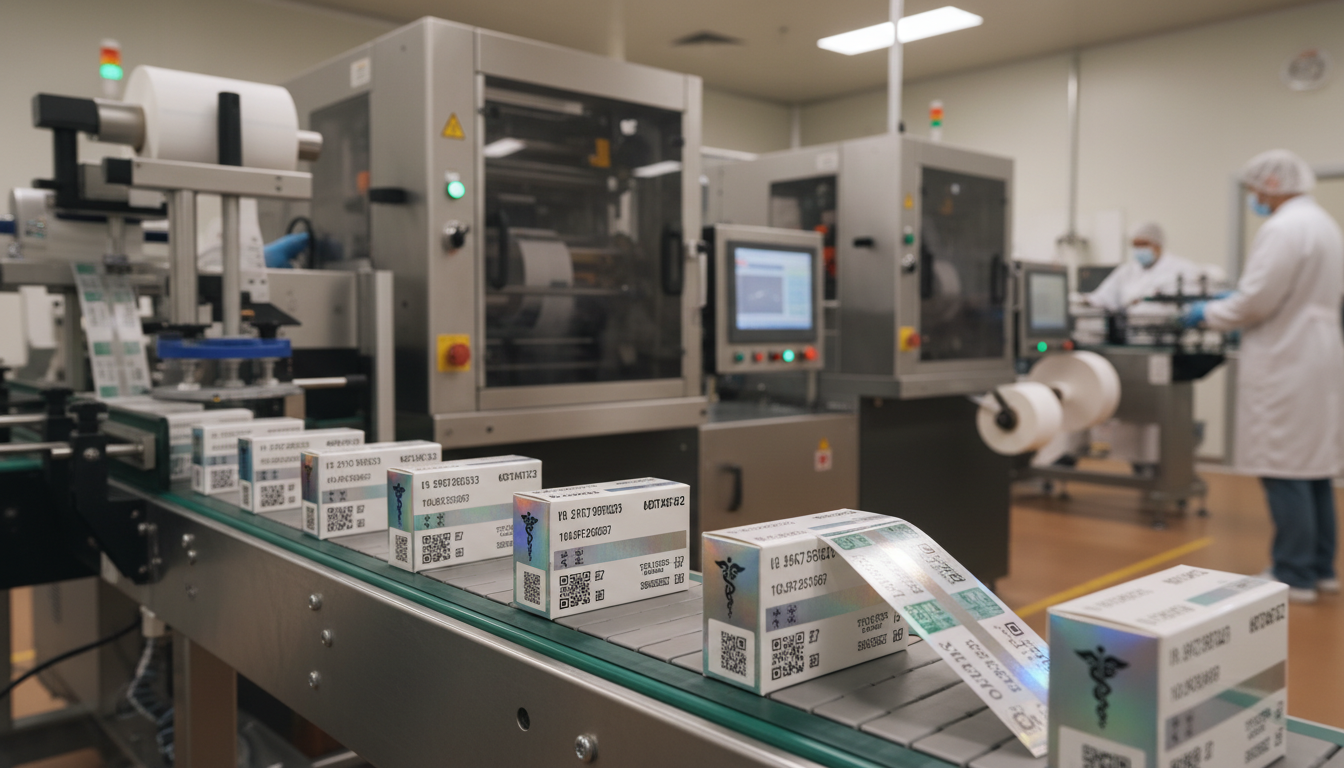
E-commerce & Logistics has emerged as a major growth driver, with requirements including:
- High-speed shipping label production with integrated tracking codes
- Returns management labels and documentation
- Custom packaging with branded labels for direct-to-consumer brands
- International shipping compliance labels
Other significant sectors include cosmetics (premium finishes, small batches), chemicals (durable, warning labels), and automotive (part identification, tracking). Each sector has unique requirements that influence the choice of printing technology, substrate, and finishing options. For example, JinXinCai Printing has developed specialized expertise in packaging labels for the Asian export market, combining regulatory knowledge with production efficiency to help clients navigate complex international requirements.
What Does the Future Outlook and Market Opportunities Look Like?
The industry forecast for label printing machines points toward continued evolution rather than revolution, with several clear opportunities for forward-thinking organizations. The market analysis suggests that success will belong to those who can balance technological capabilities with practical business needs.
Key opportunities include:
- Integration with Smart Manufacturing: Connecting label printing systems with ERP, MES, and warehouse management systems for end-to-end traceability
- Sustainable Solutions: Developing equipment that works with thinner, recyclable, or biodegradable materials without compromising performance
- Hybrid Technology Platforms: Combining the best of digital and analog technologies to optimize for both flexibility and cost-effectiveness
- Emerging Market Expansion: Tailoring solutions for growing economies with different infrastructure, regulatory, and cost considerations
- Service-based Models: Moving from equipment sales to printing-as-a-service arrangements, particularly for variable data applications
The demand growth for variable data printing capabilities represents one of the most significant opportunities. As brands seek to personalize customer experiences, create limited editions, and implement track-and-trace systems, the ability to efficiently produce unique labels at scale becomes a competitive advantage. This trend favors digital technologies but also creates opportunities for hybrid systems that combine digital variable data with traditional high-quality background printing.
Another significant opportunity lies in simplifying compliance across multiple jurisdictions. As regulations proliferate—particularly for food, pharmaceuticals, and chemicals—equipment that can easily adapt to different requirements without extensive reconfiguration will command premium pricing. This is where experienced partners like JinXinCai Printing add value, bringing regulatory knowledge to the equipment selection and implementation process.
Frequently Asked Questions
What is the projected growth rate (CAGR) for the label printing machine market?
The global label printing machine market is projected to grow at a compound annual growth rate (CAGR) of 7.2% through 2033. This growth is driven by increasing demand across multiple sectors including e-commerce, pharmaceuticals, and food & beverage, along with technological advancements that enable new applications and improve efficiency.
What are the main factors driving the demand for label printing machines?
The primary drivers include regulatory compliance requirements (particularly in pharmaceuticals and food), e-commerce growth requiring more shipping labels, brand differentiation through premium packaging, supply chain automation needs, and sustainability initiatives. Digital transformation across industries is also creating demand for variable data and smart labeling capabilities.
Which type of label printing technology is most in demand?
Digital label printing technology is experiencing the fastest growth (12-15% annually) due to its flexibility, short-run capabilities, and variable data printing features. However, flexographic printing still dominates high-volume applications, particularly in food & beverage packaging, where its cost-effectiveness for long runs remains unbeatable.
Who are the leading manufacturers in the label printing equipment market?
The market leaders include Mark Andy and Nilpeter in flexographic printing, HP Indigo and Xeikon in digital label presses, and Domino and Videojet in integrated printing/coding systems. The competitive landscape also features strong regional players and increasing consolidation as larger companies acquire specialized technology providers.
The label printing machine market presents both challenges and opportunities for packaging professionals. With a 7.2% CAGR signaling strong growth, the key to success lies in strategic equipment investment that balances current needs with future capabilities. Whether you're considering digital flexibility for personalized campaigns or high-volume flexographic efficiency for core products, the decision should be grounded in a thorough understanding of your specific applications, volumes, quality requirements, and compliance obligations.
The most successful organizations will view label printing not as a standalone function, but as an integrated component of their broader packaging and supply chain strategy. They'll select equipment that supports sustainability goals, integrates with digital systems, and provides the flexibility to adapt to changing market conditions. As you evaluate your options, consider partnering with experienced providers who can offer not just equipment, but strategic guidance based on real-world experience across diverse applications and markets.
Frequently Asked Questions
What is the projected growth rate (CAGR) for the label printing machine market?
The global label printing machine market is projected to grow at a compound annual growth rate (CAGR) of 7.2% through 2033. This growth is driven by increasing demand across multiple sectors including e-commerce, pharmaceuticals, and food & beverage, along with technological advancements that enable new applications and improve efficiency.
What are the main factors driving the demand for label printing machines?
The primary drivers include regulatory compliance requirements (particularly in pharmaceuticals and food), e-commerce growth requiring more shipping labels, brand differentiation through premium packaging, supply chain automation needs, and sustainability initiatives. Digital transformation across industries is also creating demand for variable data and smart labeling capabilities.
Which type of label printing technology is most in demand?
Digital label printing technology is experiencing the fastest growth (12-15% annually) due to its flexibility, short-run capabilities, and variable data printing features. However, flexographic printing still dominates high-volume applications, particularly in food & beverage packaging, where its cost-effectiveness for long runs remains unbeatable.
Who are the leading manufacturers in the label printing equipment market?
The market leaders include Mark Andy and Nilpeter in flexographic printing, HP Indigo and Xeikon in digital label presses, and Domino and Videojet in integrated printing/coding systems. The competitive landscape also features strong regional players and increasing consolidation as larger companies acquire specialized technology providers.