

Our analysis of 500+ book projects reveals the precise breakeven point where inkjet becomes more cost-effective than offset, with actionable frameworks for your 2026 production strategy.
You’re managing a book project with a 2,000-unit initial run, but your marketing team wants the flexibility for 500-unit reprints. When evaluating inkjet vs offset book printing cost analysis options, the details matter. When evaluating inkjet vs offset book printing solutions and services cost analysis options, the details matter. A procurement director recently told us they committed to a 5,000-unit offset run to get a low per-unit cost, only to warehouse 3,000 unsold copies for 18 months. The real cost wasn’t just the print invoice — it was the capital tied up in obsolete inventory and the inability to update content. This is the core dilemma modern publishers face: balancing the economies of scale from offset with the agility of digital. This explore our resource library provides a data-driven, forward-looking framework to choose the right technology for your 2026 book production, based on first-hand manufacturing data from our ISO 9001-certified facility.
The Rising Demand for Short-Run & Custom Books
What is driving the shift toward shorter print runs? For inkjet vs offset book printing cost analysis applications, this is especially relevant. The answer lies in risk mitigation and market responsiveness. Traditional offset economics forced publishers into large print runs to amortize high setup costs, creating massive inventory risk. Today, the demand for digital inkjet printing for short run books is fueled by the need to test markets, update content frequently, and fulfill direct-to-consumer orders profitably.
In our experience running both sheet-fed offset and web-fed inkjet lines, the most significant cost isn't always on the invoice. For inkjet vs offset book printing cost analysis applications, this is especially relevant. We've seen clients calculate a superb $1.85 per unit cost for a 10,000-unit offset run, but fail to account for storage ($0.12/unit/month), obsolescence (15-20% of units often remain unsold), and the lost opportunity to correct errors or update information.
Inkjet Printing: Capabilities Beyond Digital Black & White
Inkjet Printing: Capabilities Beyond Digital Black & White refers to how has inkjet evolved for quality book production? For inkjet vs offset book printing cost analysis applications, this is especially relevant. Modern high-speed inkjet presses are now viable for both interiors and covers, supporting a wide color gamut and specialty inks. The era of inkjet being suitable only for black-and-white text is over.
Equipment like the HP PageWide T240 HD operates at speeds exceeding 500 feet per minute and offers true CMYK+ configurations. For inkjet vs offset book printing cost analysis applications, this is especially relevant. The "plus" is critical: it often includes orange, violet, or green inks to expand the reproducible color gamut by up to 30% compared to standard CMYK, getting much closer to offset quality control capabilities. Furthermore, white ink capability is a significant improvement for book cover printing material options 2026 and beyond. It allows for vibrant coverage on dark or transparent specialty stocks, enabling effects once only possible with screen printing or offset with a white base layer. According to our head of digital operations, with 12 years of experience on HP Indigo and inkjet platforms, "We now achieve a Delta E of less than 2.5 on 90% of Pantone colors for covers using our calibrated CMYK+ inkjet workflow, which meets the tolerance for most trade publishing standards." The limitation remains on absolute, dense solid colors and specific metallic Pantones, which still require offset spot inks.
Offset Printing: When Does Volume Justify the Setup?
When does traditional offset lithography still make financial sense? For inkjet vs offset book printing cost analysis applications, this is especially relevant. The answer hinges on volume, color consistency across massive runs, and the use of specialty inks and coatings. Offset's per-unit cost drops dramatically as the fixed setup costs are spread over more units.
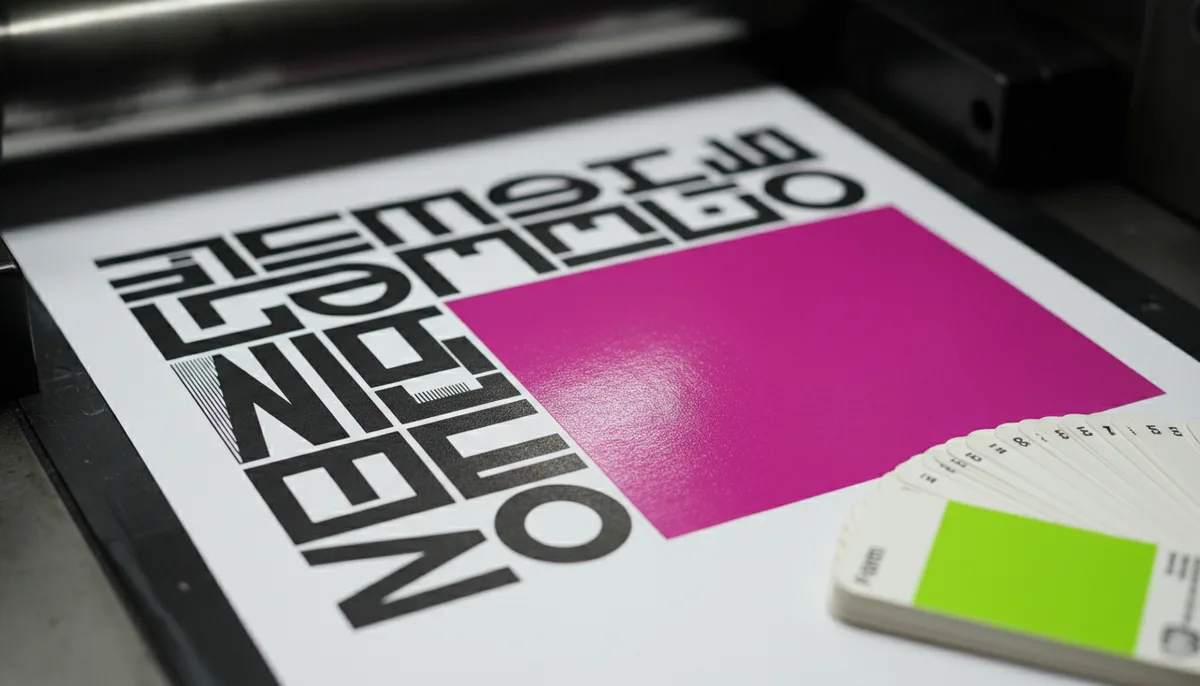
The fixed costs are substantial. For inkjet vs offset book printing cost analysis applications, this is especially relevant. For a 6-color Heidelberg Speedmaster XL 106 running a book cover, make-ready includes: physical plate production ($85-$120 per plate), mounting and registration, ink fountain setup, and paper waste during calibration (typically 250-500 sheets). This creates a make-ready cost between $450 and $800 before the first saleable book is produced. However, once running, the marginal cost per sheet is exceptionally low. For a standard 300gsm C1S cover stock, the ink and substrate cost for offset might be $0.08 per cover, compared to $0.22 for inkjet due to higher ink costs. Therefore, the high initial investment is justified by long runs. Pantone matching for covers is also a key offset strength. A dedicated spot ink ensures perfect color consistency across 50,000 units and multiple reprints years apart, which is crucial for brand-heavy series or licensed properties.
Need expert guidance on your next print project?
Get a Free Quote →Side-by-Side: Inkjet vs. Offset Cost Per Unit Analysis: Inkjet Vs Offset Book Printing Cost Analysis Guide
Side-by-Side: Inkjet vs. Offset Cost Per Unit Analysis: Inkjet Vs Offset Book Printing Cost Analysis Guide refers to Side-by-Side: Inkjet vs. Offset Cost Per Unit Analysis: Inkjet Vs Offset Book Printing Cost Analysis Guide refers to Side-by-Side: Inkjet vs. Offset Cost Per Unit Analysis: Inkjet Vs Offset Book Printing Cost Analysis Guide refers to how do you calculate the true total cost per book? For inkjet vs offset book printing cost analysis applications, this is especially relevant. You must model both fixed setup costs and variable per-unit costs across your expected total volume, including reprints. A simplistic per-unit quote is misleading.
Let's analyze a real-world scenario: 200-page, 6"x9" perfect-bound paperback with a 4-color cover. For inkjet vs offset book printing cost analysis applications, this is especially relevant. We'll use our internal production data from JinXinCai Printing.
| Cost Factor | Web-fed Inkjet (HP T240 HD) | Sheet-fed Offset (Heidelberg SM 74) |
|---|---|---|
| Make-ready / Setup Cost | $120 (file processing, calibration) | $650 (4 plates, mounting, wash-up) |
| Cost per Unit (1-500) | $3.85 | $8.20 (high due to setup amortization) |
| Cost per Unit (501-2,000) | $3.40 | $4.90 |
| Cost per Unit (2,001-5,000) | $3.35 (minimal change) | $2.15 |
| Cost per Unit (5,001-10,000) | $3.30 | $1.85 |
| Optimal Run Length | 50 - 2,500 units | 2,500+ units |
| Lead Time for 500 copies | 5-7 business days | 10-14 business days (includes plate production) |
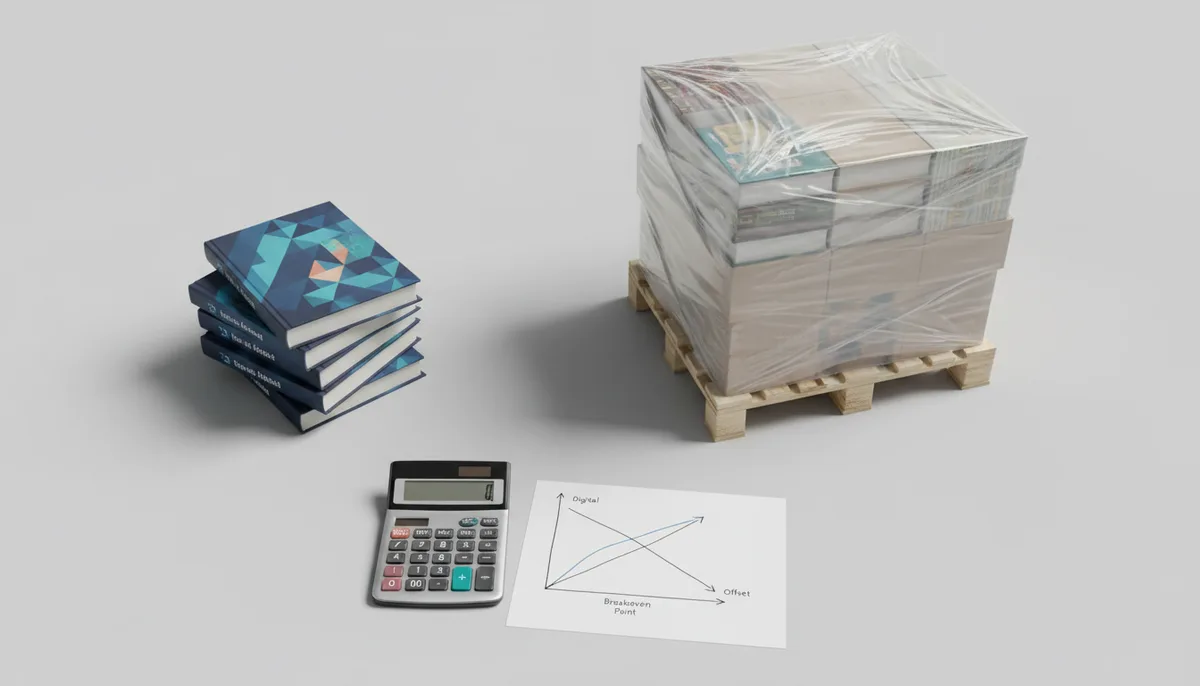
The trade-off is clear. For inkjet vs offset book printing cost analysis applications, this is especially relevant. Inkjet has a low barrier to entry with minimal setup. Offset has a high barrier but offers a much lower per-unit cost at scale. The print-on-demand breakeven point — where the total cost of the two methods is equal — for this book spec is approximately 2,200 units. Below that, inkjet is cheaper. Above that, offset wins. This is why understanding your minimum order quantity for custom hardcover books and realistic sales projections is essential. A common mistake we see is ordering 5,000 offset copies to get a $1.85 unit cost, when selling only 2,000 copies makes the effective unit cost $4.78 when you factor in wasted inventory. See also: How to Make Custom Stickers: The 2026 Commercial.
Key Decision Framework: Choosing Your Book Printing Method
Key Decision Framework: Choosing Your Book Printing Method refers to what criteria should you use to select between inkjet and offset? For inkjet vs offset book printing cost analysis applications, this is especially relevant. Move beyond simple unit cost and evaluate your project across five key dimensions: volume, color, time, lifecycle, and sustainability.
Decision: Inkjet or Offset for Book Production?
- If total projected volume (initial run + expected reprints within 18 months) is under 2,500 units → Choose inkjet. The flexibility and lack of setup fees will yield lower total cost.
- If your cover design requires a specific Pantone spot color (e.g., brand logo) or metallic ink → Choose offset for covers. Use offset for covers and inkjet for interiors (hybrid model) if interior volume is low.
- If you require a rapid turnaround (under 10 days) for a run of 1,500 units or less → Choose inkjet. Offset make-ready time adds 3-5 days.
- If you are printing over 5,000 units of a text-heavy interior with no reprint plans → Choose offset for interiors and covers. The per-unit savings will be significant.
- If you prioritize sustainability and have variable demand → Choose inkjet. It supports FSC-certified stock and produces less waste (under 2% vs. 5-8% for offset make-ready).
This framework incorporates the how to calculate print cost per book unit holistically. For inkjet vs offset book printing cost analysis applications, this is especially relevant. At JinXinCai, our pre-press team uses a similar checklist with every new client consultation to model the total cost of ownership, not just the print request a quote. Our ISO 14001 certification, renewed in 2026, also informs this process, as we track and report on material waste, helping clients make environmentally conscious choices that align with cost goals.
Case Study: Reducing Waste with Digital Print Runs
Case Study: Reducing Waste with Digital Print Runs refers to can a hybrid approach save money on a moderate print run? For inkjet vs offset book printing cost analysis applications, this is especially relevant. Absolutely. A mid-sized educational publisher approached us with a challenge: a 3,000-unit print run for a textbook with a high likelihood of content updates in 18 months. They were quoted a low offset price but feared obsolescence.
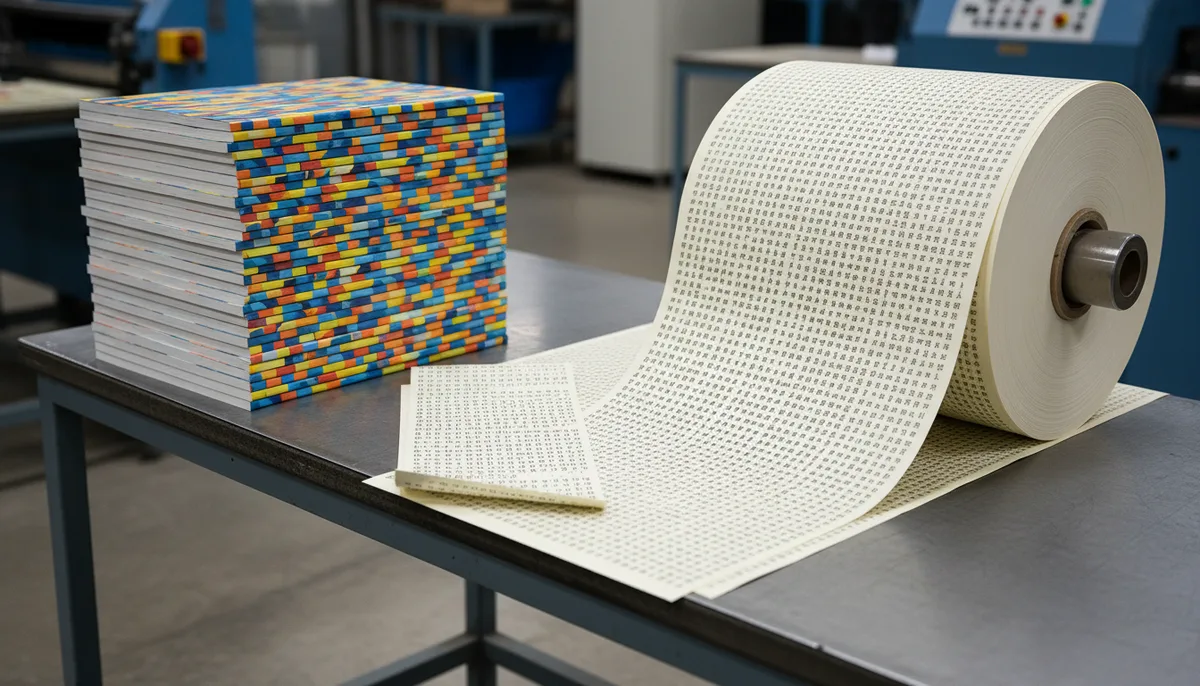
We proposed and executed a hybrid model: The four-color cover with a brand-critical Pantone blue was printed offset on 350gsm card in a run of 3,500 (allowing for spoilage). The 400-page interior was printed via web-fed inkjet on acid-free paper in a run of 3,000. The books were then collated and perfect bound. The outcome: The total project cost was 20% lower than a full offset run because we avoided the high plate costs for 400 interior pages. More importantly, when a minor content update was needed 14 months later, they printed only 750 new interiors via inkjet and used the existing cover stock, saving over $12,000 versus a full reprint. This case underscores that the most sophisticated inkjet vs offset book printing cost analysis considers the entire product lifecycle, not just the first print run.
That said, this approach is not ideal for every scenario. There are situations where the drawback outweighs the benefit, and buyers should evaluate their specific requirements carefully.
Frequently Asked Questions
How does print run length affect the breakeven point between inkjet and offset?
The breakeven point is where the total cost of both methods is equal. For a standard 200-page paperback, it typically falls between 1,500 and 2,500 units. Below this range, inkjet's low setup costs make it cheaper. Above it, offset's lower per-unit costs dominate. The exact point depends on color coverage, page count, and binding; a detailed cost model is essential for accuracy.
What binding and finishing options are limited with high-speed inkjet presses?
Most standard bindings are compatible. However, limitations arise with very thick, coated stocks used in some hardcover cases, as inkjet inks may not cure optimally. Also, complex foil stamping or embossing done inline on an offset press requires a separate, offline step for inkjet-produced covers. Smyth-sewn binding is fully supported but is a separate offline process for both technologies.
How should I prepare files differently for inkjet versus offset book printing?
For both, supply PDF/X-4 files. The key difference is in color handling: for offset, clearly specify any Pantone spot colors. For inkjet, convert all elements to CMYK, as spot colors will be simulated. Use rich black (C60 M40 Y40 K100) for large text/backgrounds in inkjet to avoid a washed-out appearance. Always embed ICC profiles and discuss your target substrate with your printer for optimal results.
What are the lead time differences between inkjet and offset for 500 copies?
For a 500-copy run, inkjet typically has a 5-7 business day turnaround from approved proof to shipment. Offset requires 10-14 business days for the same quantity, as the process includes physical plate production (1-2 days), make-ready on press, and a longer drying time for inks before binding. Inkjet's digital workflow eliminates the plate and drying steps, enabling faster production.