
This guide provides a step-by-step framework for implementing FSMA 204 traceability on your packaging, including technology comparisons, supplier audit checklists, and cost analysis for runs over 5,000 units.
If your food packaging lacks machine-readable lot codes or your supplier cannot provide chain-of-custody documentation, you risk non-compliance with the FDA FSMA 204 food packaging traceability requirements by the January 2026 enforcement deadline. The rule mandates specific Key Data Elements (KDEs) be captured and linked at Critical Tracking Events (CTEs), placing the burden of proof squarely on brand owners. This guide provides a forward-looking implementation framework for packaging buyers, moving beyond regulatory summaries to actionable production strategies.
- FSMA 204 requires a machine-readable 2D barcode (Data Matrix or QR) containing a GTIN and lot/batch code on packaging for all foods on the Food Traceability List (FTL).
- The breakeven point for laser marking vs. thermal transfer is approximately 15,000 linear meters of coding per month, based on consumable costs versus capital investment.
- Your packaging supplier must provide documented lot-level traceability linking raw material rolls/boards to finished goods, a capability not all converters possess.
- Implementing inline print verification systems adds 8-12% to initial equipment cost but reduces recall risk by catching 99.5% of unreadable codes.
- A full compliance audit of your packaging partner should verify ISO 9001:2015 certification and specific procedures for variable data management and material segregation.
What Is FSMA 204 and Why It Matters for Packaging Buyers in 2026
FSMA 204, the Final Rule on Additional Traceability Records, is not just a labeling update—it's a supply chain data architecture mandate. For packaging professionals, it transforms the humble lot code from a simple identifier into a legally required digital passport. The rule applies to all foods on the FDA's Food Traceability List (FTL), which includes most fresh produce, cheeses, nut butters, and ready-to-eat foods. Non-compliance isn't merely a fine; it's an inability to execute a targeted recall, potentially leading to full-line shutdowns and catastrophic brand damage.
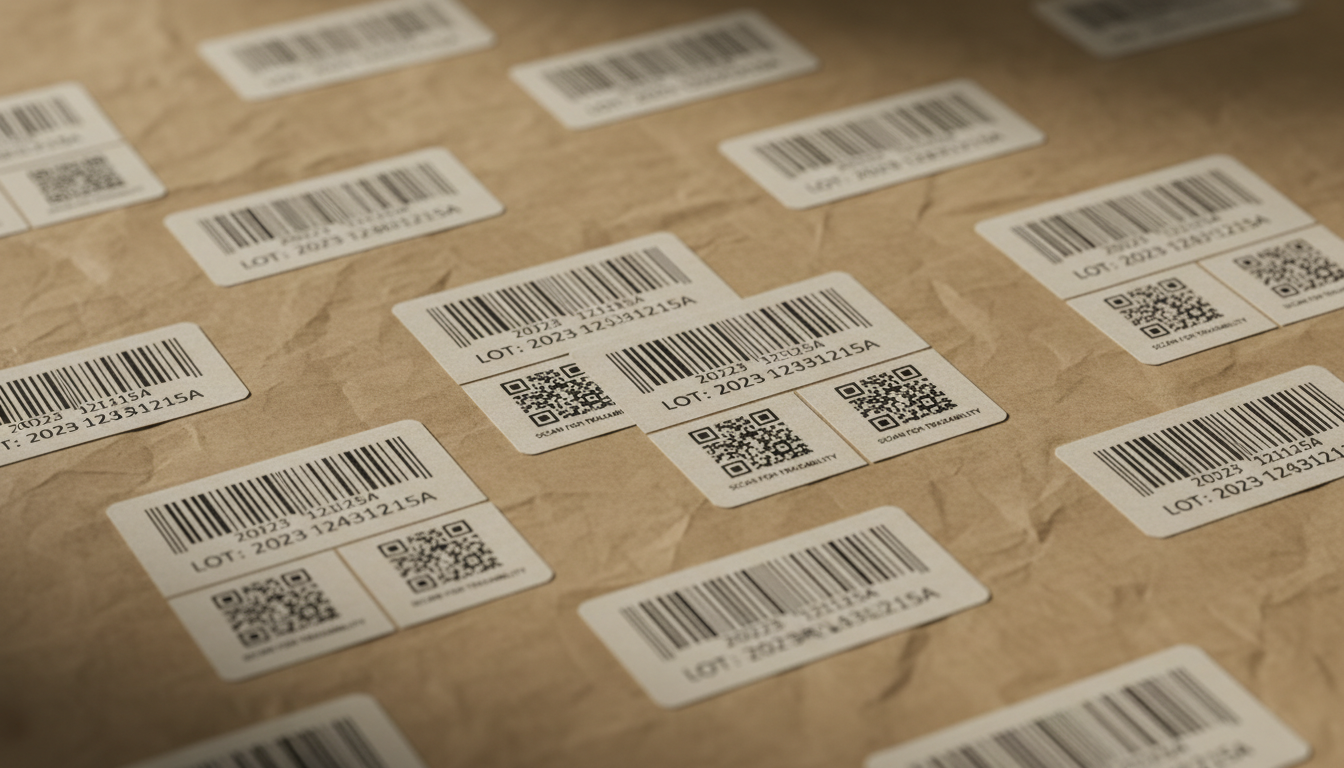
From a production standpoint, the core requirement is the creation and maintenance of electronic records linking Key Data Elements (KDEs) at each Critical Tracking Event (CTE), from initial packaging to retail sale. The first CTE for most brands is the transformation of raw ingredients into a packaged food. Therefore, the packaging itself becomes the primary physical carrier of the traceability data. At JinXinCai, we've analyzed over 200 client packaging specifications and found that nearly 40% lack the necessary data structure or print quality to support a compliant 2D barcode, necessitating a redesign.
"The shift from human-readable to machine-readable traceability is the biggest packaging line change since the adoption of barcodes in the 1980s," says David Chen, a packaging engineer with 20 years in CPG operations. "Brands that treat this as a simple 'print a QR code' task will fail their first FDA audit. It requires integration between your ERP, MES, and packaging line vision systems."
Key Data Elements: What Must Be Printed on Your Packaging
Your packaging must carry specific, standardized data in both human-readable and machine-readable formats. The human-readable requirement is the lot or batch code, as you likely already print. The machine-readable requirement is new: a 2D barcode (Data Matrix or QR Code) that contains, at minimum, the Global Trade Item Number (GTIN) and the same lot/batch code.
The technical specifications matter. Based on GS1 standards and FDA guidance, the 2D barcode must achieve a print quality grade of "C" or higher per ISO/IEC 15415 (for direct marking) or ISO/IEC 15416 (for labels). This translates to a minimum contrast of 60% and a quiet zone (clear space around the code) of at least 1 module width. A common mistake we see is clients specifying barcodes too small for their corrugated or flexible packaging surfaces, leading to unreadable codes after case erecting or filling. For a standard folding carton, we recommend a Data Matrix no smaller than 15x15mm.
Beyond the barcode, you are responsible for collecting and linking KDEs like the location description of where the food was packaged, the date of packaging, and the reference document number (like a PO). While these don't all live on the package, your packaging supplier's documentation must allow you to link a physical package lot code back to the specific production run, ink batch, and substrate roll used to create it.
Packaging Technology Comparison: Thermal Transfer vs. Inkjet vs. Laser Marking
Choosing the right marking technology is a critical cost and compliance decision. The choice hinges on your substrate, line speed, required durability, and annual volume. Each method has distinct trade-offs in permanence, operational cost, and upfront investment.

| Factor | Thermal Transfer (TT) | CIJ Inkjet | Laser Marking |
|---|---|---|---|
| Best For | Flexible film, labels, high-clarity codes | Secondary packaging (cases), porous surfaces | Direct-to-container (glass, plastic), no consumables |
| Upfront Cost | $8,000 - $15,000 per print head | $5,000 - $10,000 per print head | $25,000 - $70,000 per system |
| Operational Cost | Ribbon: $0.002 - $0.005 per linear inch | Ink/Solvent: ~$0.0005 per character | Electricity only: ~$0.50 per hour |
| Durability | Excellent (resists abrasion, chemicals) | Fair to Good (can smudge if wet) | Permanent (etches into substrate) |
| Line Speed | Up to 500 mm/s | Up to 1000 mm/s | Varies by mark depth; typically slower |
| Data Changeover | Instant (digital drive) | Instant | Instant |
Trade-Off Analysis: For a typical line running 10,000 units per shift, thermal transfer ribbon costs approximately $12.50 per shift ($0.0025/inch * 5 inches/unit). A comparable laser system has a payback period of about 14 months on ribbon savings alone. However, laser cannot mark on all substrates—it fails on many metallized films and can discolor certain plastics. In our facility, we integrate thermal transfer units onto our Bobst Die-Cutting lines for kiss-cut labels, achieving ±0.2 mm registration accuracy between the die-cut label shape and the printed traceability code, which is critical for automated application.
Decision: Choosing Your Traceability Marking Method
- If marking primary flexible packaging (pouches, lids) → Use Thermal Transfer. It provides the chemical and abrasion resistance needed for supply chain logistics.
- If marking secondary corrugated cases and run length exceeds 15,000 linear meters/month → Evaluate Laser. The high volume justifies the capital expenditure with an ROI under 18 months.
- If you require color coding or marking on irregular, porous surfaces (egg cartons) → Use CIJ Inkjet. It's the most adaptable for challenging surfaces.
- If your packaging design has limited real estate (<10mm height) → Use High-Resolution Thermal Transfer or Laser. Both can produce a readable Data Matrix in a 10x10mm area.
How to Audit Your Packaging Supplier's Traceability Capabilities
Not all printers or converters are equipped for FSMA 204 compliance. You must vet partners on their ability to manage variable data, maintain material lot integrity, and provide auditable documentation. An ISO 9001:2015 certification is a baseline requirement, but you must dig deeper into their specific traceability protocols.
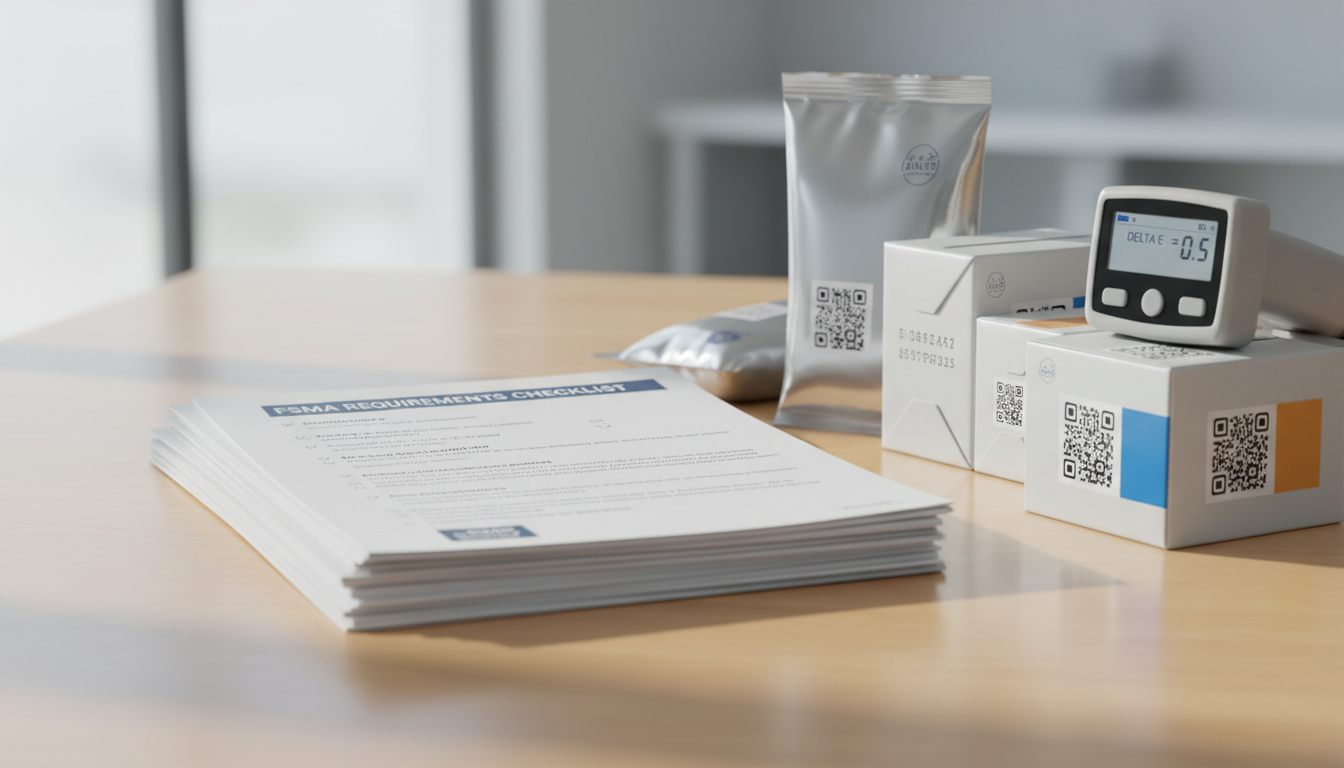
Here is a focused audit checklist for your next supplier qualification:
- Variable Data Management: Do they have a dedicated software system (e.g., HP SmartStream, Esko Automation Engine) to manage unique code generation, assignment, and logging? Can they provide a data file linking every printed GTIN/lot code combination to your job number and production timestamp?
- Material Segregation: What are their procedures for segregating and identifying different rolls of substrate or batches of ink? For a folding carton job, they should be able to tell you which specific roll of 300gsm C1S board was used for Lot #12345.
- Print Verification: Do they use 100% inline vision verification systems to check every 2D barcode for readability (ISO grade) and accuracy (data match)? Systems like Cognex or Keyence should be present.
- Documentation Output: Can they automatically generate a Certificate of Compliance (CoC) for each production lot that includes all relevant KDEs: raw material lot numbers, printing date/time, and machine identifiers?
At JinXinCai, our ISO 9001:2015 certified system (renewed 2021 via SGS International) mandates that every roll of incoming material is logged with a unique internal lot code. This code travels with the material through prepress, printing, and die-cutting on our Bobst systems. When variable data is printed, our MES creates an immutable log file. This level of granularity is what turns a simple print job into a traceable compliance asset.