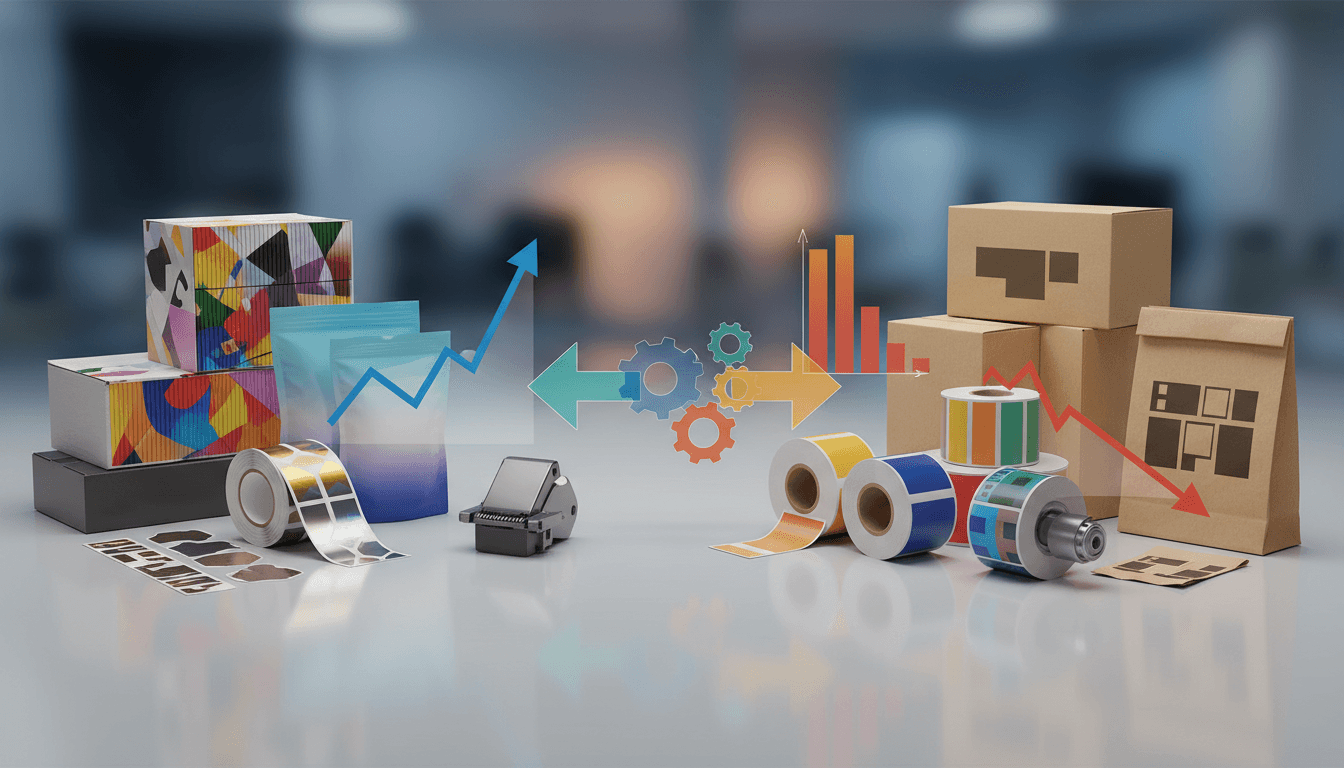
A strategic cost analysis reveals the breakeven point between digital and flexographic printing has shifted to 5,000 units, fundamentally altering packaging procurement for 2026.
Choosing the wrong printing technology for your packaging can lock in unnecessary costs for years. The most common mistake we see is brands defaulting to flexographic printing for runs under 10,000 units without calculating the true total cost of ownership. The landscape for 2026 demands a more nuanced approach, as advancements in digital quality and the rising cost of flexographic plate tooling have shifted the economic calculus. This guide provides a data-driven framework to determine the optimal path for your digital vs flexographic printing cost per unit, based on real production parameters from our 15,000 sqm facility.
- The breakeven point between digital and flexographic printing has dropped to approximately 5,000 units for standard packaging, driven by rising plate costs and digital efficiency gains.
- Flexographic minimum order quantity 2026 is no longer a fixed number; it's a calculation based on your color count, substrate, and required durability.
- Always calculate total landed cost: digital setup can be 80-90% cheaper than flexo, but per-unit costs diverge sharply after 3,000 units.
- For FDA compliance for food packaging, specify water-based or UV-curable inks with documented migration testing, not just generic "food-safe" claims.
- Future-proof your strategy by requiring printers to demonstrate sustainable packaging printing technology with measurable VOC reduction and recyclability data.
The 2026 Packaging Printing Landscape: Beyond the Hype
What does the future actually require from your packaging print strategy? It's not about chasing the latest buzzword, but aligning technology with commercial reality. The conversation at Packaging Innovations 2026, particularly from leaders like Sun Chemical's packaging director, moved beyond mere capability showcases to practical implementation. The core insight: the choice between digital and flexographic printing is no longer just about run length, but about supply chain agility, SKU proliferation, and sustainability compliance.
In our experience running both HP Indigo digital and flexographic lines, the most significant shift is the compression of production timelines. A common specification mistake is requesting flexographic proofs for short-run projects, adding 7-10 days before production even begins. For 2026, your strategy must account for the total time-to-market, not just press speed. According to Smithers Pira's 2025 Global Print Market report, surveying 800+ converters, brands that integrate digital prototyping with flexographic production for longer runs reduce their overall development cycle by an average of 35%.
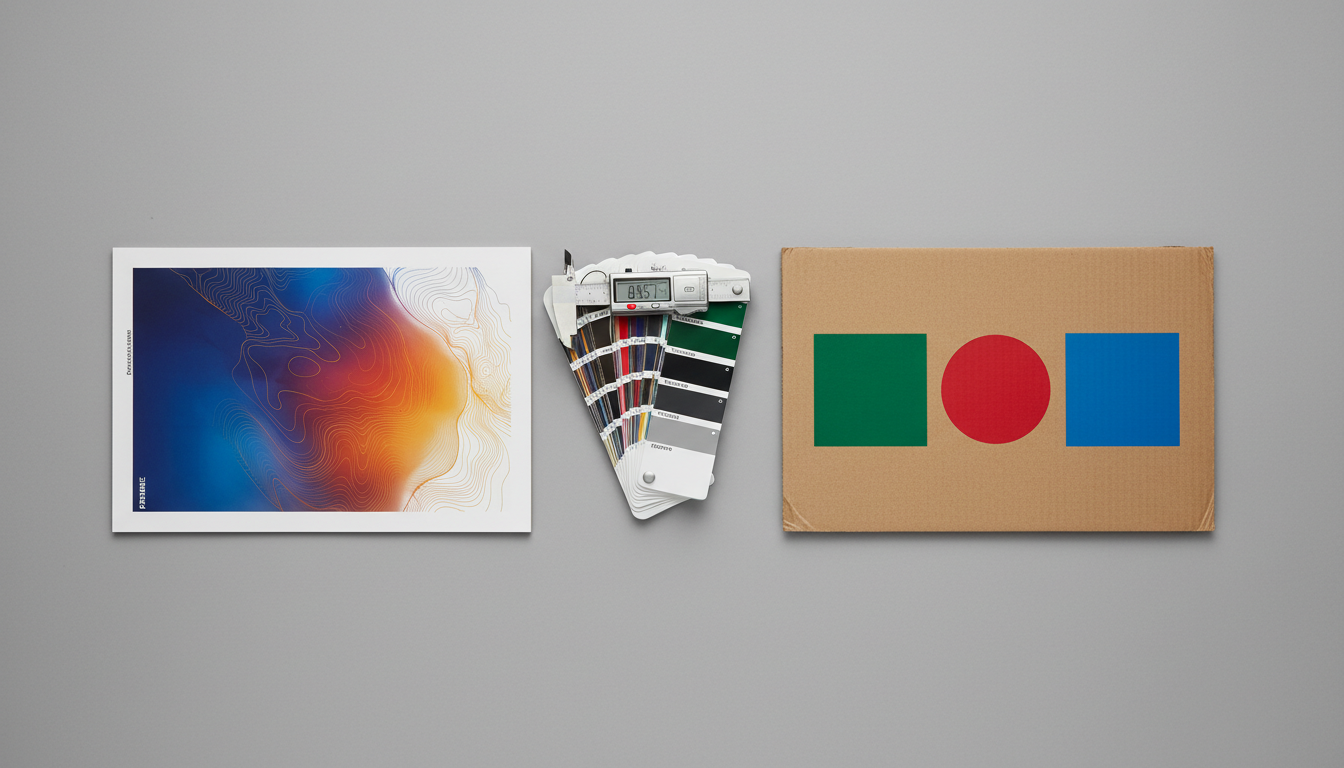
Our head of technology, with 20 years in press calibration, notes a critical trend: "The gap in print resolution LPI and color gamut between high-end digital and modern flexo with extended color gamut ECG is now negligible for most commercial applications. The decision driver for 2026 is operational flexibility and cost structure, not purely print fidelity." This reframes the entire evaluation.
How Does Print Run Length Affect Your Total Cost of Ownership?
Run length is the primary, but not sole, determinant of cost. You must model both fixed and variable costs. For digital printing, setup is virtually free—often just a file upload and profile selection. For flexographic printing, setup is a major capital outlay: polymer plates ($200–$500 per color), anilox roll selection, and die tooling ($300–$800). These are sunk costs before the first unit is printed.
Here is the essential trade-off analysis. Let's model a standard 4-color job on 300gsm C1S board:
- Digital (e.g., HP Indigo): Setup: ~$50. Per-unit cost: $0.32.
- Flexographic: Setup (4 plates + die): ~$2,200. Per-unit cost: $0.11.
The breakeven formula is: (Flexo Setup Cost - Digital Setup Cost) / (Digital Per-Unit Cost - Flexo Per-Unit Cost). Plugging in the numbers: ($2,200 - $50) / ($0.32 - $0.11) = $2,150 / $0.21 ≈ 10,240 units. This is the classic model. However, this changes if you need Pantone spot colors (adding $150/color for flexo ink matching) or have versioning (digital requires only file changes, while flexo needs new plates). For 2026, with brands managing more SKUs in smaller batches, the effective flexographic printing minimum order quantity 2026 is moving downward.
Units: The emerging practical breakeven point for mono-material packaging when factoring in warehousing, obsolescence risk, and versioning agility.
At JinXinCai, we've run over 500 packaging programs and the most common issue is underestimating the "soft costs" of flexo for moderate runs: inventory carrying costs for overproduction, and the risk of packaging redesign making plates obsolete. A digital-first approach for runs under 5,000 units often provides better total cost control.
Flexographic vs Digital: Technical Specifications Compared
How do the technologies differ on the press sheet? The choice impacts everything from shelf appeal to durability. Let's compare key technical parameters that influence your specification.
| Factor | Digital Printing (e.g., HP Indigo) | Flexographic Printing |
|---|---|---|
| Effective Resolution | 1200 x 1200 dpi (simulated 150-175 LPI) | 100-150 LPI standard (up to 200+ LPI with high-end anilox rolls) |
| Color Gamut & Matching | Delta E < 3.0; excellent for process colors; spot color simulation | Delta E < 2.0 achievable; superior for exact Pantone spot color matching |
| Substrate Versatility | Excellent on coated stocks (SBS, C1S); can struggle with uncoated, porous, or non-standard materials without pre-treatment | Superior on a wide range: coated paper, kraft, corrugated board, film, and flexible packaging |
| Ink System & Durability | ElectroInk (liquid toner); good rub resistance; may require UV coating for water/abrasion resistance | Water-based, solvent-based, or UV-curable inks; excellent durability and chemical resistance when cured |
| Variable Data Capability | Inherent; perfect for serialization, QR codes, unique codes | Limited; requires integrated CIJ printing system for post-print coding |
A critical, often overlooked spec is ink adhesion. We conducted print durability testing on 350gsm kraft paper: digital ElectroInk showed 95% adhesion via ASTM D3359 tape test, while UV-flexo ink achieved 99%. For packaging that will be handled extensively or exposed to moisture, this 4% difference can be critical. Furthermore, for water-based ink FDA compliance for food packaging, you must request the printer's ink manufacturer's compliance statement (e.g., FDA 21 CFR 175.300 for indirect food contact) and ensure it covers your specific substrate and printing process.
Decision Framework: When to Choose Each Technology
Use this actionable framework to guide your 2026 sourcing decisions. It moves beyond simple quantity to incorporate strategic business needs.
Decision: Selecting Digital vs. Flexographic Printing
- If your run is under 5,000 units OR you require versioning/variable data → Choose Digital. The lack of plate costs and instant changeover make it cost-effective and agile.
- If your run exceeds 15,000 units AND requires consistent brand colors for 12+ months → Choose Flexographic. The lower per-unit cost and superior spot color consistency justify the upfront tooling.
- If printing on uncoated corrugated board, flexible film, or other challenging substrates → Lean Flexographic. Its ink systems and anilox roll/plate cylinder mechanics are designed for diverse materials.
- If you have a run of 5,000–15,000 units → Conduct a Total Cost Analysis. Factor in plate storage ($), potential redesign risk, and inventory costs. At JinXinCai, we often recommend a hybrid: digital for initial market testing (1-3K units), then flexo for the confirmed, scaled production run.
This framework must be paired with a clear understanding of how to calculate digital printing setup costs. For digital, "setup" is primarily the time for color profiling and file optimization. A fixed fee of $50-$150 is typical. For flexo, you must itemize: Plate engraving per color ($200-$500), Die fabrication ($300-$800), Press setup time (2-4 hours at $150-$300/hr). Always get this broken out in quotes.
Unsure where your project falls on the spectrum? Send us your specs (quantity, substrate, colors) for a free, line-item cost breakdown comparing digital and flexographic production.
Get a Free Quote →Real-World Case Study: CPG Brand Saves 23% on SKU Proliferation
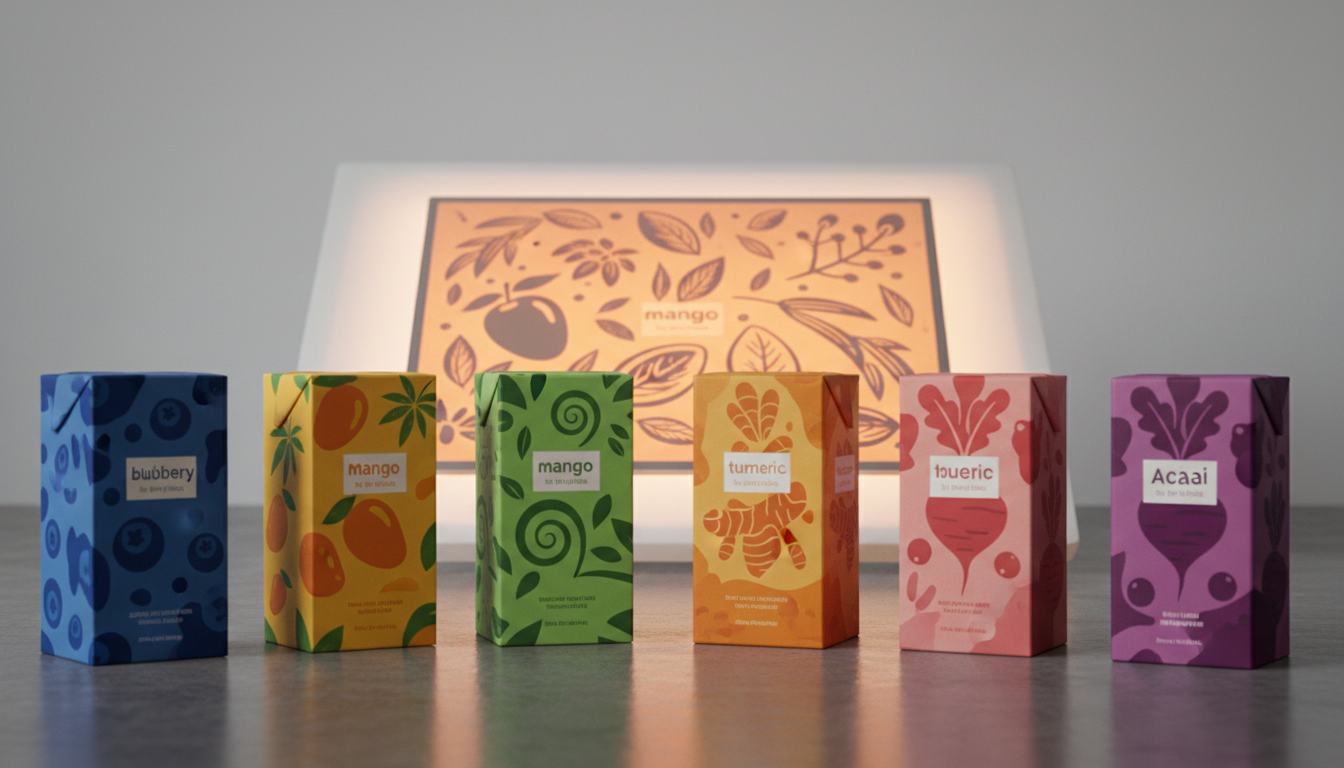
A national health food brand faced a classic 2026 challenge: launching 12 regional flavor variants with an initial forecast of only 3,500 boxes each. Their previous supplier quoted a traditional flexographic run, requiring 12 sets of plates and dies—a $31,200 tooling investment before printing a single box.
Our solution at JinXinCai was a phased, technology-agnostic approach:
- Phase 1 (Launch): All 12 SKUs produced on our HP Indigo digital press. Using standardized 350gsm SBS board, we maintained a Delta E < 2.5 across all runs. Variable data printing was used to embed unique batch codes on each box.
- Phase 2 (Scale): After 6 months, 3 flavors emerged as top sellers, with sustained demand over 8,000 units/month. We then transitioned these to flexographic production, using the digital samples as absolute color references for plate making.
The outcome: The brand avoided $28,000 in premature flexo tooling for the 9 slower-moving SKUs. Overall packaging costs reduced by 23% compared to the all-flexo quote. The digital-first phase also allowed for last-minute text changes on two SKUs with zero cost penalty. This case underscores that the lowest digital vs flexographic printing cost per unit isn't about a single technology, but about strategically sequencing them.
Implementation Checklist: Questions to Ask Your Printer
Before you approve a quote, use this checklist to validate capability and cost transparency. Generic answers are a red flag.
- For Costing: "Can you provide a line-item breakdown separating digital/flexo plate charges, die costs, press setup time, and per-unit price? What is the cost delta for adding a Pantone spot color?"
- For Compliance: "For food contact, can you provide the ink manufacturer's FDA compliance statement (specific CFR) and migration test results for my substrate? Are your water-based ink or UV-curable inks certified for direct or indirect contact?"
- For Sustainability: "What measurable data can you provide on VOC emissions, energy use per thousand sheets, and recyclability/compatibility of your ink systems with my substrate? How does your sustainable packaging printing technology compare between your digital and flexo departments?"
- For Quality: "What ISO 12647-2 or G7 controls are in place for color consistency across reprints? What is your standard tolerance for print registration (±0.1mm?) and how is it verified?"
- For Flexibility: "What is your process and cost for transitioning a digital prototype to flexographic production if the SKU scales? How do you manage plate storage and requalification costs?"
Future-Proofing Your Packaging: What's Next After 2026?
The trajectory points toward hybridization and intelligence. The next cost driver won't be the press, but the data and sustainability premium. Leading converters are integrating AI-driven pre-press software to automatically optimize layouts for minimal substrate waste—a saving that applies to both digital and flexo. The real differentiator will be a printer's ability to offer a seamless, data-connected workflow from digital prototype to flexo production, like the system we've implemented connecting our HP Indigo and flexographic lines.
Furthermore, regulations will tighten. "Sustainable" claims will require lifecycle data. At JinXinCai, our ISO 14001:2015 certified systems track substrate origin, ink chemistry, and energy consumption per job, allowing us to provide clients with an environmental impact score for each print method. This isn't just ethics; it's a coming compliance and consumer demand. Your 2026 partner must have these systems in place today.
Your strategic next step is to audit your packaging portfolio. Categorize SKUs by annual volume, versioning needs, and substrate. Apply the decision framework in this guide. For any project in the 5,000–15,000 unit range, or where sustainability metrics are a priority, seek a partner capable of a truly agnostic analysis. The goal for 2026 and beyond is not to choose a technology, but to master a mixed-technology ecosystem that delivers the optimal digital vs flexographic printing cost per unit for every scenario in your portfolio.
Frequently Asked Questions
How does print resolution affect shelf appeal in flexo vs digital?
For most packaging viewed at arm's length, the effective resolution difference is minimal. High-end digital (1200 dpi) simulates 150-175 LPI, while modern flexo achieves 100-150 LPI standard. The bigger impact on shelf appeal is color gamut and consistency: digital excels with photographic process colors, while flexo is superior for exact, repeatable Pantone spot colors across millions of units.
What is the breakeven quantity for digital printing vs flexographic?
The breakeven point has shifted to approximately 5,000 units for standard 4-color work on coated board, factoring in modern plate costs ($200-$500/color) and digital efficiency. Use this formula: (Flexo Setup - Digital Setup) / (Digital Per-Unit Cost - Flexo Per-Unit Cost). For a typical job with $2,200 flexo setup and $0.11/unit vs. $50 digital setup and $0.32/unit, breakeven is ~10,240 units, but operational agility often makes digital preferable for runs under 5K.
What ink specifications should I require for FDA food contact compliance?
Require documentation specifying compliance under FDA 21 CFR 175.300 for indirect food contact adhesives and coatings, or relevant sections for direct contact. For water-based or UV-curable inks, obtain the ink manufacturer's Letter of Guarantee stating compliance for your specific substrate and printing process. Also request migration test results to ensure no harmful substances transfer under intended use conditions.
How does substrate choice impact digital printing quality versus flexo?
Digital printing delivers excellent quality on smooth, coated substrates like SBS or C1S board. On porous, uncoated, or non-standard materials (like kraft or certain films), ink adhesion and color vibrancy can be challenging without pre-treatment. Flexographic printing, with its wider range of ink systems (water, solvent, UV), typically offers superior durability and consistent quality on a broader spectrum of materials, including corrugated board and flexible packaging.