A detailed cost and compliance analysis for brand managers, revealing how to optimize MOQ, material selection, and print method to reduce packaging costs by up to 40% without sacrificing quality.
Launching a new beverage brand or executing a major relaunch like Aspire Biopharma's BUZZ BOMB™ requires packaging that captures attention and complies with strict regulations, but the initial quotes can be staggering. The single biggest driver of that sticker shock is often the minimum order quantity (MOQ), which forces brands to commit to large volumes before validating market demand. This upfront capital lock-up creates a significant barrier, especially for innovative products entering competitive spaces. Understanding the true cost drivers behind your custom beverage packaging minimum order quantity comparison is the first step to unlocking a more agile, cost-effective supply chain that supports growth instead of hindering it.
- Offset printing becomes cost-effective for runs over 5,000–8,000 units, with plate and die costs amortized across volume.
- Specifying FDA 21 CFR 174-178 compliant C1S or SBS board from the start prevents costly last-minute material changes and delays.
- A hybrid offset/digital strategy for multi-SKU launches can reduce total packaging costs by 30–40% versus a single-method approach.
- Hidden costs like spot color matching, special coatings, and manual assembly can add 15–25% to your base unit price.
- Partnering with an ISO 9001 certified manufacturer with in-house die-cutting ensures consistent quality and reduces lead times by 20%.
Why Does Minimum Order Quantity (MOQ) Drive Beverage Packaging Decisions?
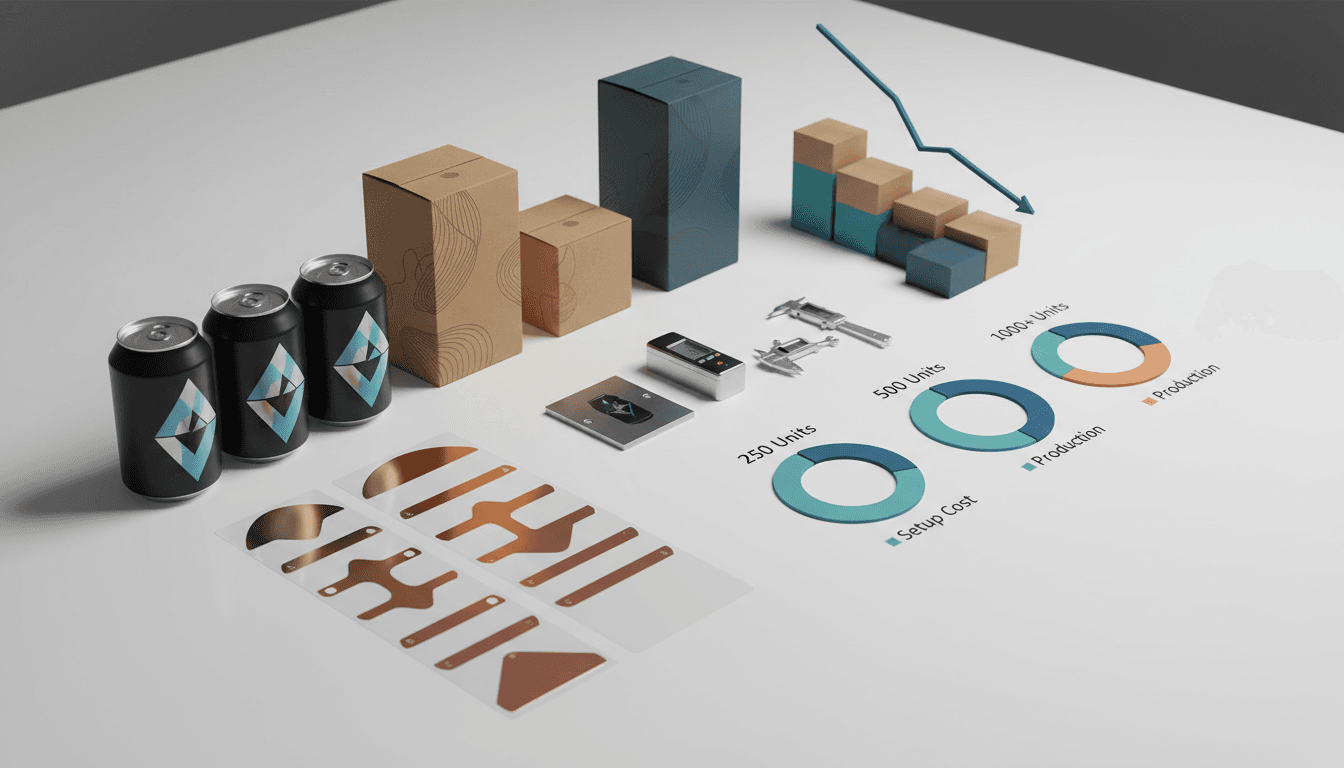
MOQ is not an arbitrary number; it's the economic threshold where production becomes viable for the manufacturer and cost-effective for you. For custom folding carton board printing for energy drinks, the primary cost components are fixed setup costs (plates, dies, proofs) and variable per-unit costs (materials, ink, labor). A low MOQ means those fixed costs are spread over fewer units, skyrocketing your per-box price. In our facility, running a 6-color Heidelberg Speedmaster XL 106 for a short run requires the same plate-making and press calibration as a run of 100,000, which is why we typically recommend a 500-unit MOQ for digital and 5,000 for offset to achieve sensible economics.
The strategic implication is profound. Over-ordering to hit a favorable MOQ ties up capital and warehouse space, while under-ordering risks stock-outs and exorbitant per-unit costs on reprints. We've seen brands make the critical mistake of viewing MOQ in isolation. According to Smithers Pira's 2025 report on packaging trends, 68% of brand managers cite "optimizing initial order quantity" as their top supply chain challenge for new product launches. The solution lies in a holistic analysis that integrates your sales forecast, storage costs, and the true total cost of ownership for your packaging.
Offset vs Digital Printing Cost for Beverage Boxes: A Breakeven Analysis
For runs over 10,000 units, offset lithography is almost always more cost-effective per unit. The decision hinges on a simple breakeven formula that factors in fixed setup costs and variable run costs. Offset has high fixed costs (plates at $200–$500 per color, die tooling at $300–$800) but very low variable costs. Digital has near-zero setup but a higher per-unit cost. The crossover point is typically between 5,000 and 8,000 units for standard 300gsm folding cartons.
Let's use a real scenario: a 4-color process job on 300gsm C1S board with one spot Pantone and a gloss aqueous coating.
| Cost Factor | Offset Lithography | Digital Press (HP Indigo) |
|---|---|---|
| Setup/Plate Costs | ~$1,800 (4 plates + 1 spot + die) | ~$150 (file setup & proof) |
| Cost per Unit (1,000 run) | ~$0.85 | ~$0.38 |
| Cost per Unit (5,000 run) | ~$0.28 | ~$0.35 |
| Cost per Unit (20,000 run) | ~$0.15 | Not typically offered |
| Color Accuracy (Delta E) | < 2.0 (G7 calibrated) | < 3.0 |
| Best For | Large runs, brand colors, cost-per-unit optimization | Prototypes, regional variants, test markets < 5K |
Our head of production planning, with 12 years of scheduling our Heidelberg and digital lines, notes: "The breakeven isn't just about quantity. If you need absolute color consistency across reprints separated by 12 months, offset with Pantone spot colors is mandatory. Digital inks, while excellent, can have slight batch-to-batch variance." For the BUZZ BOMB™ launch, a hybrid model was key: offset for the core high-volume SKU to lock in a low unit cost, and digital for limited-edition flavors or regional label variations.
How to Specify Materials for FDA-Compliant Beverage Packaging
Food-grade packaging material options must be compliant with FDA 21 CFR 174-178 for direct and indirect food contact. This isn't optional. The most common substrates for premium beverage cartons are C1S (Coated One Side) and SBS (Solid Bleached Sulfate) board. Both are available in food-safe grades, but their performance differs. C1S, like a 300gsm folding carton board, has a brilliant clay-coated printing surface on one side and a natural back; it offers excellent printability for vibrant graphics at a slightly lower cost. SBS is coated on both sides, providing superior stiffness and a pristine white base that makes colors pop, especially crucial for products like energy drinks relying on visual impact.
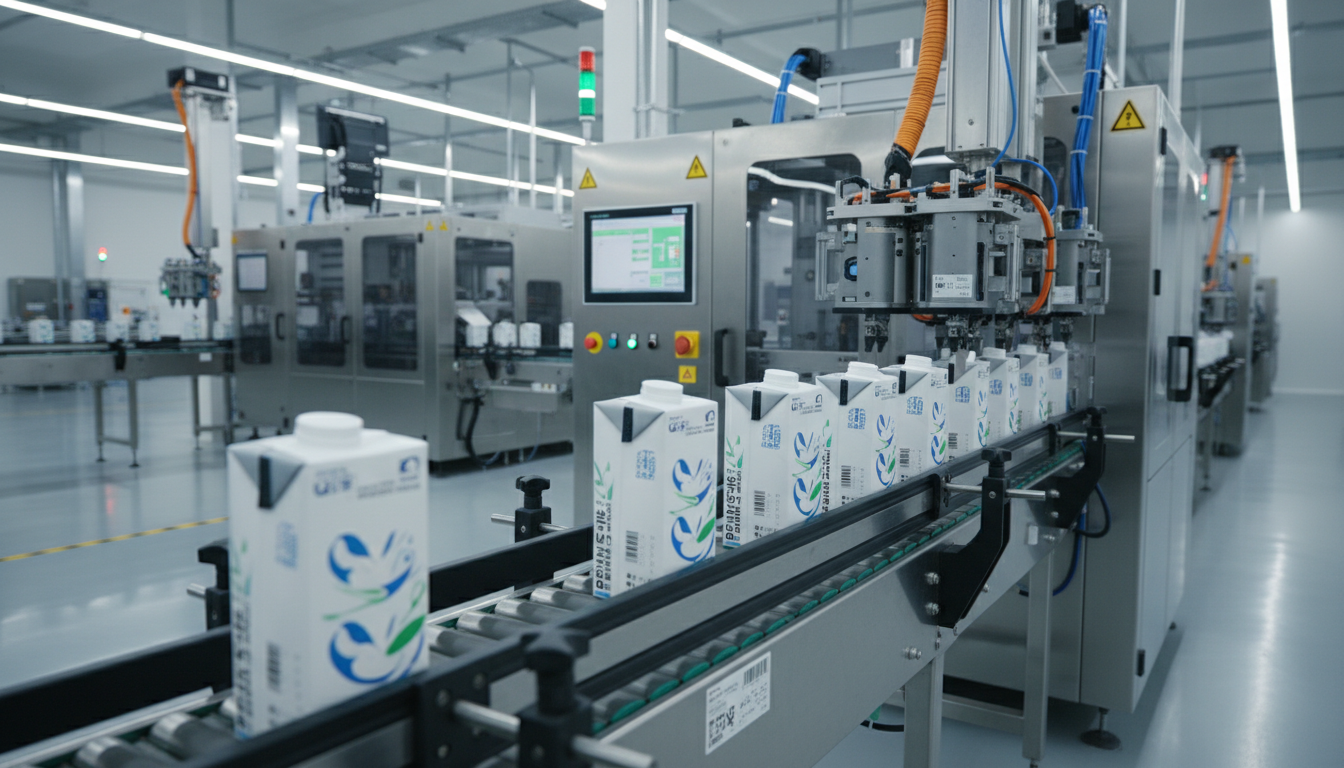
In our experience, a common and costly mistake is specifying a standard commercial board without explicit food-contact certification. Halfway through production, this can trigger a failed compliance audit. We always require our material suppliers to provide a Declaration of Compliance (DoC) and supporting migration test reports. "When clients ask for FDA compliant food-grade packaging material options," says our quality control manager, "we immediately steer them to our pre-vetted inventory of certified C1S and SBS stocks. It eliminates a major project risk." For the BUZZ BOMB™ project, we used a certified 320gsm SBS board to ensure no ink or coating components would migrate into the product, a non-negotiable for a consumable good.
What Are the Hidden Costs in Custom Packaging Beyond the Quote?
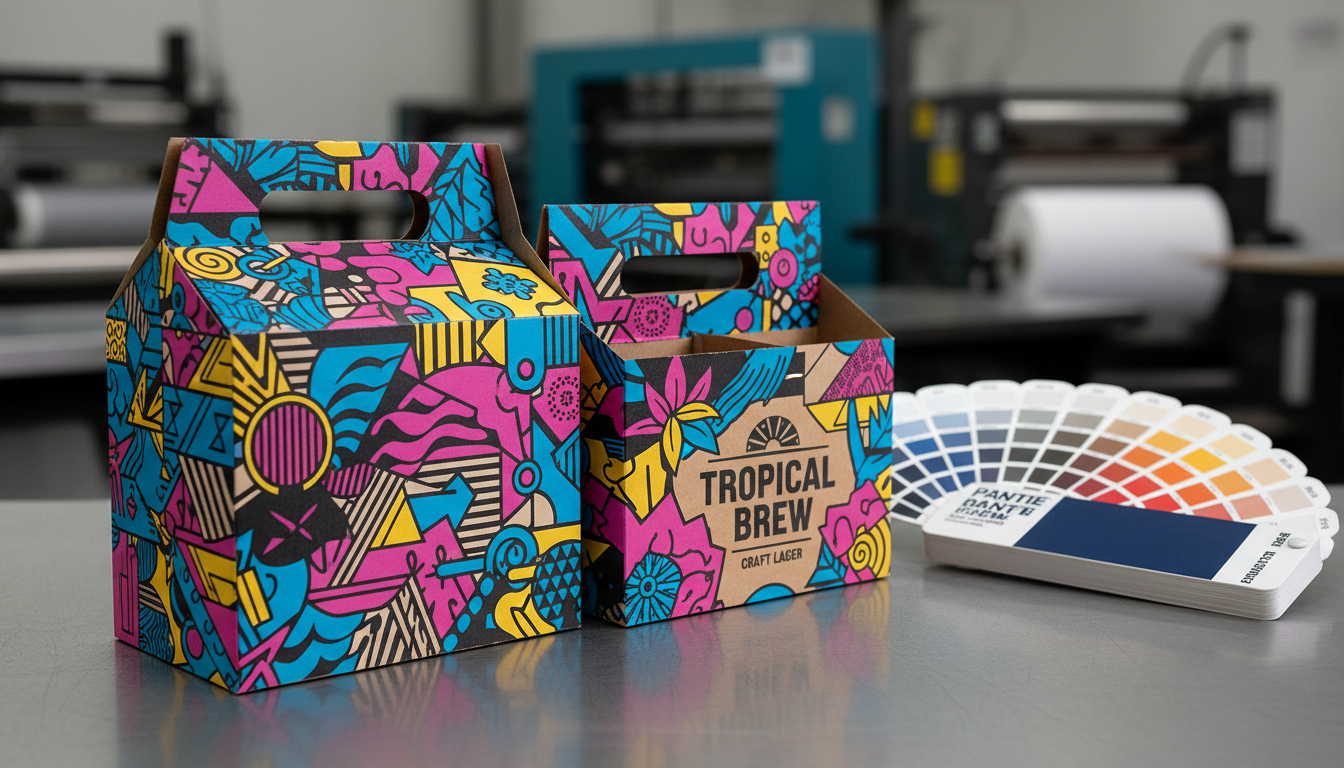
The base price per thousand boxes is just the starting point. To understand how to reduce custom packaging costs without quality loss, you must identify and manage these hidden line items. First, color: specifying a Pantone spot color instead of a CMYK blend adds a plate charge ($150–$300) and requires manual ink mixing. Second, finishing: effects like cold foil stamping or soft-touch lamination require additional dies, foils, and lamination films, adding $0.05–$0.15 per unit. Third, structural complexity: a simple straight-line die-cut is cheap, but intricate curves, internal perforations, or unique closures increase die complexity and cost.
Fourth, and most often overlooked, is manual assembly. If your boxes require hand-insertion of inserts, application of RFID tags, or complex gluing, labor costs can explode. We once audited a project where manual assembly was 40% of the total landed cost. The solution is design for manufacturability (DFM). Our prepress team, operating under our ISO 9001:2015 certified procedures, performs a DFM review on every new carton design. As our senior structural designer puts it: "We can often suggest a minor adjustment to a flap score line that allows for fully automated folding and gluing on our Bobst machine, cutting assembly time and cost by over 50%."
Case Study: Reducing Costs on a Limited-Run Energy Drink Launch
A client (similar to the Aspire Biopharma scenario) approached us with a challenge: launch a new energy drink with 12 unique regional label variants due to different regulatory wording, with an initial test market order of just 5,000 units per variant. Their previous supplier quoted a separate offset run for each, with crippling plate costs making the project untenable. The problem was a classic custom beverage packaging minimum order quantity comparison dilemma: low volume per SKU but high complexity.
Our Solution: We implemented a hybrid manufacturing model. The common carton structure—a 300gsm FDA-compliant C1S board—was run once on our Heidelberg Speedmaster at high volume (60,000 units) using offset, locking in the lowest possible material and base printing cost. The variable label information was then printed digitally on an HP Indigo press onto pre-cut labels, which were precision-applied to the generic cartons. This leveraged digital's strength in variable data with zero setup changeover between the 12 versions.
The Outcome: Total project cost was reduced by 35% compared to the all-offset quote. Lead time for the 12 variants was compressed from an estimated 10 weeks to 4 weeks. Most importantly, the client gained flexibility; they could reorder individual regional variants in quantities as low as 1,000 units without incurring plate costs again. This case directly informs a strategy for 2026: decouple your static brand elements from your variable information to achieve both scale economics and go-to-market agility.