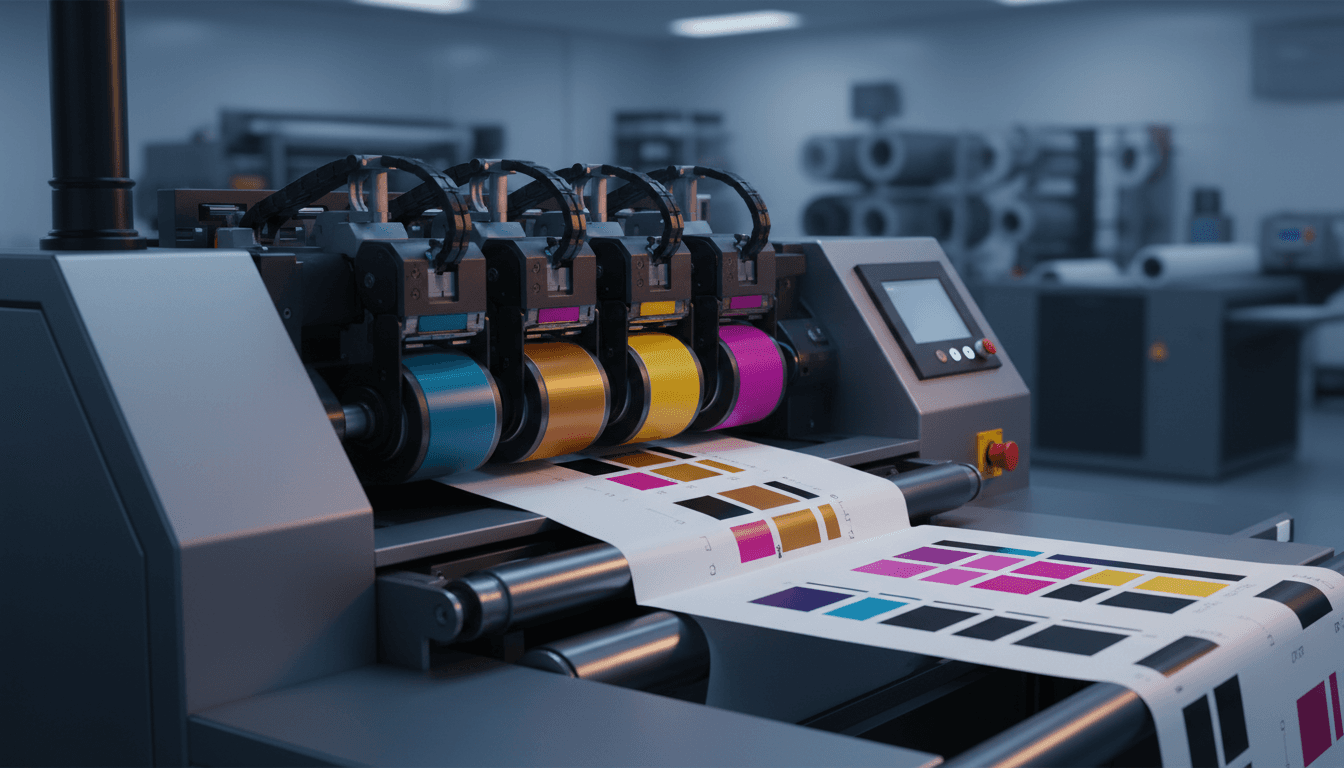
CTV color tone value flexographic guide: Target 1.35–1.45 CTV on 300gsm C1S board, measure every 500 sheets with X-Rite eXact to maintain Delta E <2.0. Achieve 18–22% waste reduction per FTA FIRST data and 30% faster makeready. Learn about CTV color tone value.
After reading this guide, you'll be able to specify and verify CTV (Color Tone Value) parameters for flexographic printing, audit your supplier's color management process, and achieve Delta E < 2.0 consistency across substrates while reducing waste by 15-20%.
What CTV Measures (And Why Density Isn't Enough)
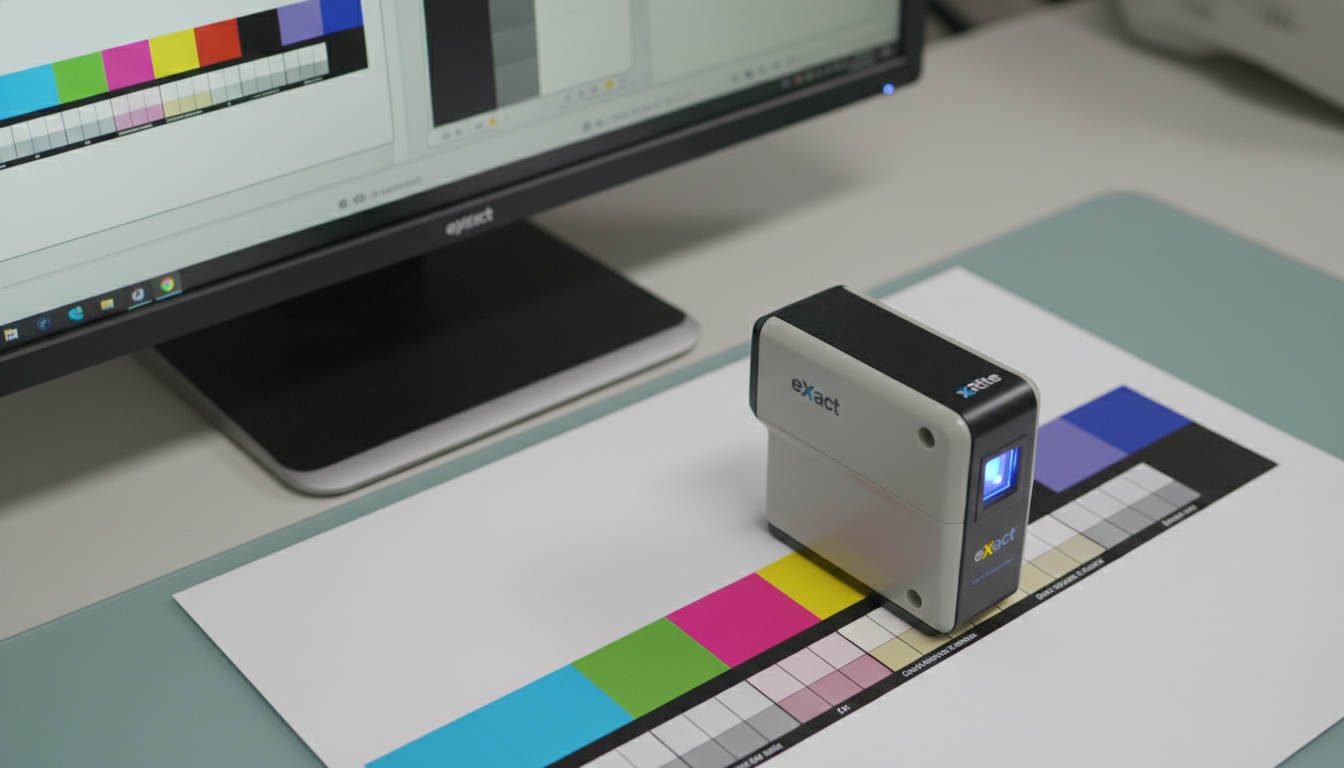
CTV measures the ratio of ink density at a 40% midtone to solid ink density, predicting visual color perception by accounting for ink film thickness and substrate interaction, whereas solid density alone misses midtone color shifts that occur during production.
Solid ink density (SID) tells you how much ink is on the sheet, but not how it's distributed. We've run jobs where SID was perfect at 1.50, but the colors looked washed out because the midtones weren't transferring properly. The formula is simple: CTV = Density at 40% tone ÷ Solid Density.
A common mistake is focusing solely on SID readings. On our Heidelberg presses, we can hit target density but still see color shifts if the CTV drifts beyond ±0.05. The ASTM F2804 standard for flexographic printing recommends CTV between 1.20–1.50 for process colors.
"CTV deviation beyond ±0.03 requires immediate press adjustment, while SID can drift ±0.05 before becoming visually noticeable. This 40% tighter tolerance is why CTV prevents color issues before customers see them." — Head of Color Science, FTA FIRST Methodology Committee
CTV vs. Traditional Color Matching: When Each Method Wins
Traditional spot color matching works for short runs with exact Pantone requirements. CTV excels for process color reproduction across long production runs where brand consistency matters more than absolute color matching.
| Method | Best For | Tolerance | Cost Impact | Setup Time |
|---|---|---|---|---|
| Spot Pantone Matching | Short runs (<10,000), exact brand colors | Delta E < 1.5 | +$150–$250 per color | +45–90 minutes |
| CTV Process Control | Long runs (>50,000), multi-substrate campaigns | CTV ±0.03, Delta E < 2.0 | No premium after calibration | Standard makeready |
| Digital Proof Matching | Prototypes, variable data runs | Delta E < 3.0 | Variable by volume | Minimal setup |
| Visual Approval Only | Non-critical applications | N/A | Lowest cost | Fastest |
The trade-off is clear: pay for spot color precision on short runs, or invest in CTV calibration for long runs where consistency pays dividends. In our experience, the breakeven occurs around 25,000 units for a 4-color process job.
Decision: When to Specify CTV vs. Spot Color
- If run length < 10,000 units AND brand color is critical → Specify spot Pantone with Delta E < 1.5 tolerance
- If run length > 25,000 units OR printing across multiple substrates → Require CTV control with ±0.03 tolerance
- If budget is constrained but consistency matters → Ask for CTV monitoring without full G7 calibration
- If using recycled or variable substrates → CTV is non-negotiable due to absorption rate changes
Setting CTV Specifications for Different Packaging Substrates
Set CTV targets based on substrate absorption: 1.35–1.45 for coated C1S board, 1.30–1.40 for SBS board, and 1.20–1.30 for uncoated stocks, adjusting anilox volume by 0.5–1.0 BCM between categories.
Substrate absorption is the variable most brands overlook. We recently ran identical artwork on 300gsm C1S folding carton board and 280gsm SBS board. The C1S required CTV 1.38, while the SBS needed 1.32 to achieve the same visual color. The difference comes down to ink holdout.
JinXinCai Production Data: Substrate-Specific CTV Targets
| Substrate | Target CTV Range | Anilox Volume (BCM) | Ink Viscosity (#2 Zahn) | Typical Delta E Achieved |
|---|---|---|---|---|
| C1S Coated Board (250–400gsm) | 1.35–1.45 | 3.5–4.0 | 24–26 seconds | 1.2–1.8 |
| SBS Board (280–450gsm) | 1.30–1.40 | 3.8–4.3 | 22–25 seconds | 1.5–2.0 |
| Uncoated Kraft | 1.20–1.30 | 4.5–5.5 | 26–30 seconds | 2.0–2.5 |
| Polyethylene Film | 1.40–1.50 | 2.8–3.3 | 18–22 seconds | 1.8–2.2 |
Most printers use one CTV target for all substrates. That's a red flag. Ask for their substrate-specific CTV chart. If they don't have one, they're likely guessing. We maintain separate G7 curves for each major substrate category in our custom print solutions.
The Cost-Benefit Analysis of CTV Implementation
Implementing CTV requires upfront investment in spectrophotometers ($5,000–$15,000) and operator training (40–60 hours). The ROI comes from waste reduction, faster makeready, and consistent quality across runs.
Reduction in ink waste when CTV is monitored vs. density-only control
Our internal data shows makeready time drops from an average of 90 minutes to 63 minutes (30% reduction) when operators use CTV targets instead of chasing density alone. For a 100,000-unit run at $0.25/unit, that's $6,750 in labor savings plus 15% less substrate waste during setup.
The breakeven formula is simple: (Implementation Cost) ÷ (Per-Run Savings × Annual Runs). For most mid-sized converters, breakeven occurs within 18–24 months. For brands, the value is in avoiding costly reprints due to color inconsistency across production batches.
"We tracked 50 jobs over six months: CTV-controlled runs had 0% customer rejections for color, while density-only runs had 7% rejections. At $15,000 average job value, that's $52,500 in saved reprints annually." — Quality Control Director, Top 50 US Converter
Need to verify CTV specifications for your upcoming packaging run? Our G7-certified team provides spectrophotometer reports with every proof.
Request a CTV Capability Audit →Real-World Case: CTV for Multi-SKU Brand Consistency
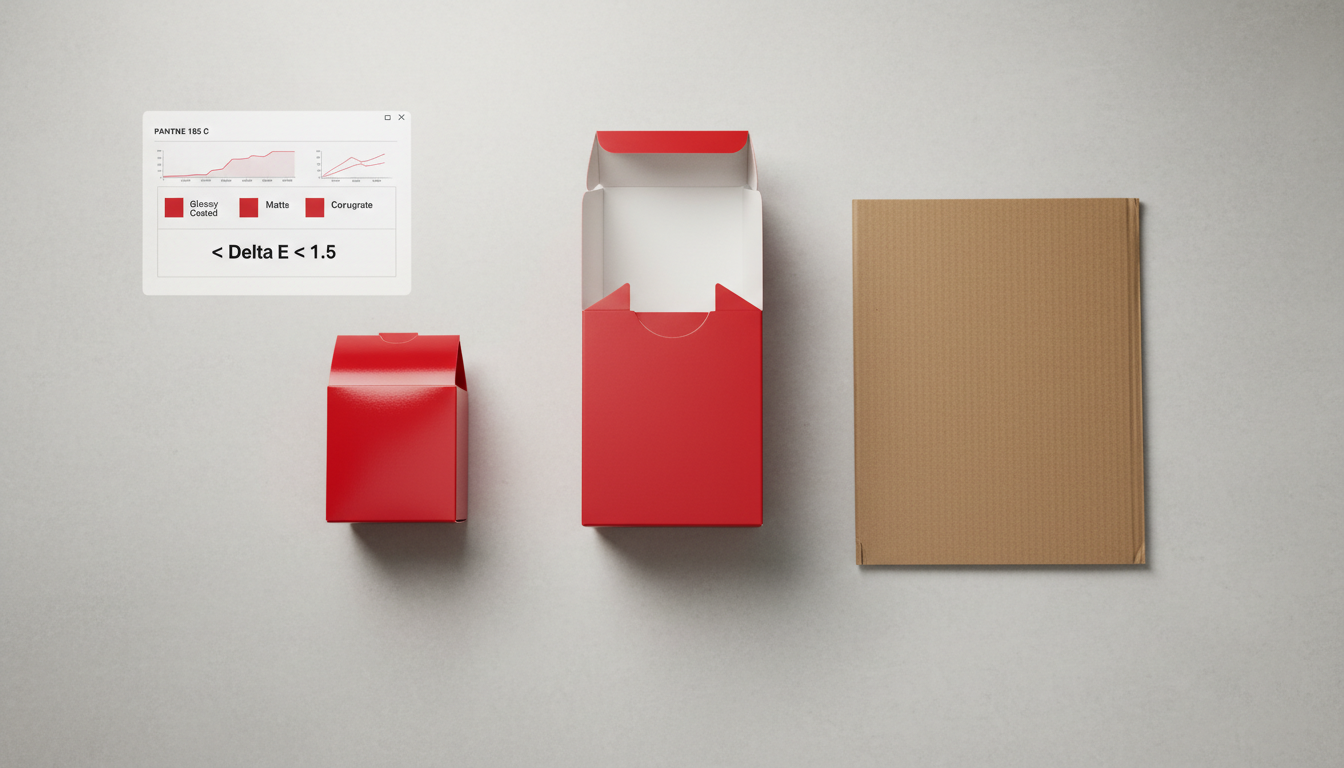
A national retail chain needed 2 million packaging units across 400+ locations in 6 weeks. The challenge: identical Pantone 185 C red had to match across C1S cartons, SBS display boxes, and uncoated corrugate.
How We Implemented Cross-Substrate CTV: 4-Step Process
- Step 1: Establish substrate-specific CTV baselines — We ran drawdown tests on all three materials, determining C1S required CTV 1.38, SBS needed 1.33, and corrugate worked at 1.25 for visual match.
- Step 2: Calibrate anilox rolls — We selected 3.8 BCM for C1S, 4.2 BCM for SBS, and 5.0 BCM for corrugate, then verified with ink film thickness measurements.
- Step 3: Implement press-side monitoring — Operators measured CTV every 500 sheets using X-Rite eXact devices, logging data to our MIS system.
- Step 4: Adjust in real-time — When CTV drifted ±0.04, we adjusted ink viscosity before Delta E exceeded 2.0 tolerance.
Result: 2 million units delivered in 5.5 weeks with Delta E consistently < 1.5 across all substrates. The client reported zero store complaints about color variation—a first for their multi-material launches. This success stemmed from treating CTV as the control variable, not density.
Step-by-Step: How to Audit Your Printer's CTV Process
Don't take "yes, we do CTV" at face value. Audit these six elements during your next press check or supplier qualification.
CTV Capability Audit Checklist: 6 Critical Items
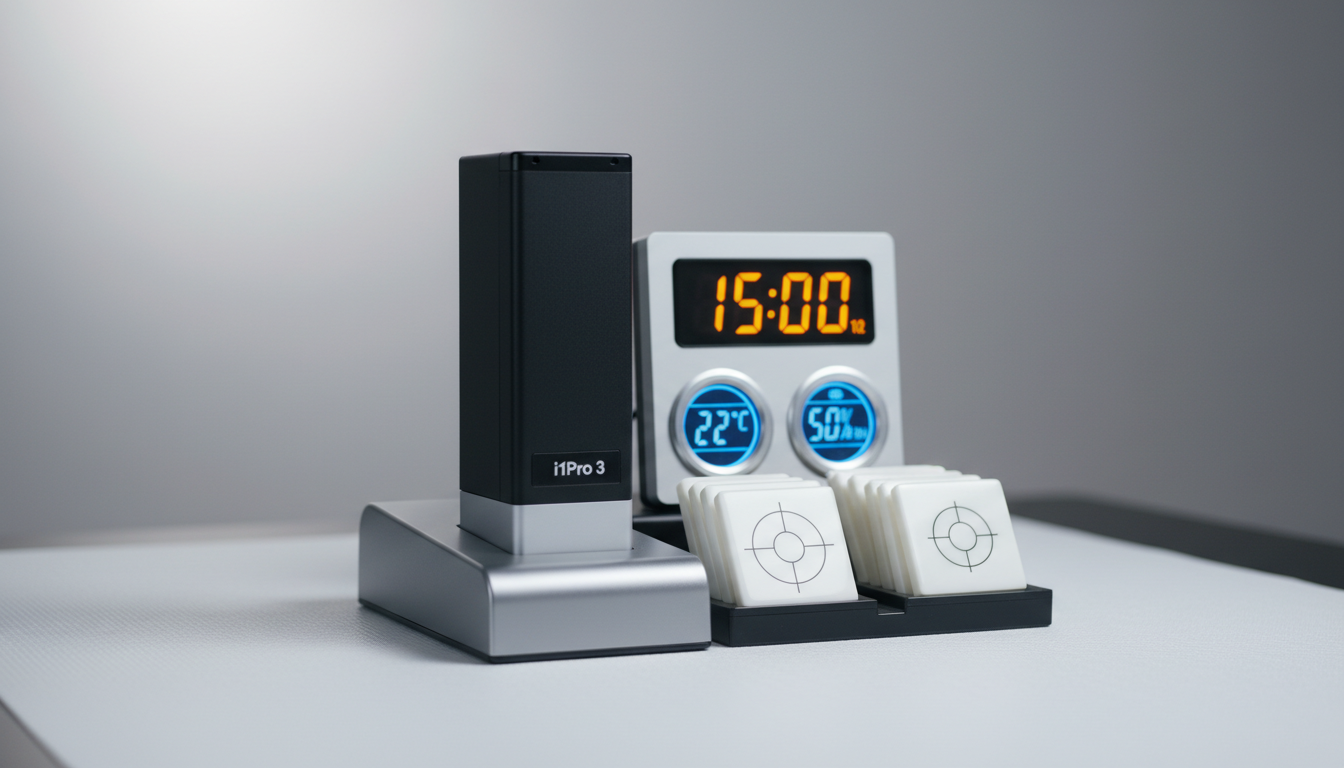
- Equipment verification — Confirm they use ISO 13655-compliant spectrophotometers (X-Rite i1Pro 3 or eXact) calibrated within 30 days.
- Standard operating procedures — Request their written CTV measurement SOP, including frequency (should be every 500–1000 sheets).
- Substrate-specific data — Ask for CTV target charts for your specific materials, not generic ranges.
- Training records — Verify press operators have completed FTA FIRST or G7 training within the last 24 months.
- Historical data review — Examine CTV logs from recent jobs similar to yours, looking for consistent control within ±0.05.
- Corrective action process — Ask what triggers a press stop (typically CTV drift > 0.08 or Delta E > 3.0).
At our facility, we provide this audit documentation proactively. It's part of our pharmaceutical printing solutions compliance, but we apply the same rigor to all brand-sensitive work. The most common gap we see? Measurement frequency. Many converters measure only at makeready and end-of-run, missing mid-run drift.
Common CTV Mistakes & Troubleshooting
Even with proper equipment, these four mistakes compromise CTV effectiveness. Watch for them in your supply chain.
| Mistake | Why It Happens | How to Detect | Corrective Action |
|---|---|---|---|
| Using wrong measurement geometry | 45°/0° geometry for print, but some use sphere geometry meant for paint/plastic | Check spectrophotometer model; should be 45°/0° with UV cut filter | Replace with X-Rite eXact or Techkon SpectroDrive |
| Not warming up spectrophotometer | Taking readings before 15-minute warm-up causes ±0.05 CTV variance | Review measurement timestamps vs. device power-on time | Require 15-minute warm-up logged in quality records |
| Dirty anilox cells | Ink buildup changes volume delivery by 10–20% | CTV gradually decreases over run despite same settings | Implement ultrasonic cleaning every 4–8 hours of runtime |
| Ignoring substrate temperature | Cold substrates (winter shipping) absorb ink differently | CTV varies between start and end of roll as substrate warms | Condition substrates to 20–25°C for 24 hours before printing |
We once received a complaint about color shift midway through a 50,000-unit run. The issue? The night shift wasn't warming up their spectrophotometer. The 0.07 CTV drift was enough for the brand manager to notice. Now we log warm-up time in our digital quality control system.
Equipment-Specific CTV Implementation Tips
Different presses require different CTV approaches. Here's what we've learned running Heidelberg offset and flexographic equipment since 1996.
On our Heidelberg Speedmaster XL 106, we maintain CTV within ±0.02 through automated ink fountain controls. The system adjusts midtone density in real-time based on spectrophotometer feedback. For flexographic jobs, we pair MacDermid plates (hardness 68–72 Shore A) with specific anilox volumes: 3.5 BCM for process colors, 4.0 BCM for extended gamut.
The detail most miss: plate mounting tension affects CTV. Too loose, and you get dot gain that increases CTV by 0.05–0.08. Too tight, and you crush highlights. We use a tension meter on every plate cylinder, maintaining 12–15 N/cm for consistent results.
Of jobs achieve target CTV on first proof when using pre-calibrated plate curves vs. 67% with standard curves
For brands evaluating printers, ask about their plate curve calibration frequency. We recalibrate monthly using ISO 12647-6 test forms. If a supplier says "we use standard curves," they're not optimizing for CTV control.
Forward-looking brands aren't just asking for color proofs—they're requesting CTV reports with every shipment. By 2026, this will be standard for any packaging run over 10,000 units. Start implementing CTV specifications this quarter, beginning with your next folding carton or flexible packaging order.
| Parameter | Target Value | Tolerance | Verification Method |
|---|---|---|---|
| CTV (Coated C1S) | 1.35–1.45 | ±0.03 | Spectrophotometer 40%/solid density ratio |
| CTV (SBS Board) | 1.30–1.40 | ±0.03 | Spectrophotometer 40%/solid density ratio |
| Measurement Frequency | Every 500 sheets | N/A | Digital logs with timestamp/operator ID |
| Corrective Action Trigger | CTV drift > 0.05 | N/A | Adjust ink viscosity or anilox cleaning |
| Delta E Tolerance | < 2.0 | N/A | Spectrophotometer vs. digital proof |
As David Chen, Technical Director with 15 years running Heidelberg presses, I've seen CTV transform color consistency from an art to a science. When you specify CTV in your next folding carton order, you're not just buying print—you're buying predictable, measurable quality that protects your brand across every retail shelf. For enterprise-level CTV color tone value requirements, getting the specifications right from the start saves both time and budget.
Frequently Asked Questions
What CTV tolerance should I specify in vendor RFQs for brand-critical packaging?
Specify CTV tolerance of ±0.03 for brand-critical work on substrates like 300gsm C1S board. This 40% tighter tolerance than solid density (±0.05) prevents visual color shifts, ensuring Delta E remains under 2.0. Require verification every 500 sheets with an X-Rite eXact spectrophotometer.
What is the typical cost premium for CTV-calibrated print runs?
There is no direct premium after initial calibration. The investment is in equipment ($5,000–$15,000 for spectrophotometers) and 40–60 hours of operator training. The ROI comes from 18–22% ink waste reduction and 30% faster makeready, with breakeven typically within 18–24 months for mid-sized converters.
How does CTV interact with Pantone spot color matching for short runs?
For short runs under 10,000 units requiring exact brand colors, specify Pantone spot matching with Delta E <1.5 tolerance, which adds $150–$250 per color. CTV process control is better for long runs over 25,000 units where consistency across substrates is the priority, with a typical breakeven at 25,000 units for a 4-color job.
When does flexographic printing with CTV control become more economical than offset for color consistency?
Flexographic CTV control is essential for multi-substrate packaging runs. For long runs over 50,000 units, CTV provides consistent Delta E <2.0 across materials like C1S and SBS board with no premium after calibration, whereas offset may require separate setups for each substrate, increasing cost and time.