
An implementation guide for brand managers to translate FDA indirect food additive regulations into actionable print production protocols, with decision frameworks, supplier audit checklists, and real-world cost analyses for 2026 and beyond.
The recall notice arrives on a Tuesday. Your custom-printed snack packaging, vibrant and structurally perfect, has failed migration testing. A non-compliant ink component has leached, violating 21 CFR 174-186. The brand liability is yours, not your printer’s. This isn’t a theoretical legal risk—it’s a manufacturing failure that starts on the pressroom floor.
This guide moves beyond regulatory summaries. We’ll translate 21 CFR Parts 174-186 into the concrete production decisions you must validate with your print partner: material specs, ink systems, and factory protocols that directly determine your packaging’s compliance status.
- Avoid migration testing costs ($2,500–$8,000 per SKU) by selecting pre-cleared materials from vetted suppliers with full traceability.
- Implement a 5-step supplier audit framework to verify compliance infrastructure before production begins.
- Understand the functional barrier principle: a compliant lamination or coating can isolate a non-food-contact print layer.
- Establish a 'Golden Record' for each SKU, locking in approved substrate, ink, coating, and adhesive specifications to prevent unauthorized changes.
- Budget an additional 10–25% in lead time for compliance verification on new packaging designs to prevent launch delays.
What Are 21 CFR Parts 174-186 and Why Do They Matter for Your Brand?
Legally, they define substances permitted as indirect food additives. Operationally, they are a manufacturing constraint list for everything that touches your food packaging. The critical concept is migration: the transfer of substances from the packaging to the food.
A common mistake is assuming compliance is solely about the primary substrate. In our experience running 6-color Heidelberg presses, the greater risk often lies in the inks, coatings, and adhesives. A brilliant Pantone-matched spot color can be the source of a non-compliant pigment.
The FDA’s enforcement statistics are telling. A 2023 report from the Food and Drug Administration’s Office of Regulatory Affairs showed that 16% of import refusals for food products were related to packaging material violations.
of FDA import refusals for food were due to packaging material violations
For your brand, a violation means more than a fine. It triggers a destructive cycle: voluntary recall, destruction of inventory, lost sales, and corrosive brand damage. The printer’ liability is often limited by contract; the brand’s reputation bears the full cost.
Key Substances and Materials: A Compliant Print Production Breakdown
You must think in terms of the complete printed construction. We segment it into four regulated components: substrate, ink system, coating, and adhesive. Each has a distinct compliance pathway.
Substrates: Many paperboards and corrugates are GRAS (Generally Recognized as Safe) by historical use. However, specific treatments or recycled content can introduce variables. A 300gsm C1S folding carton board from a reputable mill typically has a DoC. A molded fiber pulp tray with a proprietary moisture barrier may require a Food Contact Notification (FCN).
Ink Systems: This is where we see the most critical specification errors. Not all “food-grade” inks are equal.
- UV-Curable Inks: Once fully cured, the polymerized film is often considered compliant. The detail that makes the difference is the photoinitiator package. Some low-grade initiators can leave residual breakdown products.
- Water-Based & Solvent-Based Inks: Compliance hinges on the pigment and resin systems being listed in 21 CFR. We insist on ink suppliers providing a direct citation (e.g., “21 CFR 175.300 Resinous and polymeric coatings”).
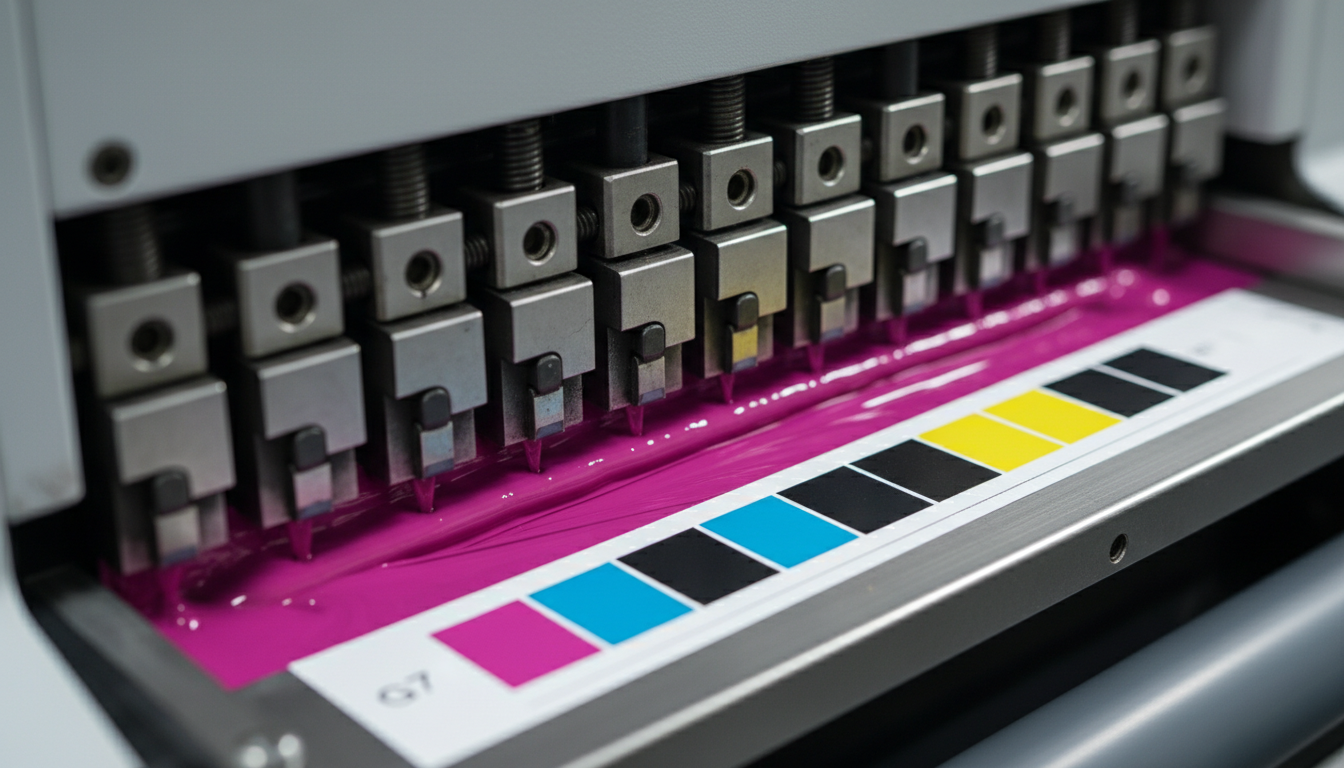
Coatings & Varnishes: Often applied as a functional barrier. A fully cured, high-barrier UV coating can effectively isolate printed ink layers from the food contact surface. The specification must include minimum coat weight (e.g., 3.0 gsm ±0.5) to guarantee barrier integrity.
Adhesives: Critical for laminated or pouch structures. Aqueous adhesives are commonly used, but solvent-based or reactive polyurethane adhesives require specific clearance. The mistake is assuming the laminate supplier handles this; the brand must have the CoA for the adhesive lot.
The Supplier Audit: A 5-Step Framework for Verifying Compliance
Auditing a printer’s compliance is not about reading their marketing brochure. It’s a forensic review of their production floor controls. Our facility’s ISO 9001:2015 certification, audited by SGS, provides the framework, but you must verify its application to food contact materials.
- Review Raw Material Supplier Declarations of Compliance (DoC): Request DoCs for the specific substrate, ink, and coating SKUs quoted for your job. A generic “our products are food safe” letter is a red flag. The DoC must name the product, cite the specific 21 CFR sections, and be signed by the supplier’s authorized representative.
- Audit Material Segregation & Lot Control: On a 15,000 sqm production floor like ours, running food and non-food jobs concurrently, physical segregation is non-negotiable. Ask for their procedure. Compliant inks must be stored in designated racks, with lot numbers traceable to CoAs. We use a color-coded label system.
- Evaluate Change Management Protocol: What happens if an ink supplier reformulates? A robust ISO 9001 system mandates a formal change request, risk assessment, and customer notification before the new material is used on any live order. Ask to see a recent change control record.
- Request Certificates of Analysis (CoA): A DoC is a promise; a CoA is proof for that batch. For inks, a CoA should list heavy metals (Pb, Cd, Hg, Cr VI) and confirm the absence of non-listed substances. You should be able to trace a finished carton back to the ink lot CoA.
- Verify GMP for Food Contact Production: This is the factory walk-through. Are press blankets and rollers dedicated or thoroughly purged between non-food and food jobs? Is there a documented wash-up procedure? We maintain separate tooling for high-sensitivity runs.
“The most common gap we see during audits,” says Li Wei, Quality Assurance Director at our facility, “is not in the documentation itself, but in the line operator’s access to it. If the pressman can’t instantly verify if the ink can on the floor is approved for a dairy job, the system has failed.”
Printing & Finishing: How Production Choices Directly Impact FDA Status
Compliance isn’t just about what materials you use, but how you process them. Heat, pressure, and curing kinetics can affect migration.
On a Heidelberg Speedmaster XL 106 running at 15,000 sheets per hour, the infrared and hot air drying units can reach substrate temperatures of 60–70°C. For some UV-curable coatings, insufficient peak temperature can lead to incomplete cure, raising the risk of extractables. We monitor this with inline temperature sensors and validate cure with MEK rub tests.
Lamination presents a major decision point. If you are printing on the outer layer of a laminate, the adhesive and inner film become the functional barrier.
Decision: Laminated Structure Compliance Pathway
- If your print is on the outer layer → The adhesive and inner film must be fully compliant and act as a barrier. Migration testing focuses on the adhesive/film.
- If your print is on the inner layer (food contact surface) → Every ink, coating, and the substrate itself must have direct 21 CFR clearance. Lamination is not a barrier in this orientation.
Die-cutting and creasing expose raw substrate edges. For a dry food application, this may be acceptable. For a fatty or moist food, you must assess edge exposure. A common oversight we see is specifying a food-compliant board but using a standard, non-compliant aqueous coating for scratch resistance—which then contacts the food at the scored edge.

Case Study: Navigating a Compliance Halt for a New Snack Packaging Line
Last year, a client launched a new line of seasoned nut mixes. The packaging was a beautiful 5-color job on metallized board, laminated to a transparent inner film. Press checks passed, and the first production run of 50,000 units was completed.
Two weeks before ship date, the client’s internal audit requested migration testing for the specific ink batch. The test failed for a trace migration of a phthalate plasticizer—a component of the extender base in the custom-matched metallic silver ink.
The Root Cause: The ink supplier had provided a DoC for their standard silver, but the pressroom, aiming for a closer color match, had blended in a small percentage of a different extender from a non-food-grade inventory. Our ISO 9001 change control should have caught this, but the ink was logged under the main approved code.
The Solution & Cost:
- Immediate Halt: All finished goods were quarantined. Loss: $18,000 in printed inventory.
- Corrective Action: We implemented a barcode scanning system at the ink mixing station. Now, every component drum must be scanned against the approved job recipe before dispensing. This is logged digitally.
- Recovery: The job was reprinted with the verified standard ink, delaying the launch by 4 weeks. The total cost of the failure, including reprint, testing, and delay, exceeded $45,000.
“That failure was a turning point,” says Michael Chen, Production Manager. “It proved that compliance is a real-time manufacturing discipline, not a pre-production paperwork exercise. We now treat the approved ink formula with the same control as a pharmaceutical batch record.”
Frequently Asked Questions
How does a spot UV coating affect the FDA compliance status of a paperboard carton?
A fully cured spot UV coating can act as a functional barrier, isolating non-food-contact ink layers from the food. To be effective, the specification must include a minimum coat weight, typically 3.0 gsm ±0.5, to guarantee barrier integrity and prevent migration.
What documentation should I require from my packaging manufacturer to prove 21 CFR compliance?
Require a signed Supplier Declaration of Compliance (DoC) citing specific 21 CFR sections for each material SKU and a lot-specific Certificate of Analysis (CoA). The CoA should list heavy metals like lead and cadmium and confirm the absence of non-listed substances for that batch.
What is the typical cost and timeline impact for conducting migration testing on a new material?
Migration testing typically costs $2,500–$8,000 per SKU and can add 3–6 weeks to your timeline. You can avoid this cost by selecting pre-cleared materials from vetted suppliers with full traceability and documented compliance.
What is the breakeven for using pre-cleared materials versus conducting new migration testing?
The breakeven is immediate for most custom runs. Testing costs $2,500–$8,000 upfront, while using pre-cleared materials from vetted suppliers incurs no additional testing fees and prevents potential $45,000+ recall events from non-compliance.